


In an attempt to avoid a seven-day railway strike during the Lunar New Year holiday next year, the government yesterday presented the Taiwan Railway Labor Union with a peace offering of new benefits.
Since the union staged a controversial member's conference that threatened to disrupt train services during the Mid-Autumn Festival last month, the Taiwan Railway Administration (TRA) has been under pressure to address the union's grievances.
During the conference, the union voted to strike during the Lunar New Year if its demands were not met.
"We've settled two out of three of the points of contention," Minister of Transportation and Communications Lin Ling-san (林陵三) told legislators yesterday. "The issues of overtime pay and travel subsidization have already been settled. We're still working on bonuses given to train drivers with good safety records."
"I am confident that all three points of contention can be resolved before the Lunar New Year. There will be no strike," Lin said.
The ministry has agreed to reinstate overtime pay that was abolished in the 1980s so that employees are compensated when they must wait to be relieved at the end of their eight-hour shifts. Subsidies for expenses, such as accommodation and food for train drivers stranded away from their hometowns, will be raised by 50 percent, the ministry said.
"Although the Council of Labor Affairs has yet to approve the proposed changes, the ministry is prepared to go through with the said employment benefits," Lin said.
However, the union said that despite Lin's confidence, it had yet to approve the ministry's proposals.
Union secretary-general Chen Han-ching (陳漢卿) said that Lin's promises cut a few corners and neglected the union's main concerns.
Last month's strike vote included only issues of employment benefits. Should the union and the government agree on these issues, the union would be breaking the Labor Union Law (
The union's main goal is to get a public guarantee that the TRA's privatization will be halted. It also wants the rights and benefits of current and retired employees to be protected; the ministry to take on the railway administration's debts resulting from loss-making stations and the cost of disability discount tickets and infrastructure maintenance; and the Taiwan Railway Administration Organic Law (
"The government's offer is a very small one," Chen said. "We could easily step away from it. We want to talk to the ministry about all of our requests, but they only want to discuss the issues of employment benefits."
Responding to Chen's accusation, TRA Deputy Director-General Hsu Ta-wen (
"We can't do anything about the other requests as they entail the cooperation of other governmental bodies," Hsu said.
While Chen refused to say whether the union planned to accept Lin's offer, he said that the union's main objective was to protect the future of the TRA.
Pointing to what he called a legal flaw, Chen admitted that if a consensus were reached over employment benefits, it would be illegal for the union to strike.
"When we voted during the Mid-Autumn Festival to strike, we were only legally able to vote on issues of employment benefits. Therefore, we can only strike based on these three points," he said.
According to Lin, negotiations will be halted until next Wednesday, when the union elects a new president.
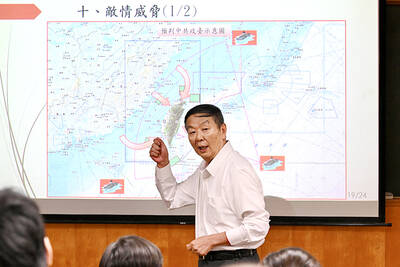
RETHINK? The defense ministry and Navy Command Headquarters could take over the indigenous submarine project and change its production timeline, a source said Admiral Huang Shu-kuang’s (黃曙光) resignation as head of the Indigenous Submarine Program and as a member of the National Security Council could affect the production of submarines, a source said yesterday. Huang in a statement last night said he had decided to resign due to national security concerns while expressing the hope that it would put a stop to political wrangling that only undermines the advancement of the nation’s defense capabilities. Taiwan People’s Party Legislator Vivian Huang (黃珊珊) yesterday said that the admiral, her older brother, felt it was time for him to step down and that he had completed what he

Taiwan has experienced its most significant improvement in the QS World University Rankings by Subject, data provided on Sunday by international higher education analyst Quacquarelli Symonds (QS) showed. Compared with last year’s edition of the rankings, which measure academic excellence and influence, Taiwanese universities made great improvements in the H Index metric, which evaluates research productivity and its impact, with a notable 30 percent increase overall, QS said. Taiwanese universities also made notable progress in the Citations per Paper metric, which measures the impact of research, achieving a 13 percent increase. Taiwanese universities gained 10 percent in Academic Reputation, but declined 18 percent
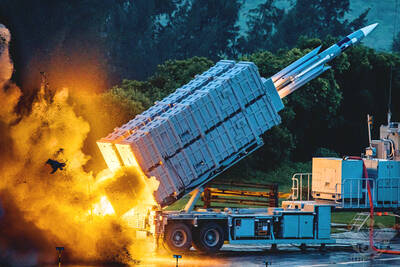
UNDER DISCUSSION: The combatant command would integrate fast attack boat and anti-ship missile groups to defend waters closest to the coastline, a source said The military could establish a new combatant command as early as 2026, which would be tasked with defending Taiwan’s territorial waters 24 nautical miles (44.4km) from the nation’s coastline, a source familiar with the matter said yesterday. The new command, which would fall under the Naval Command Headquarters, would be led by a vice admiral and integrate existing fast attack boat and anti-ship missile groups, along with the Naval Maritime Surveillance and Reconnaissance Command, said the source, who asked to remain anonymous. It could be launched by 2026, but details are being discussed and no final timetable has been announced, the source
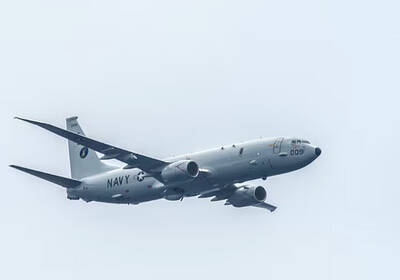
CHINA REACTS: The patrol and reconnaissance plane ‘transited the Taiwan Strait in international airspace,’ the 7th Fleet said, while Taipei said it saw nothing unusual The US 7th Fleet yesterday said that a US Navy P-8A Poseidon flew through the Taiwan Strait, a day after US and Chinese defense heads held their first talks since November 2022 in an effort to reduce regional tensions. The patrol and reconnaissance plane “transited the Taiwan Strait in international airspace,” the 7th Fleet said in a news release. “By operating within the Taiwan Strait in accordance with international law, the United States upholds the navigational rights and freedoms of all nations.” In a separate statement, the Ministry of National Defense said that it monitored nearby waters and airspace as the aircraft


 RSS
RSS