


A suicide attacker blew up an explosive-laden car outside a Baghdad police station yesterday, killing at least eight other people, while a Spanish diplomat was murdered in a surge of violence six months after the fall of former president Saddam Hussein's regime.
The killings came as Ankara's decision to send troops to the war-torn country caused an uproar in both Turkey and Iraq amid widespread warnings their presence would further deteriorate the security situation.
At least nine people were killed and scores others were wounded in the suicide attack on a police station in Baghdad's main Shiite neighborhood of Sadr city, US military police spokesman Captain Sean Kirley said.
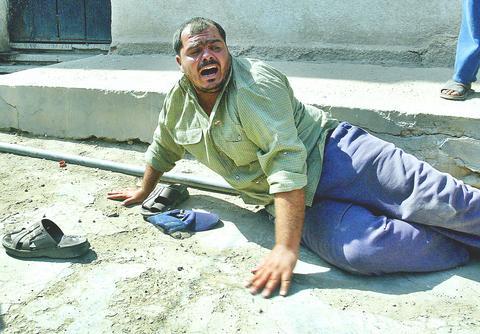
PHOTO: AP
"The dead were three police, five civilians and a suicide bomber," he said.
"At around 8:45am an individual driving a vehicle came in front of the building, the guard at the entrance detained him for a brief period of time," Kirley said.
"He was able to neutralize the guard and get inside. Then around five meters from the checkpoint, the car exploded," he said.
US troops later deployed three dozen US armored personnel carriers and set up barbed wire fences around the police station and the charred wreckage of the Oldsmobile which was used in the latest suicide attack since US troops entered Baghdad on April 9.
"I found the head of the bomber," an Iraqi police officer said. "He was bearded."
Meanwhile, a Spanish intelligence officer was murdered early yesterday as he left his Baghdad home, the foreign ministry said in Madrid.
The dead man, Jose Antonio Bernal Gomez, a military attache and intelligence official, was reportedly cut down by machine-gun fire as he left his residence.
Spanish media reports said he had been posted in Iraq since the start of the US-led invasion on March 20. Spain is part of the US-led coalition that is occupying Iraq, and has some 1,250 soldiers in the country.
Several members of Iraq's US-appointed Governing Council, meanwhile, condemned the plan to send Turkish troops across the border into Iraq, whose ethnic Kurdish population is alarmed at the prospect.
"Sending these troops would delay our regaining sovereignty," said council member Nasseer Chaderchi, warning the deployment could affect relations between the neighbors.
Chaderchi said Turkish authorities recently told council members they would not send troops to Iraq without their approval.
But Turkey's parliament authorized on Tuesday the dispatch of troops for a maximum of one year, leaving the decision on the size, location and timing of the deployment to the government to work out with the US.
The Turkish troops -- Ankara has talked of sending up to 10,000 -- would join a US-led force already numbering more than 155,000 from 34 countries, the overwhelming majority from the US.
Turkey's ambassador Osman Paksut insisted the troops would come as "a friendly, stabilizing, contributing factor," and not as "an occupying force."
Despite the council's objections, Iraq's interim foreign minister, Hoshyar Zebari, did not rule out the deployment would go ahead.
"If Turkish troops were sent, they would be deployed in the east of the country, far from Kurdish zones," Zebari, a Kurd, said in an interview with Al-Hayat newspaper.
"The interim Iraqi government prefers not to have peace forces from neighboring countries because each one has its own political program and its own interests which will lead to unjustified susceptibility and provocation," Zebari said.
In Turkey, those opposed to the troop deployment protested around Istanbul while its main Kurdish party, the Democratic People's Party, denounced the decision, describing it has having "brought Turkey to the edge of war."
But Washington welcomed the move, which US officials hope will ease the strain on their forces, facing almost daily casualties amid rising skepticism among Americans about the war.
Meanwhile, the US faced a new setback at the UN as its draft resolution on Iraq appeared to have been put on hold after criticism from UN Secretary-General Kofi Annan.
A disagreement over how soon Iraqis could take political control of their country and how big a UN role might be during that transition led Annan to come out against the US proposal last week, in remarks that galvanized its opponents.
"People are telling us that basically, if you're going to go around with a tin cup, you need to show a little humility," a US official said in Washington.
"The official line is that we're looking at all the options but the feeling here is that the resolution is dead," the official said.
The US now appears unable to muster the Security Council votes needed to pass the resolution, which it had hoped could convince other nations to contribute cash and troops for Iraq.
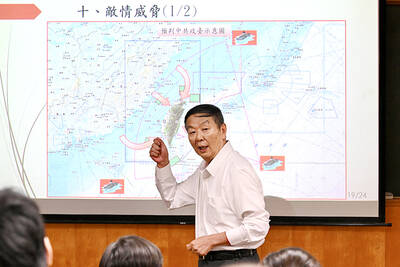
RETHINK? The defense ministry and Navy Command Headquarters could take over the indigenous submarine project and change its production timeline, a source said Admiral Huang Shu-kuang’s (黃曙光) resignation as head of the Indigenous Submarine Program and as a member of the National Security Council could affect the production of submarines, a source said yesterday. Huang in a statement last night said he had decided to resign due to national security concerns while expressing the hope that it would put a stop to political wrangling that only undermines the advancement of the nation’s defense capabilities. Taiwan People’s Party Legislator Vivian Huang (黃珊珊) yesterday said that the admiral, her older brother, felt it was time for him to step down and that he had completed what he
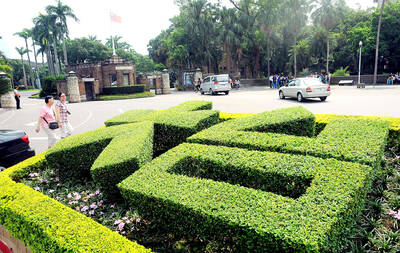
Taiwan has experienced its most significant improvement in the QS World University Rankings by Subject, data provided on Sunday by international higher education analyst Quacquarelli Symonds (QS) showed. Compared with last year’s edition of the rankings, which measure academic excellence and influence, Taiwanese universities made great improvements in the H Index metric, which evaluates research productivity and its impact, with a notable 30 percent increase overall, QS said. Taiwanese universities also made notable progress in the Citations per Paper metric, which measures the impact of research, achieving a 13 percent increase. Taiwanese universities gained 10 percent in Academic Reputation, but declined 18 percent
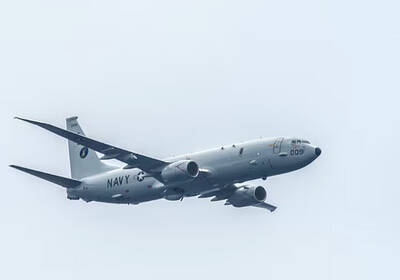
CHINA REACTS: The patrol and reconnaissance plane ‘transited the Taiwan Strait in international airspace,’ the 7th Fleet said, while Taipei said it saw nothing unusual The US 7th Fleet yesterday said that a US Navy P-8A Poseidon flew through the Taiwan Strait, a day after US and Chinese defense heads held their first talks since November 2022 in an effort to reduce regional tensions. The patrol and reconnaissance plane “transited the Taiwan Strait in international airspace,” the 7th Fleet said in a news release. “By operating within the Taiwan Strait in accordance with international law, the United States upholds the navigational rights and freedoms of all nations.” In a separate statement, the Ministry of National Defense said that it monitored nearby waters and airspace as the aircraft
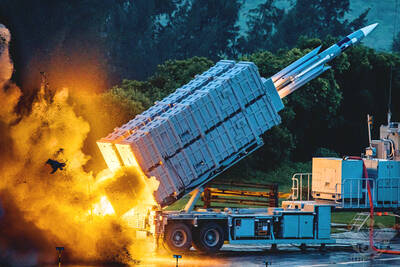
UNDER DISCUSSION: The combatant command would integrate fast attack boat and anti-ship missile groups to defend waters closest to the coastline, a source said The military could establish a new combatant command as early as 2026, which would be tasked with defending Taiwan’s territorial waters 24 nautical miles (44.4km) from the nation’s coastline, a source familiar with the matter said yesterday. The new command, which would fall under the Naval Command Headquarters, would be led by a vice admiral and integrate existing fast attack boat and anti-ship missile groups, along with the Naval Maritime Surveillance and Reconnaissance Command, said the source, who asked to remain anonymous. It could be launched by 2026, but details are being discussed and no final timetable has been announced, the source


 RSS
RSS