


A strong earthquake measuring 6.3 on the Richter scale shook the nation yesterday morning, resulting in a temporary halt of the mass rapid transit system in Taipei, but there were no reports of damages or casualties.
Seismologists at the Central Weather Bureau said residents living in the north and northeast should be prepared for aftershocks that could exceed 5 on the Richter scale.
"The earthquake was caused by a collision between the Philippine and Eurasian tectonic plates," said Kuo Kai-wen (

PHOTO: REUTERS
Yesterday's earthquake struck at 9:52am, making it the strongest earthquake this year. It lasted for about 22 seconds, rattling windows and shaking shelves in buildings in northern and eastern Taiwan, officials said.
The temblor was centered 21.3km below the sea floor and about 25km east of the bureau's Nanao seismic monitoring station in eastern Ilan County.
The quake was felt across the country yesterday. The greatest intensity of the quake was measured at 4 in Ilan, Hualien and Taichung counties on Taiwan's unique scale of tremor-intensity measurement -- which classifies tremor-intensity into seven categories.
In Taipei, the intensity measured 3, leading to a temporary halt of the city's rapid transit system. The operation resumed service at 10:10am.
The quake was followed by several moderate aftershocks and more than 200 insensible ones. At 1:08pm, a tremor registering 5.3 on the Richter scale shook the nation.
On March 31 last year, an earthquake measuring 6.8 on the Richter scale, struck at 2:52pm with its epicenter near Nanao.
In Taipei, roughly 100km away from the epicenter, the intensity registered at 5.
"Although the epicenter of the earthquake is near last year's March epicenter, we don't see any correlation between the two events," Kuo said.
Since the devastating 921 earthquake, which registered 7.3 on the Richter scale and claimed more than 2,400 lives in 1999, seismologists have reminded the public that minor earthquakes are a relatively common occurrence.
Yeh Yih-hsiung (葉義雄), a seismologist at Academia Sinica, said that like Japan, Taiwan is also one of the world's most earthquake-prone countries. They both sit on the circum-Pacific seismic belt, where about 68 percent of the world's earthquakes occur.
Yeh said yesterday's earthquake had no correlation with the big quake that hit north eastern Japan last month.
A powerful earthquake rocked northeastern Japan on May 26, causing fires and landslides, knocking out power, and disrupting road and rail traffic. The quake registered at magnitude of 7 and was the strongest to hit Japan in more than two years.
"Earthquakes in Japan can be attributed to the motion of the Eurasian tectonic plate. The mechanism is different from that of earthquakes in Taiwan," Yeh said.
In addition to the aftershocks, bureau officials said residents should also be alert for heavy rain.
Yesterday, officials issued warnings of heavy rain in southern Taiwan, saying that the affected area would be expanded today.
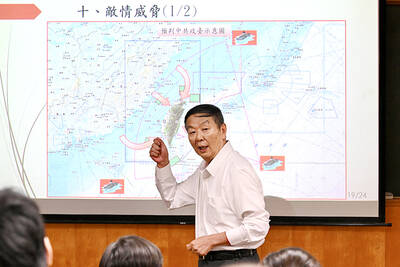
RETHINK? The defense ministry and Navy Command Headquarters could take over the indigenous submarine project and change its production timeline, a source said Admiral Huang Shu-kuang’s (黃曙光) resignation as head of the Indigenous Submarine Program and as a member of the National Security Council could affect the production of submarines, a source said yesterday. Huang in a statement last night said he had decided to resign due to national security concerns while expressing the hope that it would put a stop to political wrangling that only undermines the advancement of the nation’s defense capabilities. Taiwan People’s Party Legislator Vivian Huang (黃珊珊) yesterday said that the admiral, her older brother, felt it was time for him to step down and that he had completed what he
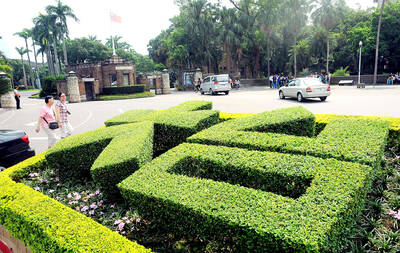
Taiwan has experienced its most significant improvement in the QS World University Rankings by Subject, data provided on Sunday by international higher education analyst Quacquarelli Symonds (QS) showed. Compared with last year’s edition of the rankings, which measure academic excellence and influence, Taiwanese universities made great improvements in the H Index metric, which evaluates research productivity and its impact, with a notable 30 percent increase overall, QS said. Taiwanese universities also made notable progress in the Citations per Paper metric, which measures the impact of research, achieving a 13 percent increase. Taiwanese universities gained 10 percent in Academic Reputation, but declined 18 percent
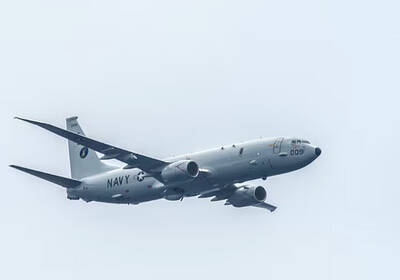
CHINA REACTS: The patrol and reconnaissance plane ‘transited the Taiwan Strait in international airspace,’ the 7th Fleet said, while Taipei said it saw nothing unusual The US 7th Fleet yesterday said that a US Navy P-8A Poseidon flew through the Taiwan Strait, a day after US and Chinese defense heads held their first talks since November 2022 in an effort to reduce regional tensions. The patrol and reconnaissance plane “transited the Taiwan Strait in international airspace,” the 7th Fleet said in a news release. “By operating within the Taiwan Strait in accordance with international law, the United States upholds the navigational rights and freedoms of all nations.” In a separate statement, the Ministry of National Defense said that it monitored nearby waters and airspace as the aircraft
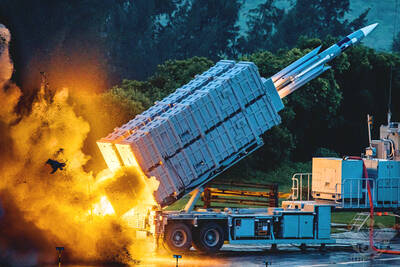
UNDER DISCUSSION: The combatant command would integrate fast attack boat and anti-ship missile groups to defend waters closest to the coastline, a source said The military could establish a new combatant command as early as 2026, which would be tasked with defending Taiwan’s territorial waters 24 nautical miles (44.4km) from the nation’s coastline, a source familiar with the matter said yesterday. The new command, which would fall under the Naval Command Headquarters, would be led by a vice admiral and integrate existing fast attack boat and anti-ship missile groups, along with the Naval Maritime Surveillance and Reconnaissance Command, said the source, who asked to remain anonymous. It could be launched by 2026, but details are being discussed and no final timetable has been announced, the source


 RSS
RSS