


The World Health Organization (WHO) said China, epicenter of a flu-like virus that has killed about 160 people worldwide, had failed to report all its cases and the capital, Beijing, could have five times the official number.
The virus, which is new to science and has no known cure, has been carried by air travellers to around 22 countries in the past six weeks, infecting over 3,400 people.
Hong Kong, the second most affected area after China, reported five more deaths from the virus yesterday.
"Indeed there have been cases of SARS [severe acute respiratory syndrome] -- there is no question about that -- that have also not been reported officially," German WHO virologist Wolfgang Preiser said after a visit to a military hospital in Beijing.
"The military seems to have its own reporting system which does not link in presently with the municipal one," he told a news conference yesterday.
WHO officials called for full disclosure from the country where SARS first appeared in November and which has been criticized widely for not sharing information with the rest of the world soon enough.
Officials were asked how many cases Beijing really had. "I would guess the range would be between 100 and 200," WHO official Alan Schnur replied. Only 37 cases have been officially reported in Beijing.
A team of WHO virologists and epidemiologists were allowed to visit two military hospitals in Beijing -- days after asking for permission -- as the government responded to pressure.
SARS has killed at least 65 people and infected 1,445 in mainland China -- nearly half of the world's cases -- since it first surfaced in the southern province of Guangdong.
In a sign some progress was being made in the fight against the illness, Singapore said it hopes to have a diagnostic test ready in a week following 12 deaths from SARS in the tiny island nation in less than a month.
But scientists in Hong Kong said they may have detected a more virulent form of the virus in the city where the disease has killed 61 people and infected 1,268.
Key data to help explain SARS may emerge from China in three to four weeks, due to the new openness of officials, said Dr David Heymann, head of the WHO's contagious diseases unit.
"What's the future of this disease?" he said in New York. "We won't know until we see what's going on in China."
Scientists have been working feverishly on diagnostic tests for SARS, after mapping the genetic sequence of the virus.
The state-run Genome Institute of Singapore said its new test would take three hours and may be sensitive enough to detect the virus in its early stages.
Also See Stories:
Fear of SARS cited for deserted trade fair in Guangzhou
SARS damage not irreparable
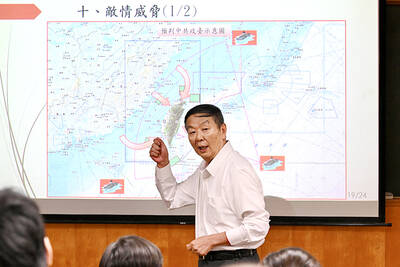
RETHINK? The defense ministry and Navy Command Headquarters could take over the indigenous submarine project and change its production timeline, a source said Admiral Huang Shu-kuang’s (黃曙光) resignation as head of the Indigenous Submarine Program and as a member of the National Security Council could affect the production of submarines, a source said yesterday. Huang in a statement last night said he had decided to resign due to national security concerns while expressing the hope that it would put a stop to political wrangling that only undermines the advancement of the nation’s defense capabilities. Taiwan People’s Party Legislator Vivian Huang (黃珊珊) yesterday said that the admiral, her older brother, felt it was time for him to step down and that he had completed what he
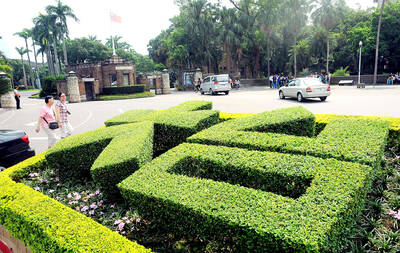
Taiwan has experienced its most significant improvement in the QS World University Rankings by Subject, data provided on Sunday by international higher education analyst Quacquarelli Symonds (QS) showed. Compared with last year’s edition of the rankings, which measure academic excellence and influence, Taiwanese universities made great improvements in the H Index metric, which evaluates research productivity and its impact, with a notable 30 percent increase overall, QS said. Taiwanese universities also made notable progress in the Citations per Paper metric, which measures the impact of research, achieving a 13 percent increase. Taiwanese universities gained 10 percent in Academic Reputation, but declined 18 percent
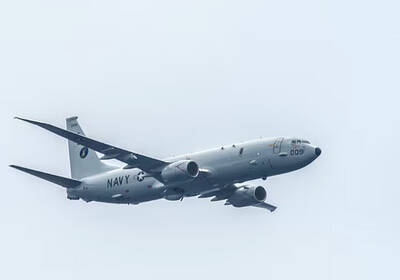
CHINA REACTS: The patrol and reconnaissance plane ‘transited the Taiwan Strait in international airspace,’ the 7th Fleet said, while Taipei said it saw nothing unusual The US 7th Fleet yesterday said that a US Navy P-8A Poseidon flew through the Taiwan Strait, a day after US and Chinese defense heads held their first talks since November 2022 in an effort to reduce regional tensions. The patrol and reconnaissance plane “transited the Taiwan Strait in international airspace,” the 7th Fleet said in a news release. “By operating within the Taiwan Strait in accordance with international law, the United States upholds the navigational rights and freedoms of all nations.” In a separate statement, the Ministry of National Defense said that it monitored nearby waters and airspace as the aircraft
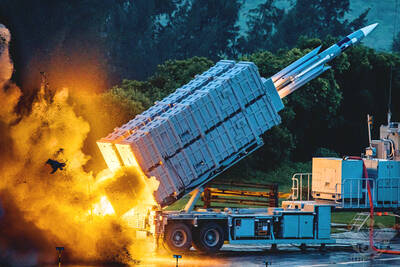
UNDER DISCUSSION: The combatant command would integrate fast attack boat and anti-ship missile groups to defend waters closest to the coastline, a source said The military could establish a new combatant command as early as 2026, which would be tasked with defending Taiwan’s territorial waters 24 nautical miles (44.4km) from the nation’s coastline, a source familiar with the matter said yesterday. The new command, which would fall under the Naval Command Headquarters, would be led by a vice admiral and integrate existing fast attack boat and anti-ship missile groups, along with the Naval Maritime Surveillance and Reconnaissance Command, said the source, who asked to remain anonymous. It could be launched by 2026, but details are being discussed and no final timetable has been announced, the source


 RSS
RSS