


US and Israeli intelligence officials have concluded that Yasser Arafat has forged a new alliance with Iran that involves Iranian shipments of heavy weapons and millions of dollars to Palestinian groups that are waging guerrilla war against Israel.
The partnership, officials said, was arranged in a clandestine meeting in Moscow last May between two top aides to Arafat and Iranian government officials. The meeting took place while Arafat was visiting Russian President Vladimir Putin, according to senior Israeli security officials who declined to describe the precise nature of their information.

PHOTO: REUTERS
The new alignment is significant for several reasons, US and Israeli officials said. In recent years, Iran's support for terrorism around the world has been on the wane, with the notable exception of its ties to Hezbollah, the militant group that fought for 18 years to expel Israel from southern Lebanon.
Israeli officials say they are alarmed by Arafat's alliance with Iran because they say it gives the Palestinians a powerful and well-armed patron in the increasingly violent conflict with Israel. US officials echoed that concern and said they were also worried by intelligence reports that say Tehran is harboring al-Qaeda members, including one leader who recently tried to mount an attack against Israel from his sanctuary in Iran.
Questions about Iran's relationship with the Palestinians came into public view early this year when Israel seized a ship carrying 50 tonnes of Iranian-supplied arms, including antitank weapons that could neutralize one of Israel's main military advantages over the Palestinians and rockets that could reach most cities in Israel.
The Palestinians and the Iranians deny they are working together, but US and Israeli officials say they now see the shipment as part of a broader relationship. They say that began with several smaller attempts by Iranian-backed groups in Lebanon to supply arms and was cemented at the Moscow meeting. Officials of Israel and the US say they believe that Arafat personally approved the dealings with Iran.
US officials said that Israeli intelligence reports about the Moscow meeting were at the heart of secret briefings that Israel provided to the George W. Bush administration after the arms shipment was intercepted.
"There's plenty of evidence to show that it wasn't a rogue operation," a senior State Department official said of the ship that Israel seized in early January.
Palestinian Authority officials dismissed the charges of any Iranian involvement in their struggle against Israel and denied that Arafat knew of the arms shipment. They said the allegations were an attempt by Israel to discredit the Palestinians and to justify Israel's military operations in the West Bank and the Gaza Strip.
"This is a factory of lies," Yasser Abed Rabbo, the Palestinian minister of information, said. "Israel is like any colonial power. When they get in trouble, they try to blame outsiders. There has not been a single Iranian here since the 14th century."
Iran also has denied any involvement with the Palestinians or the arms shipments. Ali Shamkhani, the Iranian minister of defense, told the state news agency that, "The Islamic Republic of Iran has had no military relations with Arafat, and no steps have been taken by any Iranian organization for the shipment of arms to the mentioned lands."
For several years, US counterterrorism experts believed Iran's terrorist apparatus had fallen dormant. Hezbollah and other groups backed by Iran had not attacked US targets since the Khobar Towers bombing in Saudi Arabia killed 19 American servicemen in 1996. Iranian leaders had apparently decided that state sponsorship of anti-US terrorism was too risky at a time when the country was trying to build closer economic ties with Europe.
But US intelligence officials said that they believe that the onset of the Palestinian uprising known as the intifadah in September 2000 renewed the enthusiasm among Iran's hard-liners for terrorism.
Now, Iranian actions to destabilize the new interim government in Afghanistan, its willingness to assist al-Qaeda members and its fueling of the Palestinian uprising are prompting a reassessment in Washington, officials say. Earlier this year, Bush identified Iran, Iraq and North Korea as an "axis of evil."
The most visible evidence of the new strategic partnership between the Palestinian Authority and Iran came in the case of the Karine A, a ship laden with 50 tonnes of mortars, rockets, missiles and explosives from Iran that was seized by Israeli commandos in early January.
The Israelis have been unable to tie the shipment directly to Arafat, but Israeli officials said the involvement of senior Palestinian Authority officials and Arafat's well-known attention to financial details created a strong circumstantial case for his knowledge.
The ship contained an arsenal that could have escalated the war between Palestinians and Israelis.
The discovery sparked an intense debate within the Bush administration, US officials said. Secretary of Defense Donald Rums-feld and some others argued that relations should be broken off with Arafat, but Secretary of State Colin Powell contended that there was nothing to gain by cutting ties with the Palestinians.
In the end, Powell and Bush chastised Arafat publicly over the shipment, but the US did not end its relations with the Palestinian leader.
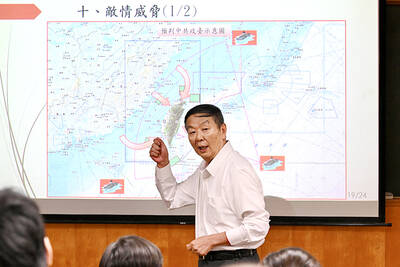
RETHINK? The defense ministry and Navy Command Headquarters could take over the indigenous submarine project and change its production timeline, a source said Admiral Huang Shu-kuang’s (黃曙光) resignation as head of the Indigenous Submarine Program and as a member of the National Security Council could affect the production of submarines, a source said yesterday. Huang in a statement last night said he had decided to resign due to national security concerns while expressing the hope that it would put a stop to political wrangling that only undermines the advancement of the nation’s defense capabilities. Taiwan People’s Party Legislator Vivian Huang (黃珊珊) yesterday said that the admiral, her older brother, felt it was time for him to step down and that he had completed what he

Taiwan has experienced its most significant improvement in the QS World University Rankings by Subject, data provided on Sunday by international higher education analyst Quacquarelli Symonds (QS) showed. Compared with last year’s edition of the rankings, which measure academic excellence and influence, Taiwanese universities made great improvements in the H Index metric, which evaluates research productivity and its impact, with a notable 30 percent increase overall, QS said. Taiwanese universities also made notable progress in the Citations per Paper metric, which measures the impact of research, achieving a 13 percent increase. Taiwanese universities gained 10 percent in Academic Reputation, but declined 18 percent
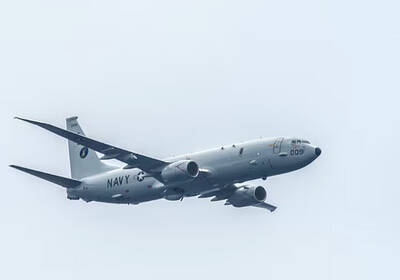
CHINA REACTS: The patrol and reconnaissance plane ‘transited the Taiwan Strait in international airspace,’ the 7th Fleet said, while Taipei said it saw nothing unusual The US 7th Fleet yesterday said that a US Navy P-8A Poseidon flew through the Taiwan Strait, a day after US and Chinese defense heads held their first talks since November 2022 in an effort to reduce regional tensions. The patrol and reconnaissance plane “transited the Taiwan Strait in international airspace,” the 7th Fleet said in a news release. “By operating within the Taiwan Strait in accordance with international law, the United States upholds the navigational rights and freedoms of all nations.” In a separate statement, the Ministry of National Defense said that it monitored nearby waters and airspace as the aircraft
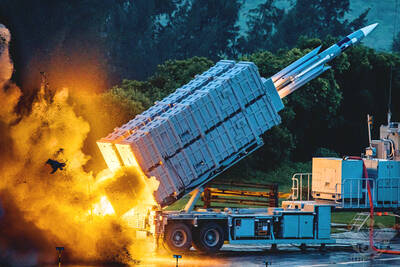
UNDER DISCUSSION: The combatant command would integrate fast attack boat and anti-ship missile groups to defend waters closest to the coastline, a source said The military could establish a new combatant command as early as 2026, which would be tasked with defending Taiwan’s territorial waters 24 nautical miles (44.4km) from the nation’s coastline, a source familiar with the matter said yesterday. The new command, which would fall under the Naval Command Headquarters, would be led by a vice admiral and integrate existing fast attack boat and anti-ship missile groups, along with the Naval Maritime Surveillance and Reconnaissance Command, said the source, who asked to remain anonymous. It could be launched by 2026, but details are being discussed and no final timetable has been announced, the source


 RSS
RSS