


The Executive Yuan has reached an internal consensus to scrap the Mongolian and Tibetan Affairs Commission (蒙藏委員會) as part of the government's downsizing plan, the Chinese-language Liberty Times reported yesterday.
The news came one month after the Cabinet's revision of a bylaw effectively excluding Outer Mongolia from ROC territory.
A consensus was reached at a meeting on government reforms on Saturday to reduce the number of ministries and councils to between 20 and 23, down from the current 36, according to the report.
The new government reforms will not start until May 2004.
A total of three proposals were submitted at the meeting, all of which include plans to abolish the Mongolian and Tibetan commission. The proposals also recommend that the commission's operations be merged into the Ministry of Foreign Affairs, the Mainland Affairs Council (MAC) or an ad hoc task force under the Presidential Office.
The commission's chairman, Hsu Chih-hsiung (
Hsu recommended merging it with the MAC and creating a "Mainland, Mongolian and Tibetan affairs commission."
But the move will be tantamount to putting Beijing on the same status as Ulan Bator and is likely to anger the former.
Another option considered earlier was to merge it with the Hakka and Aboriginal affairs commissions and create an "ethnic affairs commission."
However, the option became void after President Chen Shui-bian (
On Jan. 31, the Cabinet approved an MAC-proposed amendment to the Statutes Governing Relations between the People on Both Sides of the Taiwan Strait (
The amendment will allow the government to view Mongolians as foreigners and issue visas to them as such.
Whether Mongolia, better known in Taiwan as "Outer Mongolia," is part of the ROC has been a long-running debate in Taiwan even though Mongolia declared independence from China in 1911.
The KMT government did not recognize the country until 1946.
Under pressure from the Allied countries around the end of World War II, the KMT government signed a treaty with the Soviet Union in August 1945.
In the treaty, the KMT government agreed to recognize Mongolia's independence if a plebiscite confirmed the Mongolian people's desire for such.
Mongolia held a referendum in October that year and the electorate overwhelmingly voted for independence from China.
The KMT government recognized Mongolia's independence in January 1946.
However, after losing the Chinese civil war to the Communists and fleeing to Taiwan in 1949, the KMT regime back tracked on recognizing the Sino-Soviet treaty in addition to Mongolia's independence.
The Chinese Communist Party recognized Ulan Bator's independence soon after taking power in 1949.
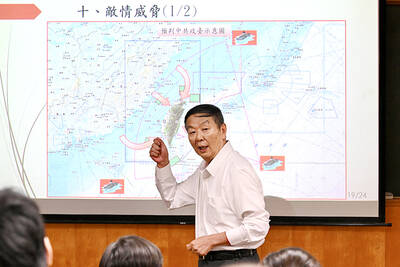
RETHINK? The defense ministry and Navy Command Headquarters could take over the indigenous submarine project and change its production timeline, a source said Admiral Huang Shu-kuang’s (黃曙光) resignation as head of the Indigenous Submarine Program and as a member of the National Security Council could affect the production of submarines, a source said yesterday. Huang in a statement last night said he had decided to resign due to national security concerns while expressing the hope that it would put a stop to political wrangling that only undermines the advancement of the nation’s defense capabilities. Taiwan People’s Party Legislator Vivian Huang (黃珊珊) yesterday said that the admiral, her older brother, felt it was time for him to step down and that he had completed what he
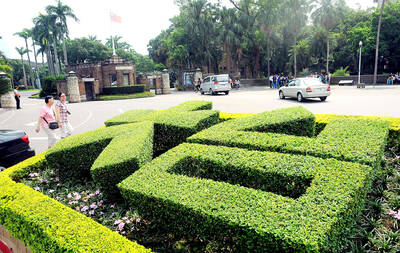
Taiwan has experienced its most significant improvement in the QS World University Rankings by Subject, data provided on Sunday by international higher education analyst Quacquarelli Symonds (QS) showed. Compared with last year’s edition of the rankings, which measure academic excellence and influence, Taiwanese universities made great improvements in the H Index metric, which evaluates research productivity and its impact, with a notable 30 percent increase overall, QS said. Taiwanese universities also made notable progress in the Citations per Paper metric, which measures the impact of research, achieving a 13 percent increase. Taiwanese universities gained 10 percent in Academic Reputation, but declined 18 percent
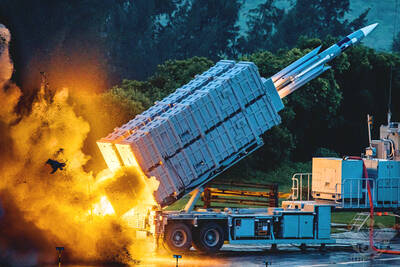
UNDER DISCUSSION: The combatant command would integrate fast attack boat and anti-ship missile groups to defend waters closest to the coastline, a source said The military could establish a new combatant command as early as 2026, which would be tasked with defending Taiwan’s territorial waters 24 nautical miles (44.4km) from the nation’s coastline, a source familiar with the matter said yesterday. The new command, which would fall under the Naval Command Headquarters, would be led by a vice admiral and integrate existing fast attack boat and anti-ship missile groups, along with the Naval Maritime Surveillance and Reconnaissance Command, said the source, who asked to remain anonymous. It could be launched by 2026, but details are being discussed and no final timetable has been announced, the source
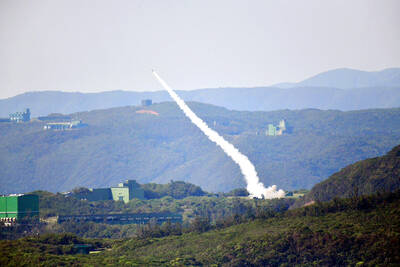
SHOT IN THE ARM: The new system can be integrated with Avenger and Stinger missiles to bolster regional air defense capabilities, a defense ministry report said Domestically developed Land Sword II (陸射劍二) missiles were successfully launched and hit target drones during a live-fire exercise at the Jiupeng Military Base in Pingtung County yesterday. The missiles, developed by the Chungshan Institute of Science and Technology (CSIST), were originally scheduled to launch on Tuesday last week, after the Tomb Sweeping Day holiday long weekend, but were postponed to yesterday due to weather conditions. Local residents and military enthusiasts gathered outside the base to watch the missile tests, with the first one launching at 9:10am. The Land Sword II system, which is derived from the Sky Sword II (天劍二) series, was turned


 RSS
RSS