


The KMT elected members of its Central Committee and Central Standing Committee yesterday -- with a growing number of lawmakers filling important seats within the party.
In the election of the party's 31 core Central Standing Committee seats, 16 went to lawmakers. Of the 60 lawmakers who stood in the race for Central Committee, 58 were elected. The results of the elections were widely seen as a sign of the growing importance of lawmakers to the party.
Following the KMT's loss in last year's presidential election, the Legislative Yuan has become the party's last source of power. Yesterday's congress was also an important step for the party as it prepared for the year-end legislative elections.
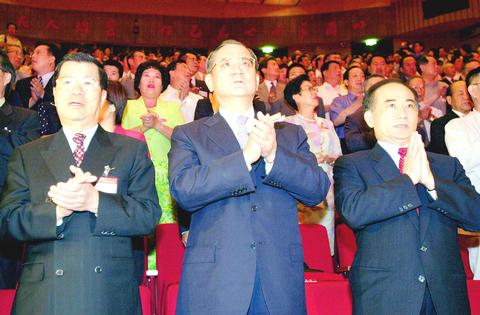
PHOTO: GEORGE TSORNG, TAIPEI TIMES
"The KMT will rise up again and take back power," Chairman Lien Chan (
But not every lawmaker was satisfied with the elections. KMT lawmaker Chen Hsueh-hseng (
Chen accused the party of using a "suggestion" list for the election that identified 25 members the party's top leadership wanted to see chosen as among the group's 31 members. "The KMT continues to follow the practices of the past," Chen said angrily.
Lien sat nearby with a serious and stern look on his face. Chen was not elected to the central standing committee, though he placed 30th in the standing committee elections.
Party secretary Lin Feng-cheng (
In the election of 210 Central Committee members yesterday morning, KMT poster boy and Taipei City Mayor Ma Ying-jeou (
Ma garnered more than 1,000 votes, setting the tongues wagging that the mayor may be a possible candidate to represent the party in the 2004 presidential election.
But Ma shrugged off the results yesterday. "The most important thing to the party is how to unite, and my position in this competition is really not important," he said.
Members close to ex-president Lee Teng-hui (李登輝) were low in the rankings. Because Lee is backing a new, rival party, the performance of party members who have close ties to the former president drew attention.
Liu Tai-ying (
Some said Liu's placing indicated that the KMT was attempting to eliminate Lee's influence from the party, but Liu offered a different explanation for his showing.
"I'm glad to be elected, since I hardly promoted myself at all for the election," Liu said. "I don't know who those members of Lee's faction really are," he said, coyly.
While Lee's faction was pushed away from the party's center stage, Chiang Kai-shek's (
The illegitimate son of late president Chiang Ching-kuo (蔣經國), John Chang (章孝嚴), finished fifth in the elections with 896 votes and plans to run for the year-end legislative elections. Chiang's daughter-in-law, Chiang Fang Chih-yi (蔣方智怡), an overseas delegate, finished 21st in the election.
Also See Story:
KMT failure may mean the end of Lien
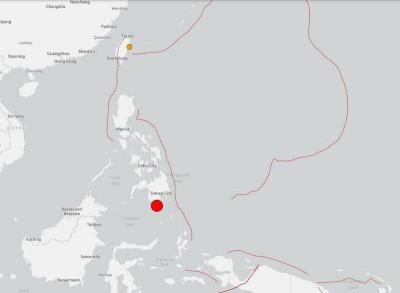
A magnitude 7.8 earthquake struck off the southern coast of Mindanao in the Philippines at 7:38am today, prompting the US Tsunami Warning System to issue an alert for neighboring countries, including Taiwan. The system issued a purple alert indicating a "tsunami threat." The potential threat zone includes Taiwan, the Philippines, Papua New Guinea, Yap and Palau. Philippine authorities were assessing the damage from the quake, with the office of civil defense seeking to verifying initial reports that 15 people had been killed and 129 injured in the region, mostly from falling debris. Arlene Hollero, disaster chief of Maasim town in the Philippines' Sarangani Province,
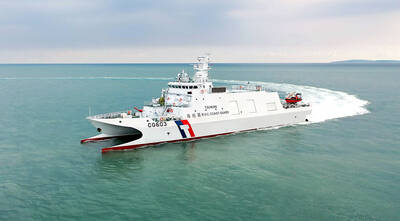
‘GRAY ZONE’ PRESSURE: Beijing’s activities are intended to create the deceitful impression that China has jurisdiction over the area around Taiwan, the CGA said Taiwan’s rights over its territorial waters and exclusive economic zone must not be violated by any country, the Mainland Affairs Council said yesterday, adding that it will not accept any unprovoked actions. The council issued the remarks in response to the China Coast Guard conducting maritime enforcement drills near eastern Taiwan and claiming to fully exercise China’s maritime administrative law enforcement authority. The Coast Guard Administration (CGA) has been closely monitoring the situation and is taking concrete steps to defend the nation’s sovereignty and secure its waters, the council said. China has no sovereign rights over the waters off eastern
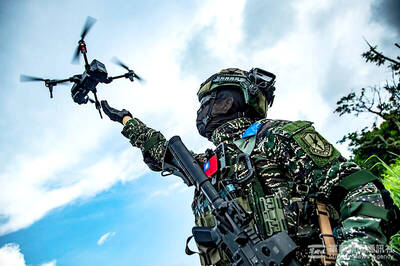
RESILIENCE: Taiwan plays a key role in semiconductors, energy, information infrastructure and advanced manufacturing, AIT Director Raymond Greene said Taiwan’s continued investment in deterrence and resilience remains vital, especially in uncrewed systems and other emerging technologies, American Institute in Taiwan (AIT) Director Raymond Greene said yesterday. Greene made the remarks at the annual National Strategic Summit on Supply Chain Resilience held by the Research Institute for Democracy, Society and Emerging Technology (DSET), a government-backed think tank. As Taiwan last year became the US’ fourth-largest trading partner and supply chain security is becoming more important, cooperation in emerging technologies continues to deepen between the two countries, he said. The US is committed to accelerating innovation, building key infrastructure, strengthening cooperation
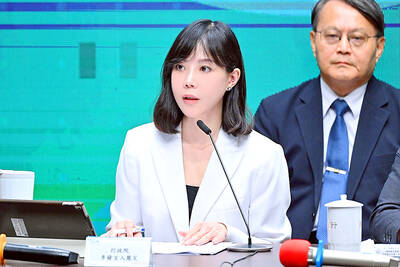
RIGHT DIRECTION: Taiwan’s efforts to prevent forced labor include a proposal to ‘fully prohibit’ employers from withholding workers’ documents, an official said Taiwan is to establish a mechanism to restrict imports of goods linked to forced labor, the Executive Yuan said yesterday, after the US proposed imposing additional tariffs on Taiwanese goods over labor concerns. “The Ministry of Labor and the Ministry of Economic Affairs are to establish an interministerial review procedure,” Executive Yuan spokesperson Michelle Lee (李慧芝) said at a news briefing in Taipei. “The government is to use the Foreign Trade Act [貿易法] as the legal basis to restrict imports of goods produced with forced labor” and bring its supply chain governance more in line with international standards on human rights, resilience


 RSS
RSS