


A team of economic pundits criticized President Chen Shui-bian's (
Chen made the controversial comments at the opening of the Economic Development Advisory Conference on Sunday, saying that even if China has overtaken Taiwan "by a few stages" in economic development, Taiwan "cannot evade fighting an economic war" with China.
Responding to the conference, several prominent academics yesterday attended a seminar organized by the National Policy Research Foundation, a KMT think tank.
One pundit at the event said DPP party politics are getting in the way of economic reform.
"President Chen is restricting the country by not allowing trade with China," said Lee Tong-how (
"The [reason that the] administration organized the conference illuminates another issue," he said.
"Currently the administration is not looking for solutions [to economic problems]. Instead it want academics and others to address the problem and then provide solutions and hand those to the administration for execution. It's irresponsible politics.
"Meanwhile, it appears that the administration only hires obedient people who conform to its ideologies," said Lee.
Other pundits at yesterday's meeting also criticized the attitude of government officials.
"A number of government officials recently criticized many pundits as being too pessimistic concerning the prospects of the local economy. But actually it shows ignorance among economic officials within the DPP administration," said Norman Yin (殷乃平), a banking professor at National Chengchi University.
"When all the economic indicators are declining, the economic officials still say that the economy could grow. I hope that the Directorate General of Budget, Accounting and Statistics will disclose the real economic indicators, instead of covering up the figures," Yin said.
Meanwhile, another academic at yesterday's meeting said the conference should work on attracting new investment if it wants to turn the economy around.
"The most important issue for the conference is to solve the issue of domestic investment. How to improve the current investment environment to attract foreign investment and to solve domestic unemployment problems should be on the top of the meeting's list," said Paul Chiu (邱正雄), a former finance minister who chaired the KMT-sponsored meeting.
"To suspend levying the securities transaction tax is not a cure for the stock market. However, the tax system on the securities should also be reviewed [by the conference]," said Chiu.
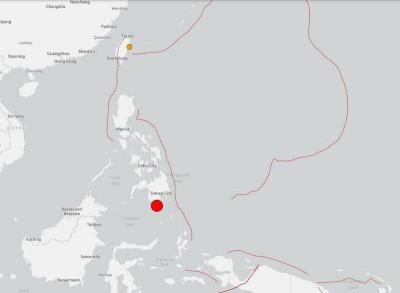
A magnitude 7.8 earthquake struck off the southern coast of Mindanao in the Philippines at 7:38am today, prompting the US Tsunami Warning System to issue an alert for neighboring countries, including Taiwan. The system issued a purple alert indicating a "tsunami threat." The potential threat zone includes Taiwan, the Philippines, Papua New Guinea, Yap and Palau. Philippine authorities were assessing the damage from the quake, with the office of civil defense seeking to verifying initial reports that 15 people had been killed and 129 injured in the region, mostly from falling debris. Arlene Hollero, disaster chief of Maasim town in the Philippines' Sarangani Province,
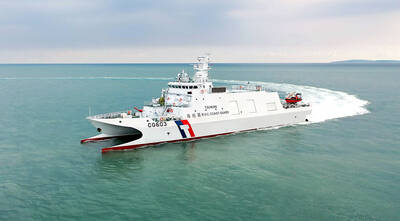
‘GRAY ZONE’ PRESSURE: Beijing’s activities are intended to create the deceitful impression that China has jurisdiction over the area around Taiwan, the CGA said Taiwan’s rights over its territorial waters and exclusive economic zone must not be violated by any country, the Mainland Affairs Council said yesterday, adding that it will not accept any unprovoked actions. The council issued the remarks in response to the China Coast Guard conducting maritime enforcement drills near eastern Taiwan and claiming to fully exercise China’s maritime administrative law enforcement authority. The Coast Guard Administration (CGA) has been closely monitoring the situation and is taking concrete steps to defend the nation’s sovereignty and secure its waters, the council said. China has no sovereign rights over the waters off eastern

RESILIENCE: Taiwan plays a key role in semiconductors, energy, information infrastructure and advanced manufacturing, AIT Director Raymond Greene said Taiwan’s continued investment in deterrence and resilience remains vital, especially in uncrewed systems and other emerging technologies, American Institute in Taiwan (AIT) Director Raymond Greene said yesterday. Greene made the remarks at the annual National Strategic Summit on Supply Chain Resilience held by the Research Institute for Democracy, Society and Emerging Technology (DSET), a government-backed think tank. As Taiwan last year became the US’ fourth-largest trading partner and supply chain security is becoming more important, cooperation in emerging technologies continues to deepen between the two countries, he said. The US is committed to accelerating innovation, building key infrastructure, strengthening cooperation

RIGHT DIRECTION: Taiwan’s efforts to prevent forced labor include a proposal to ‘fully prohibit’ employers from withholding workers’ documents, an official said Taiwan is to establish a mechanism to restrict imports of goods linked to forced labor, the Executive Yuan said yesterday, after the US proposed imposing additional tariffs on Taiwanese goods over labor concerns. “The Ministry of Labor and the Ministry of Economic Affairs are to establish an interministerial review procedure,” Executive Yuan spokesperson Michelle Lee (李慧芝) said at a news briefing in Taipei. “The government is to use the Foreign Trade Act [貿易法] as the legal basis to restrict imports of goods produced with forced labor” and bring its supply chain governance more in line with international standards on human rights, resilience


 RSS
RSS