


Founded by a native of Ho Chi Minh City, the month-old A-ching (阿菁) is a modest hole-in-the-wall on Taishun Street (泰順街), but the restaurant’s short menu is packed with low-priced Vietnamese classics, including a delicious banh mi, or baguette sandwich, for just NT$50, and sweet Vietnamese coffee for NT$35 a cup.
The restaurant’s banh mi (法國麵包, NT$50) is the highlight of A-ching’s streamlined menu. The fresh baguette is toasted until the crust is flaky while the inside remains soft and chewy, and stuffed with julienned pickled carrots and daikon radish, large strips of sweet pickled cucumber, fresh cilantro and pieces of cha lua, a light sausage made from pounded pork, fish sauce and potato starch. The cha lua makes the sandwich taste rich and substantial, but its springy texture, the crunchy veggies and the baguette’s paper-thin crust make the banh mi a wonderfully light meal.
A-ching’s spring rolls (生菜春捲, NT$50) are also very good. Rice vermicelli, shrimp, pork and scallions are bundled into rice paper and served with a sweet-and-sour dipping sauce made from chopped chili, garlic and vinegar. For take-out diners, the spring rolls are wrapped in saran wrap, packed in plastic containers and stored in a refrigerator out front. The rolls are frequently made so the rice paper remains tender instead of drying out and becoming tough and chewy. A fried version (炸春捲) is also available for NT$50. The green papaya salad (涼拌木瓜, NT$50), which is also kept ready-to-serve next to the spring rolls, is another option for health-conscious diners. The crunchy stripes of unripened papaya are topped with toasted peanuts, carrots, chopped pork, cilantro and shrimp and soaked in a tangy sauce. If you order the salad for takeout, make sure to ask for some slices of lime; the salad tastes best with lime juice drizzled over it.
Ironically, A-ching’s two pho selections, which headline its menu, pale in comparison to its side dishes. The pork pho (豬肉河粉, NT$70) and beef pho (牛肉河粉, NT$70) are both served with big portions of handmade rice noodles, but only a few lonely bits of overcooked meat that are lost underneath mounds of cilantro and bean sprouts.
The only beverage available at A-ching is Vietnamese coffee (越南咖啡, NT$35), which is flavored with a liberal dousing of sweetened condensed milk and served on ice. A-ching’s version is satisfying for sweet tooths, but surprisingly mild, which might come as a disappointment to people who like their coffee to leave them bouncing off the walls.
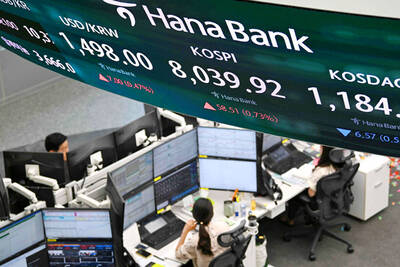
Taiwan’s overtaking of South Korea in GDP per capita is not a temporary anomaly, but the result of deeper structural problems in the South Korean economy says Chang Young-chul, the former CEO of Korea Asset Management Corp. Chang says that while it reflects Taiwan’s own gains, it also highlights weakening growth momentum in South Korea. As design and foundry capabilities become more important in the AI era, Seoul risks losing competitiveness if it relies too heavily on memory chips. IMF forecasts showing Taiwan widening its lead over South Korea have fueled debate in Seoul over memory chip dependence, industrial policy and
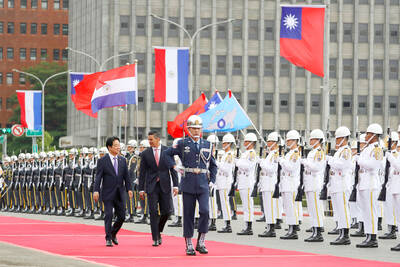
“China wants to unify with Taiwan at the lowest possible cost, and it currently believes that unification will become easier and less costly as time passes,” wrote Amanda Hsiao (蕭嫣然) and Bonnie Glaser in Foreign Affairs (“Why China Waits”) this month, describing how the People’s Republic of China (PRC) is playing the long game in its quest to seize Taiwan. This has been a favorite claim of many writers over the years, easy to argue because it is so trite. Very obviously, if the PRC isn’t attacking Taiwan, it is waiting. But for what? Hsiao and Glaser’s main point is trivial,

And so, in the wake of US President Donald Trump’s trip to the People’s Republic of China (PRC), all the experts on the Strait of Hormuz suddenly became experts on US-China-Taiwan relations. The Internet has certainly expanded human knowledge. Lots of these sudden experts made noise this week about Trump’s words after the meeting with PRC dictator Xi Jin-ping (習近平). Trump is going to sell out Taiwan! Longtime Taiwan commentator J. Michael Cole summed the situation up neatly in the Guardian: “We need to keep in mind that he has a tendency to say many things — sometimes contradicting himself within

It took 12 years and months of standing in the same mountain location for director Liang Chieh-te (梁皆得) to capture a few seconds of footage: Taiwan’s largest resident raptor locking talons with its mate and spinning through the air in a courtship ritual. With only about 1,000 left in the wild and very short flight windows, the mountain hawk-eagle remains among Taiwan’s most elusive birds. The species generally produces only one offspring per year. Using forest cameras, the film crew and research teams document the arduous process the monogamous pairs go through for the chick to hatch and grow up, weathering


 RSS
RSS