


Fred Perry is best known today for the chain of leisurewear that bears his illustrious name. But almost three quarters of a century ago, he set Wimbledon ablaze when he won the men’s singles — a feat that no Briton has achieved since. He was feted internationally, but in the genteel world of the 1930s no mention was made of his extra-ordinary love life.
The first biography of the tennis star, The Last Champion, paints Perry as the heartthrob of his day: flirting with Hollywood and dating some of the world’s most beautiful women, while governments sought his services for propaganda purposes.
The book, written by Jon Henderson, the Observer’s tennis correspondent, spells out how Perry’s glamorous life was a far cry from his humble origins: his father, Sam, had worked in a factory before becoming a powerful figure in the Co-operative movement and a Labour member of parliament. But Perry’s immense talents — first at table tennis, eventually becoming world champion; then at lawn tennis — propelled him to international stardom.
It helped that Perry had matinee-idol looks. “He is 6ft (1.82m) tall, weighs around 12 stone (76kgs); sculptors declare his physique perfect ... women fall for him like ninepins,” Henderson quotes one star-struck commentator as having said. “When he goes to Hollywood, male film stars go and sulk in Nevada.”
Away from the tennis courts, women and the silver screen were Perry’s great loves. Once, while staying at a Boston hotel, Perry and an American tennis player tied bed sheets together to lower themselves down to the floor below to make a social call on two female players.
Perry was briefly engaged to an English actress, Mary Lawson, but went on to marry four times. His first marriage was to divorcee Helen Vinson, an actress from Texas; the second, to Sandra Breaux, a model with film ambitions; and the third to Lorraine Walsh, whose drink problem is thought to have contributed to their break-up. All three maintained that Perry had been cruel to them, although Henderson suggests this was largely legalese employed by their divorce lawyers. Perry’s fourth wife, Barbara Rise Friedman, stayed with him for 40 years.
But the book’s most intriguing suggestion is that Perry enjoyed dalliances with some of Hollywood’s leading ladies. He briefly dated the original blonde bombshell Jean Harlow, of whom the Hollywood trade paper Variety once noted: “It doesn’t matter what degree of talent she possesses ... nobody ever starved possessing what she’s got.”
He went on to become a close confidant of screen star Bette Davis, of whom he said: “We were always easy and natural in each other’s company ... Not exactly family, but almost.”
Perry also romanced Marlene Dietrich while coaching her at tennis. According to Dietrich’s daughter, Maria Riva: “Fred Perry taught my mother to play tennis with great patience and lots of little passionate hugs, punctuated with rapid kissing between flying balls.”
At the time, Dietrich was also engaged in a lesbian affair with Mercedes de Acosta, a Cuban-American poet referred to as the “smitten Spaniard” by Riva. “I sort of hoped the smitten Spaniard might arrive and witness the Englishman at work, but my mother was very skilful in keeping her admirers from overlapping,” said the star’s daughter.
Hollywood leading man Clark Gable’s former lover Loretta Young also set tongues wagging when she turned up on Perry’s arm at Wimbledon, although she played down suggestions of a serious romance. “You can bank on it that I’m not going back to America as Mrs Perry,” she told the press.
At the height of his career, film studio RKO offered Perry a contract for two movies at US$50,000 each, but the Lawn Tennis Association, the amateur game’s governing body in England, talked him out of it.
Perry’s on-court prowess was second to none. “Perry’s forehand was merely the deadliest weapon in an armory full of menace,” Henderson notes. “He executed his backhand — distinguished by its short backswing — with the powerful efficiency of a butcher laying into a carcass.”
It was this ability that saw Perry, a teetotal pipe-smoker, win Wimbledon in 1934, 1935 and 1936, completing a sporting hat-trick that made him one of the world’s first truly international sportsmen.
In 1937, he turned professional, after becoming disillusioned with the LTA, upset that it had done little to offer him incentives to remain an amateur. He hired an American promoter and took US citizenship the following year.
Henderson believes that decision, compounded by his desire to stay in America when war broke out, cost Perry a knighthood. He was called up in 1942 and served in the US Air Force, spending most of the war in California as the military hierarchy tried, unsuccessfully, to find a propaganda role for him.
Perry’s failure to secure a knighthood was in some ways in keeping with his character. He had always felt like an outsider. His friend Dan Maskell, the veteran BBC tennis commentator, recalled: “He was not typically British; there was an aggressiveness and dedication about him that was out of step with the contemporary attitude towards sport.”
Indeed, Perry was even known to deviate from the very English sense of fair play. American champion Jack Kramer recalled how Perry would antagonize his opponents by saying “very clevah” whenever an opponent played a particularly good shot. “’Very clevah’ drove a lot of opponents crazy,” Kramer said.
When Perry turned professional, an official from the International Lawn Tennis Club of Great Britain wrote to inform him that he should never wear the club sweater again. “I made sure he wouldn’t have to worry about that,” Perry said. “I sent a sleeve to him as a present.”
Though a perennially disappointed nation desperately hopes that a successor will now emerge to emulate Perry’s success, aficionados of the sport doubt that England will see his like again.
At Perry’s funeral in 1995, a friend recalled how “simply fun to be around” Perry had been — friendly and a bit of a rascal. He told how one day Perry walked into a locker room and declared: “Thank God I’m not playing me today.”
In 1957, more than 20 years after winning his last grand slam title, Perry was approached by a Soviet delegation to help the USSR challenge the west’s hegemony at tennis. He made two visits to advise the Soviet bloc countries.
On his first, he pushed his hosts to make a grand political gesture, calling on them to allow a player to compete at Wimbledon. Anna Dmitrieva, 17, became that player, and reached the final in the junior tournament in 1958.

“Taiwan’s Opposition Leader Comes to US With a Message Straight Out of Beijing” read a May 31 headline in the Wall Street Journal. Top US administration officials and members of Congress almost certainly read the WSJ, and if there was a bullet point takeaway that people in Washington should absorb ahead of Chinese Nationalist Party (KMT) Chair Cheng Li-wun’s (鄭麗文) arrival in DC on June 9, that headline is it. The last few columns have discussed this very topic, and the timing is not coincidental. While those top officials likely do not read the Taipei Times, judging by the number

With weighty, anxiety-inducing geopolitical topics dominating the headlines, checking in on the wild and weird state of local politics can take some of the edge off. This November’s elections will determine who will be in charge of fixing potholes in your neighborhood, not the potholes in Taiwan’s complicated geopolitical space. Recently, after an online interview with a Taipei-based journalist, I commented that Taipei journalists never go further than the MRT can take them. He laughed and agreed. Naturally, the Taipei mayoral race is eating up much of the press attention. TAIPEI CITY Democratic Progressive Party (DPP) candidate Puma Shen (沈伯洋) has
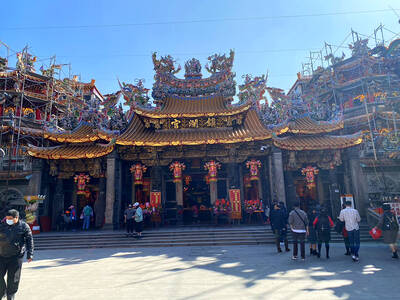
In December of 2008 Lee E-tin (李乙廷), a Miaoli county legislative hopeful, was convicted of vote-buying. Rather than buy votes retail, voter by voter, in the usual manner, Lee had done it wholesale, in a commendably efficient manner: he had visited local temples and made donations to gain their support. Because he did not normally make donations to temples, the court ruled he was attempting to improperly influence voter behavior. The case indicates how important temples are in influencing political life. Both judge and politician appeared to see them in the same way. Beijing sees them that way as well. Democratic Progressive
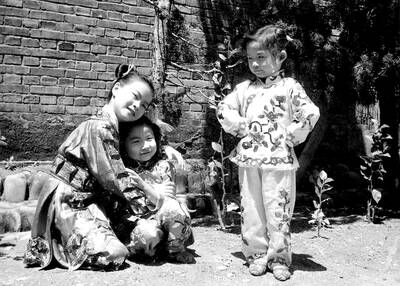
Audiences in Leicester, Cardiff, London and Sheffield will this month gather to watch a series of black-and-white Taiwanese-language films made more than 70 years ago. On the surface, these screenings commemorate the seventieth anniversary of taiyupian (台語片) — Taiwanese-language cinema. Yet the significance of these events extends far beyond nostalgia or film history. They represent a remarkable chapter in Taiwan’s ongoing effort to recover, preserve and reinterpret a cultural heritage that was once thought to have largely disappeared. The centerpiece of the program is the Ho Chi-ming (何基明) directed Xue Pinggui and Wang Baochuan (薛平貴與王寶釧), a film produced in 1955 and


 RSS
RSS