


In 1964, George Hamilton appeared in a bit part on a television series about three suave con-men cousins. The leading men of The Rogues were David Niven, Gig Young and Charles Boyer, and they kept busy trying to upstage one another. The cocked eyebrow, the attention-getting cough, the scornful sneer: Hamilton learned those debonair tricks from the experts and has spent a lifetime putting them to sneakily good use. When it comes to trade secrets, he also likes to ask himself, “What would Gloria Swanson do?”
One thing Swanson did was publish a memoir (Swanson on Swanson) equally devoted to image burnishing and indiscretion. It was in the tradition of My Wicked, Wicked Ways by Errol Flynn, another member of Hamilton’s personal pantheon. Now 69, at a point in his career where a stint on Dancing With the Stars qualifies as a recent triumph, Hamilton is ready to spill some beans of his own.
He’s not about to give up his best secrets. You won’t learn much about either his taxidermist or his “handsome cinnamon brown” tan. Nor will you be entirely privy to the maneuvers that kept him fiscally afloat and Rolls-Royce-ready as he squired some of the world’s most fabulous, maternal divas from camera to camera. There are certain details about Imelda Marcos, Elizabeth Taylor, Lynda Bird Johnson, Merle Oberon and Princess Soraya of Iran that he will never, thank goodness, reveal.
But his book, Don’t Mind if I Do, goes a long way toward explaining Hamilton’s flashy charm. And the life he has created, in the flesh and now on the page, can be better than fiction. How do we know? Because another of the women on that long list of wealthy conquests was Danielle Steel, the nonstop romance novelist. Hamilton spent time with her between husband No. 4, a Napa Valley vintner, and husband No. 5, a Silicon Valley financier. “I hope I was a peak,” he says, while also noting that Steel used him as material and treated him like homework. Here, after all, was a jet-setting, lady-killing, martini-shaking, devilishly handsome Hollywood luminary of the sort Steel usually makes up.
But nobody outdoes Hamilton in milking his life story. Amid an onslaught of pretty-boy memoirs (including books by Tony Curtis and Robert Wagner, both of whose stories overlap Hamilton’s), his is the one with the most flair, partly because of his writing collaborator, William Stadiem. Stadiem has moved seamlessly from the ring-a-ding-ding of Mr S, a memoir he wrote with Frank Sinatra’s loose-lipped valet, George Jacobs, to the savvy Hamilton, who briefly hired Jacobs but soon figured out that a swinging, tattletale employee was the rare luxury he couldn’t afford.
Propelled by Stadiem’s ear for dishy anecdotes and casual regard for the truth (there are some glaringly obvious exaggerations here, particularly one involving a frozen 16kg turkey), Don’t Mind if I Do begins by explaining the Hamilton family pathology. The actor’s father was a bandleader whose footloose good times impressed his middle son mightily and led to a divorce. His mother, nicknamed Teeny, was a much-married, gold-digging Southern glamour girl who contributed greatly to what the actor calls his case of “plantation syndrome.” Teeny and their three sons were constantly on the move, bouncing from Beekman Place to Beacon Hill to Beverly Hills, teaching Hamilton the importance of living far beyond his means. He now ascribes his showy, clotheshorse style to a way of attracting his mother’s wayward attention.
Sample Hamilton family story: Hamilton once walked into a Spanish brothel to find his mother at the bar, drinking with Ava Gardner. “What in the world are you doing here?” he asked her in astonishment. “I should ask the same of you,” his mother replied.
Don’t Mind if I Do is remarkably mum about the ways in which the young Hamilton’s devastating good looks caught the notice of male directors when he hit Hollywood. (Vincente Minnelli, described by Hamilton as effete, did see in him “the quality of a privileged but sensitive mama’s boy.”) In any case, Hamilton parlayed his mother’s social connections and his own wiles into an inexplicably enduring film career. He now freely acknowledges that there were plenty of rich, aristocratic thrill-seekers eager to finance films, and that he appealed to them. But he was both lucky and smart. He knew that making outrageous demands signaled Hollywood status, and he played that trick to the hilt. “Five hundred a week is nothing,” he told MGM, in one ploy to double his salary. “My mother makes that.” Hamilton’s book also describes his strategic eagerness to be the youngest, most impeccably polite actor in the room and a tame alternative to the James Dean types who dominated Hollywood in the late 1950s. His skills as an escort (and, he says, a Don Juan) were just as carefully honed. Glamorous women liked to be listened to and appreciated, and he had been brought up with those skills. Some women also sought his advice when it came to beauty secrets. This was something about which Hamilton knew a lot.
Caddishness was part of the formula, too. (As a teenager, Hamilton had sex with his stepmother. Put that in the circular more-than-we-need-to-know file.) There is a sleaze factor to some of his stories, like the suggestion that an emissary for the jeweler Harry Winston used high-class prostitutes to create matrimonial guilt and sell guilty husbands gifts for their wives. But the reigning mood of this book, like Hamilton’s approach to turning Dracula (Love at First Bite) and Zorro (Zorro, the Gay Blade) into camp classics, is self-deprecating good humor. And its stories are star-studded and wild, offering hearty proof of its chief claim. Hamilton always wanted more than mere Hollywood glamour. He wanted to learn “how to really milk it to the max.”
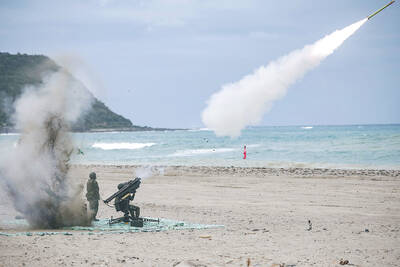
In late October of 1873 the government of Japan decided against sending a military expedition to Korea to force that nation to open trade relations. Across the government supporters of the expedition resigned immediately. The spectacle of revolt by disaffected samurai began to loom over Japanese politics. In January of 1874 disaffected samurai attacked a senior minister in Tokyo. A month later, a group of pro-Korea expedition and anti-foreign elements from Saga prefecture in Kyushu revolted, driven in part by high food prices stemming from poor harvests. Their leader, according to Edward Drea’s classic Japan’s Imperial Army, was a samurai

The following three paragraphs are just some of what the local Chinese-language press is reporting on breathlessly and following every twist and turn with the eagerness of a soap opera fan. For many English-language readers, it probably comes across as incomprehensibly opaque, so bear with me briefly dear reader: To the surprise of many, former pop singer and Democratic Progressive Party (DPP) ex-lawmaker Yu Tien (余天) of the Taiwan Normal Country Promotion Association (TNCPA) at the last minute dropped out of the running for committee chair of the DPP’s New Taipei City chapter, paving the way for DPP legislator Su
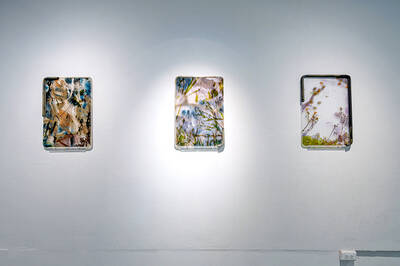
Located down a sideroad in old Wanhua District (萬華區), Waley Art (水谷藝術) has an established reputation for curating some of the more provocative indie art exhibitions in Taipei. And this month is no exception. Beyond the innocuous facade of a shophouse, the full three stories of the gallery space (including the basement) have been taken over by photographs, installation videos and abstract images courtesy of two creatives who hail from the opposite ends of the earth, Taiwan’s Hsu Yi-ting (許懿婷) and Germany’s Benjamin Janzen. “In 2019, I had an art residency in Europe,” Hsu says. “I met Benjamin in the lobby
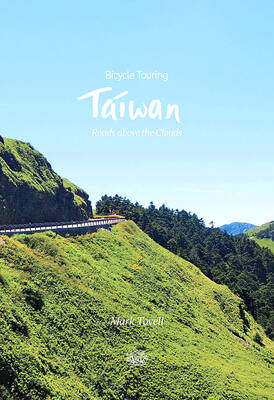
It’s hard to know where to begin with Mark Tovell’s Taiwan: Roads Above the Clouds. Having published a travelogue myself, as well as having contributed to several guidebooks, at first glance Tovell’s book appears to inhabit a middle ground — the kind of hard-to-sell nowheresville publishers detest. Leaf through the pages and you’ll find them suffuse with the purple prose best associated with travel literature: “When the sun is low on a warm, clear morning, and with the heat already rising, we stand at the riverside bike path leading south from Sanxia’s old cobble streets.” Hardly the stuff of your


 RSS
RSS