


On a cold day in January, Dan Stoicescu, a millionaire living in Switzerland, became the second person in the world to buy the full sequence of his own genetic code.
He is also among a relatively small group of individuals who could afford the US$350,000 price tag.
Stoicescu is the first customer of Knome, a company based in Cambridge, Massachusetts, that has promised to parse his genetic blueprint by spring. A Chinese executive has signed on for the same service with Knome's partner, the Beijing Genomics Institute, the company said.
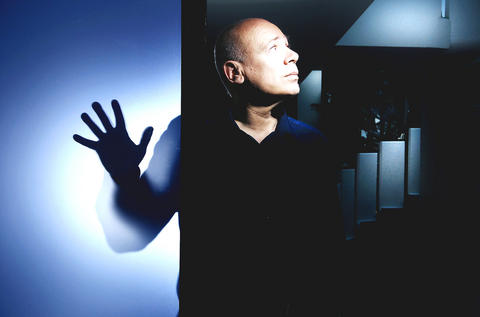
PHOTO: NY TIMES NEWS SERVICE
Scientists have so far unraveled only a handful of complete human genomes, all financed by governments, foundations and corporations in the name of medical research. But as the cost of genome sequencing goes from stratospheric to merely very expensive, it is piquing the interest of a new clientele.
"I'd rather spend my money on my genome than a Bentley or an airplane," said Stoicescu, 56, a biotechnology entrepreneur who retired two years ago after selling his company. He says he will check discoveries about genetic disease risk against his genome sequence daily, "like a stock portfolio."
But while money may buy a full readout of the 6 billion chemical units in an individual's genome, biologists say the super-rich will have to wait like everyone else to learn how the small variations in their sequence influence appearance, behavior, abilities, disease susceptibility and other traits.
"I was in someone's Bentley once - nice car," said James Watson, the co-discoverer of the structure of DNA, whose genome was sequenced last year by a company that donated the US$1.5 million in costs to demonstrate its technology. "Would I rather have my genome sequenced or have a Bentley? Uh, toss up."
He would probably pick the genome, Watson said, because it could reveal a disease-risk gene that one had passed on to one's children, though in his case, it did not. What is needed, he said, is a "Chevrolet genome" that is affordable for everyone.
Biologists have mixed feelings about the emergence of the genome as a luxury item. Some worry that what they have dubbed "genomic elitism" could sour the public on genetic research that has long promised better, individualized health care for all. But others see the boutique genome as something like a US$20 million tourist voyage to space - a necessary rite of passage for technology that may soon be within the grasp of the rest of us.
"We certainly don't want a world where there's a great imbalance of access to comprehensive genetic tests," said Richard Gibbs, director of the human genome sequencing center at Baylor College of Medicine. "But to the extent that this can be seen as an idiosyncratic exercise of curious individuals who can afford it, it could be quite a positive phenomenon."
It was the stream of offers from wealthy individuals to pay the Harvard laboratory of George Church for their personal genome sequences that led Church to co-found Knome last year (most people pronounce it "nome," though he prefers "know-me").
"It was distracting for an academic lab," Church said. "But it made me think it could be a business."
Scientists say they need tens of thousands of genome sequences to be made publicly available to begin to make sense of human variation.
Knome, however, expects many of its customers to insist on keeping their dearly bought genomes private, and provides a decentralized data storage system for that purpose.
Stoicescu said he worried about being seen as self-indulgent (though he donates much more each year to philanthropic causes), egotistical (for obvious reasons) or stupid (the cost of the technology, he knows, is dropping so fast that he would have certainly paid much less by waiting a few months).
But he agreed to be identified to help persuade others to participate. With only four complete human genome sequences announced by scientists around the world - along with the Human Genome Project, which finished assembling a genome drawn from several individuals at a cost of about US$300 million in 2003 - each new one stands to add considerably to the collective knowledge.
"I view it as a kind of sponsorship," he said. "In a way you can also be part of this adventure, which I believe is going to change a lot of things."
Stoicescu, who has a PhD in medicinal chemistry, was born in Romania and lived in the US in the early 1990s before founding Sindan, an oncology products company that he ran for 15 years. Now living with his wife and 12-year-old son in a village outside Geneva, he describes himself as a "transhumanist" who believes that life can be extended through nanotechnology and artificial intelligence, as well as diet and lifestyle adaptations. His genome sequence, he reasons, might give him a better indication of just what those should be. Last fall, Stoicescu paid US$1,000 to get a glimpse of his genetic code from deCODE Genetics. That service, and a similar one offered by 23andMe, looks at close to a million nucleotides on the human genome where DNA is known to differ among people.
But Stoicescu was intrigued by the idea of a more complete picture. "It is only a part of the truth," he said. "Having the full sequence decoded you can be closer to reality."
How close is a matter of much debate. Knome is using a technology that reads the genome in short fragments that can be tricky to assemble. All of the existing sequencing methods have a margin of error, and the fledgling industry has no agreed-on quality standards.
Knome is not the only firm in the private genome business. Illumina, a sequencing firm in San Diego, plans to sell whole genome sequencing to the "rich and famous market" this year, said its chief executive, Jay Flatley. If competition drives prices down, the personal genome may quickly lose its exclusivity. The nonprofit X Prize Foundation is offering US$10 million to the first group to sequence 100 human genomes in 10 days, for US$10,000 or less per genome. The federal government is supporting technology development with an eye to a US$1,000 genome in the next decade.
But for now, Knome's prospective customers are decidedly high-end. The company has been approached by hedge fund managers, Hollywood executives and an individual from the Middle East who could be contacted only through a third party, said Jorge Conde, Knome's chief executive.

In late October of 1873 the government of Japan decided against sending a military expedition to Korea to force that nation to open trade relations. Across the government supporters of the expedition resigned immediately. The spectacle of revolt by disaffected samurai began to loom over Japanese politics. In January of 1874 disaffected samurai attacked a senior minister in Tokyo. A month later, a group of pro-Korea expedition and anti-foreign elements from Saga prefecture in Kyushu revolted, driven in part by high food prices stemming from poor harvests. Their leader, according to Edward Drea’s classic Japan’s Imperial Army, was a samurai

Located down a sideroad in old Wanhua District (萬華區), Waley Art (水谷藝術) has an established reputation for curating some of the more provocative indie art exhibitions in Taipei. And this month is no exception. Beyond the innocuous facade of a shophouse, the full three stories of the gallery space (including the basement) have been taken over by photographs, installation videos and abstract images courtesy of two creatives who hail from the opposite ends of the earth, Taiwan’s Hsu Yi-ting (許懿婷) and Germany’s Benjamin Janzen. “In 2019, I had an art residency in Europe,” Hsu says. “I met Benjamin in the lobby
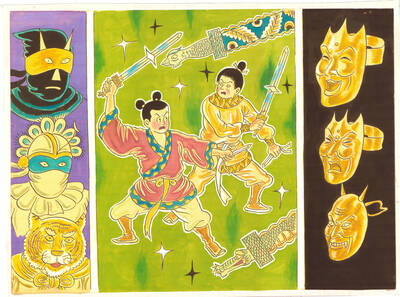
April 22 to April 28 The true identity of the mastermind behind the Demon Gang (魔鬼黨) was undoubtedly on the minds of countless schoolchildren in late 1958. In the days leading up to the big reveal, more than 10,000 guesses were sent to Ta Hwa Publishing Co (大華文化社) for a chance to win prizes. The smash success of the comic series Great Battle Against the Demon Gang (大戰魔鬼黨) came as a surprise to author Yeh Hung-chia (葉宏甲), who had long given up on his dream after being jailed for 10 months in 1947 over political cartoons. Protagonist

Peter Brighton was amazed when he found the giant jackfruit. He had been watching it grow on his farm in far north Queensland, and when it came time to pick it from the tree, it was so heavy it needed two people to do the job. “I was surprised when we cut it off and felt how heavy it was,” he says. “I grabbed it and my wife cut it — couldn’t do it by myself, it took two of us.” Weighing in at 45 kilograms, it is the heaviest jackfruit that Brighton has ever grown on his tropical fruit farm, located


 RSS
RSS