


If the tank can't hold the aggro, then things are going to get nasty for the squishies back with the DDs. If an add joins the mix as well, then it's going to be a wipe.
Experienced online gamers will process these statements with an unconcerned nod of their heads. It's probably no better than gibberish to everyone else. Online games are more than just a hobby for millions of people. They're also a petri dish for entire insider languages between gamers who want to communicate specific information fast. Newcomers to this world will find it a bit easier once they learn at least a few basic terms.
Among the many different kinds of online games, the most successful are the "MMORPGs," or Massive Multiplayer Online Role Playing Games. These are games in which a multitude of players control virtual characters - known as "chars" or "avatars" for short - through adventures in fantasy worlds. It's certainly possible for a gamer to go it on his own, but much of the fun comes through playing in groups. To find those players to make group quests happen, the games all provide some form of chat function.

PHOTO: AFP
To those versed in the lingo, "4/6 LFM tank and DD" is a more scientific notation than lazy shorthand. It represents a want ad with very specific information. The first part of this seeming jumble of letters and numbers, 4/6, indicates that four characters have already come together for what is to be a six-member group. They are looking for two more members to fill out the group (LFM - looking for more). Specifically, they are looking for either tank or damage dealer (DD) characters.
Tank and DD - these refer to the different classes of characters that can be created. It's important to remember that online games usually involve chasing down nasty monsters (usually dubbed "mobs," short for mobile object).
To make the hunt successful, most groups feature a warrior in heavy armor capable of absorbing punishment from the monster - in short, a tank. Each group usually includes at least one healer in the second row to help keep the tanks fresh, using magic or medicine to keep the front line's health points (HP) in the green zone. The DD are responsible for creating high damage-per-second (DPS) numbers to keep the monster's HP headed downward.
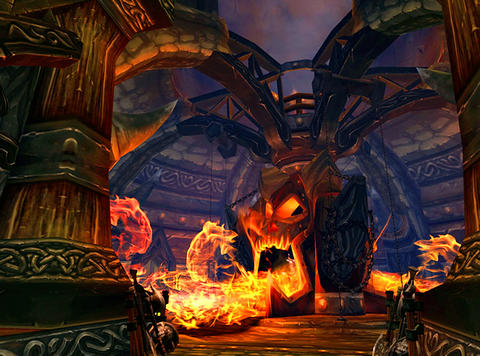
PHOTO: AFP
The tank's job is to take the aggro - lure the monster into applying its aggression exclusively to the tank's armor. If one of the characters wearing only thin cloth robes - a "squishy" - ends up "drawing aggro," that is, ends up the target of the monster's blows, then that character is likely to end up lifeless on the floor in a hurry.
And then there is the "add," or additional, which is what happens when more monsters join a battle after the fighting has begun.
But adds aren't the only thing that can disrupt a game. Behind each avatar is a real-life person, with real-life concerns. Typing "bio" into the chat window freezes a character within the online world and marks the player as "AFK" (away from keyboard) while the player takes care of urgent biological needs. Upon returning, a "re" notice will usually bring in several "WBs" (welcome back messages) from polite players.
With luck, a party will not have been completely demolished by a tough fight, because the returning char was parked in a safe state. With even more luck, that char possesses the ability to resurrect, or "rez," other players. If the members of a group finish a quest, they can then return to the non-player character (NPC, a character not controlled by players) who assigned them the quest.
Completing quests brings XP (experience points), which are needed to develop characters. In many cases quests bring a reward that is "BOP" (bound on pickup): The object is tied to that character, with no option to barter it away to other players with a "WTS" (want to sell) in chat.
Should a player find himself alone after surviving an adventure, he can speed up the search for companions with a "LFG" (looking for group) call.
As odd as many of these terms may be, it only takes a few adventures for even the greenest "noob" (newbie) to become an experienced hero. He can then help the next wave of newcomers learn the lingo of the online role-playing world.
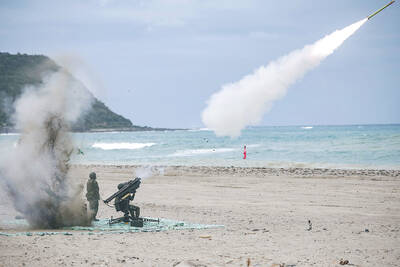
In late October of 1873 the government of Japan decided against sending a military expedition to Korea to force that nation to open trade relations. Across the government supporters of the expedition resigned immediately. The spectacle of revolt by disaffected samurai began to loom over Japanese politics. In January of 1874 disaffected samurai attacked a senior minister in Tokyo. A month later, a group of pro-Korea expedition and anti-foreign elements from Saga prefecture in Kyushu revolted, driven in part by high food prices stemming from poor harvests. Their leader, according to Edward Drea’s classic Japan’s Imperial Army, was a samurai
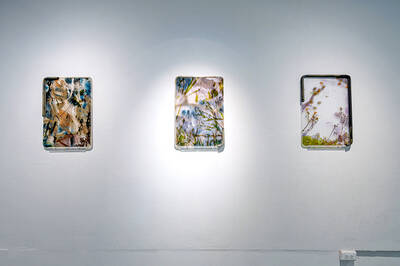
Located down a sideroad in old Wanhua District (萬華區), Waley Art (水谷藝術) has an established reputation for curating some of the more provocative indie art exhibitions in Taipei. And this month is no exception. Beyond the innocuous facade of a shophouse, the full three stories of the gallery space (including the basement) have been taken over by photographs, installation videos and abstract images courtesy of two creatives who hail from the opposite ends of the earth, Taiwan’s Hsu Yi-ting (許懿婷) and Germany’s Benjamin Janzen. “In 2019, I had an art residency in Europe,” Hsu says. “I met Benjamin in the lobby
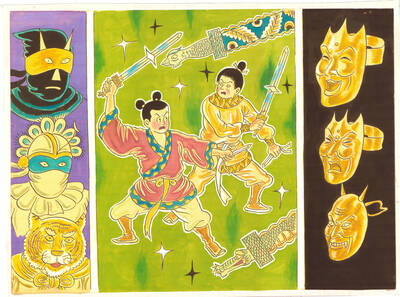
April 22 to April 28 The true identity of the mastermind behind the Demon Gang (魔鬼黨) was undoubtedly on the minds of countless schoolchildren in late 1958. In the days leading up to the big reveal, more than 10,000 guesses were sent to Ta Hwa Publishing Co (大華文化社) for a chance to win prizes. The smash success of the comic series Great Battle Against the Demon Gang (大戰魔鬼黨) came as a surprise to author Yeh Hung-chia (葉宏甲), who had long given up on his dream after being jailed for 10 months in 1947 over political cartoons. Protagonist

Peter Brighton was amazed when he found the giant jackfruit. He had been watching it grow on his farm in far north Queensland, and when it came time to pick it from the tree, it was so heavy it needed two people to do the job. “I was surprised when we cut it off and felt how heavy it was,” he says. “I grabbed it and my wife cut it — couldn’t do it by myself, it took two of us.” Weighing in at 45 kilograms, it is the heaviest jackfruit that Brighton has ever grown on his tropical fruit farm, located


 RSS
RSS