


The terra-cotta warriors have come and gone and the National Museum of History (國立歷史博物館) is now devoting its first floor to folk artifacts from the Philippines, Thailand, Indonesia and Vietnam in an exhibition called Treasures of Southeast Asia (菲越泰印:東南亞民俗文物展).
While the terra-cotta exhibit covered one area of China, Treasures of Southeast Asia spans four countries and several centuries. It's geared toward "new immigrants and other Taiwan citizens … so that they can gain an enhanced understanding of each other's cultural background and way of life," according to the museum's brochure.
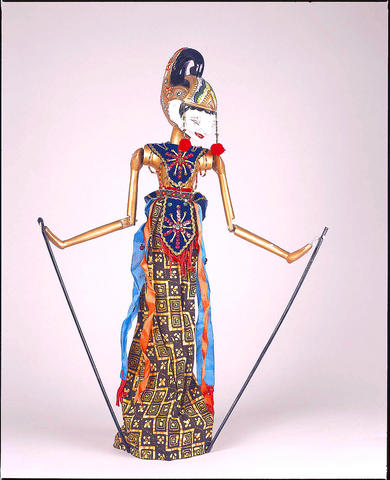
A joint venture between the Museum of Filipino People, National Museums of Thailand, Museum of Vietnamese History, National Taiwan Museum, National Museum of Prehistory and National History Museum, the exhibit contains 226 cultural artifacts including tapestries, bowls, masks, puppets, stonework and sculpture. There is even a section on betel nuts.
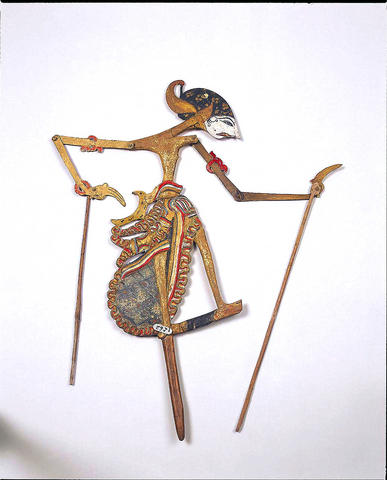
PHOTOS: COURTESY OF THE NATIONAL MUSEUM OF HISTORY
The exhibition is arranged around seven themes - country, costume and society, food and life, traffic and transport, house and crafts, religions and beliefs and drama and performance - and includes a general introduction to each. The four countries are color-coded.
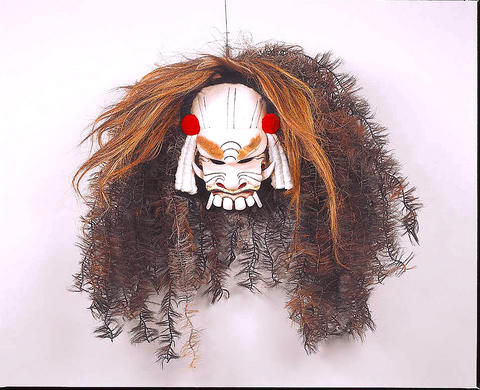
Though the introductory section that visitors pass through as they enter the exhibit presents a Chinese-language overview of each country, it fails to make a connection between these cultures and Taiwan. While masks in the drama and performance section are also accompanied by a few explanatory sentences, other artifacts are not.
Object number NMP-05 is called Loincloth. Though the label indicates the country of origin, its accompanying explanation is: "'Uninvaded disease' [sic] handmade textile of Bali, Indonesia." Such labeling leaves English-speakers baffled at best.
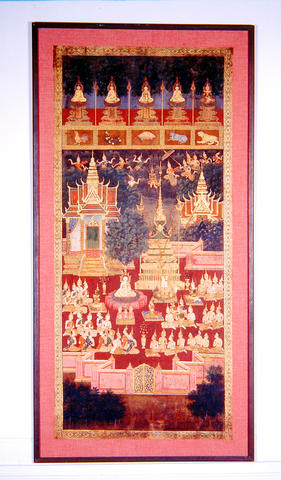
The house and crafts section - which displays some finely woven textiles and delicately carved artifacts - features a Maranao Traditional Game. The caption reads: "A black wooden Maranao traditional toy with diagonal cuts at both ends and two rows of eight rounds of cavities on the surface." The display fails to explain how the game was played, when it was popular and why it is culturally significant.
Dates are also lacking from the majority of display items. In an exhibit spanning several centuries, this is problematic.
All these unanswered questions raise doubts about the museum's sincerity and professionalism. The extent to which this exhibit edifies the public is unclear. With expats from the Philippines, Thailand, Vietnam and Indonesia making up the majority of the foreign community in Taiwan and in light of the country's Taiwan's shaky human rights record towards immigrants from the developing world Treasures of Southeast Asia doesn't pass muster.
The documentaries on display throughout the first floor, however, offer more insight. One focuses on three traditional artisans from the Philippines and shows why they are important to the cultures in which they operate. The video about Thailand, however, has more to do with tourism (women wandering around in bikinis and men playing golf) than it does with traditional crafts and cultures - the point of the exhibit.
The exhibit displays artifacts of interest to many - scholars, researchers and the general public alike - and is sure to pique the interest of museumgoers. Many of the questions the exhibition raises and leaves unanswered, can only be answered through further research, be it online, from a book or via direct contact with relevant experts.
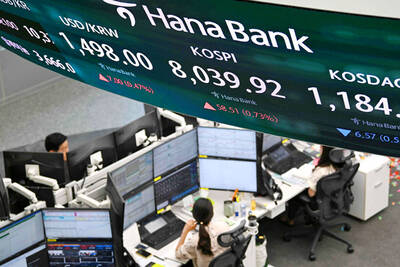
Taiwan’s overtaking of South Korea in GDP per capita is not a temporary anomaly, but the result of deeper structural problems in the South Korean economy says Chang Young-chul, the former CEO of Korea Asset Management Corp. Chang says that while it reflects Taiwan’s own gains, it also highlights weakening growth momentum in South Korea. As design and foundry capabilities become more important in the AI era, Seoul risks losing competitiveness if it relies too heavily on memory chips. IMF forecasts showing Taiwan widening its lead over South Korea have fueled debate in Seoul over memory chip dependence, industrial policy and
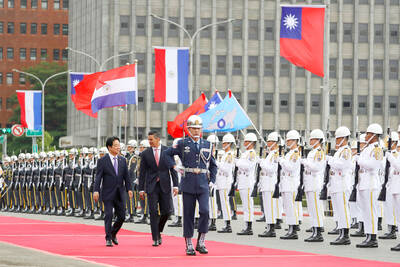
“China wants to unify with Taiwan at the lowest possible cost, and it currently believes that unification will become easier and less costly as time passes,” wrote Amanda Hsiao (蕭嫣然) and Bonnie Glaser in Foreign Affairs (“Why China Waits”) this month, describing how the People’s Republic of China (PRC) is playing the long game in its quest to seize Taiwan. This has been a favorite claim of many writers over the years, easy to argue because it is so trite. Very obviously, if the PRC isn’t attacking Taiwan, it is waiting. But for what? Hsiao and Glaser’s main point is trivial,
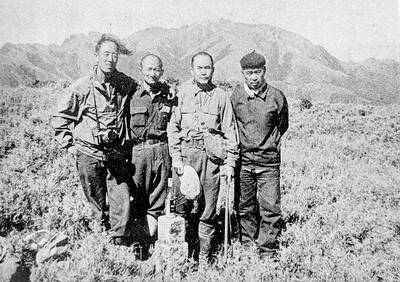
May 18 to May 24 Gathered on Yangtou Mountain (羊頭山) on Dec. 5, 1972, Taiwan’s hiking enthusiasts formally declared the formation of the “100 Peaks Club” (百岳俱樂部) and unveiled the final list of mountains. Famed mountaineer Lin Wen-an (林文安) led this effort for the Chinese Alpine Association (中華山岳協會). Working with other experienced climbers, he chose 100 peaks above 10,000 feet (3,048m) that featured triangulation points and varied in difficulty and character. The list sparked an alpine hiking craze, inspiring many to take up mountaineering and competing to “conquer” the summits. A common misconception is that the 100 Peaks represent Taiwan’s 100 tallest

And so, in the wake of US President Donald Trump’s trip to the People’s Republic of China (PRC), all the experts on the Strait of Hormuz suddenly became experts on US-China-Taiwan relations. The Internet has certainly expanded human knowledge. Lots of these sudden experts made noise this week about Trump’s words after the meeting with PRC dictator Xi Jin-ping (習近平). Trump is going to sell out Taiwan! Longtime Taiwan commentator J. Michael Cole summed the situation up neatly in the Guardian: “We need to keep in mind that he has a tendency to say many things — sometimes contradicting himself within


 RSS
RSS