


Science fiction is dead. Long live science fiction.
For those of us who care (and no, we do not live in our parents' basements), the future of futurism is an urgent matter indeed. Is science fiction thriving amid the pyrotechnics, or is it dying a slow and hideous death, suffocated by publishing-industry group-think and unimaginative movie execs drunk on sequels?
I speak as a fan with opinions - as though there's any other kind - when I pronounce the sound health and shining future of 21st-century speculative fiction. I'm less concerned with the release this month of the megabudget Transformers movie, with its gargantuan alien robots and shiny cast, than a prevailing cultural shift that seems to embrace the expansive narrative frontiers of sci-fi. And I'm not even counting the genre's recent successes on television (Battlestar Galactica, Heroes, The 4400, Lost) or world-domination in games (take your pick).
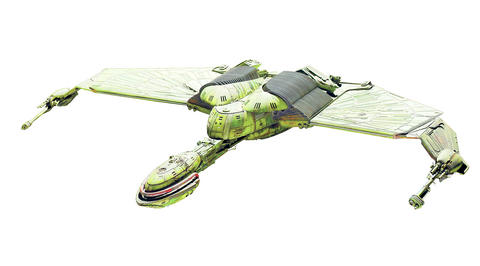
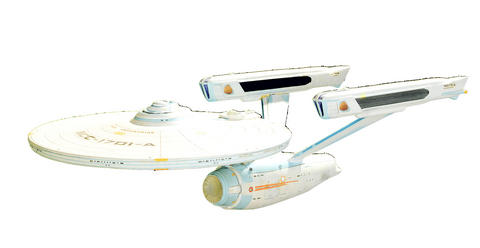
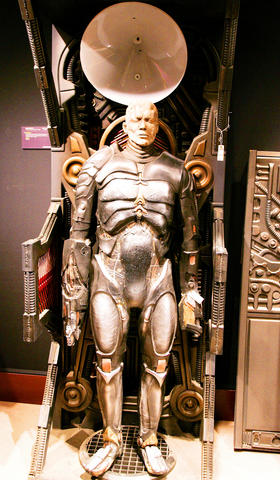
PHOTOS: AFP
"It's everywhere now. Everybody has some exposure to it - it's much more respectable than it used to be," says David Wellington, a sci-fi/horror author (Monster Island, Thirteen Bullets) and aficionado who recalls the bad old days of fandom. "Back in the 80s, when I was a huge science-fiction fan, it was very marginalized. And we always complained about that: 'Why can't other people understand why we like this stuff so much?'"
Wellington is one of several devotees who, given the chance to vent, expresses enthusiasm as well as skepticism at the current state of the genre. Many view the landscape ahead with caution, fearing a post-apocalyptic vista mottled by computer-giddy graphics and the blunt force of mainstream taste. Some see it fragmenting. Others see it thrive.
But fans reach consensus - sort of - on a few key issues. One is that fantasy novels, once joined at the hip with science fiction, have enjoyed huge success since venturing into their own sizable niche. A second is that the film and publishing industries should take more artistic risks. A third: Blade Runner rocks. Fourth: so do Pan's Labryinth and Children of Men.
Exciting Times, Visually
A fifth point, expressed with varying degrees of disappointment and annoyance, is that advances in digital technology have made for gob-stopping eye candy that doesn't always satisfy the mind or the heart. From a visual standpoint, "there's no better time in the history of films for science fiction," says Dave Dorman, an in-demand sci-fi/fantasy painter based in Florida best known for his Star Wars renderings. "On the other hand, I think the writing of science-fiction films is not up to what it was back in, say, the 40s, 50s and 60s."
Craig Elliott, an animator for Disney (Treasure Planet) and DreamWorks (the upcoming The Princess and the Frog), puts it even more succinctly: "There's too much bling on the screen."
In publishing, contemporary science fiction has splintered into a zillion little sub-sets, running from alternate history and space opera to hardcore, urban fantasy, movie and TV tie-ins, cyberpunk and the boundary-stretching "New Weird."
Call it what you will, but great science fiction can be cosmic or minimalist, outward-looking or inward. It expands or contracts, pushing humanity into the farthest reaches of space or reducing it to cinders.
From the start, it's never been about the rubber-faced aliens, not really. Edwin A. Abbott's Flatland (written in 1884 and adapted repeatedly for film) is set in a two-dimensional world that skewers Victorian class distinctions. H.G. Wells and Jules Verne both injected the acid of satire into the pulp of sci-fi, and even the dated strangeness that is Karel Capek's R.U.R. (or Rossum's Universal Robots, the play that coined the word) was more concerned with sentience and civil rights than the construction of humanoid workers.
Do we watch Fritz Lang's Metropolis for the sexy android, or the Marxist parallels? Is The Day the Earth Stood Still about a guy in a soup can or a world poised on self-destruction? Sci-fi can offer visions of a humankind freed from poverty, racism and the horrors of war (see Star Trek's first two series) or ravaged by violence in a post-nuclear wasteland (Mad Maxes one through three). You can feel good or bum out, depending on your mood.
Lately, a lot of folks are bumming. During the past few years dystopian yarns have surged in popularity, prophesying tomorrows wracked by terrorism (V for Vendetta), zombie germs (28 Days Later, 28 Weeks Later) and infertility (Children of Men). All three of those films are set in London, the new vogue setting for ashen pessimism.
In literary fiction, Kazuo Ishiguro's Never Let Me Go moved dystopia to the English countryside. Margaret Atwood moved it stateside (The Handmaid's Tale, Oryx and Crake), while Cormac McCarthy pushed it even farther with The Road. Not everyone calls his Pulitzer Prize-winning novel science fiction, but that's what it is: Man and boy wade through the soot of an annihilated landscape.
Sci-fi/fantasy marketer and publicist Colleen Lindsay has high praise for McCarthy's book, but she's vexed by the perception that it's anything new. "It's post-apocalyptic fantasy for people who don't read fantasy." Look at David Brin's The Postman and S.M. Stirling's Dies the Fire, she says: similar books written by (gasp) genre authors and read by (gasp) geeks. Or consider Richard Matheson's classic 1954 I Am Legend, the original zombie-germ novel, adapted to film in 1964 (The Last Man on Earth), 1971 (The Omega Man) and now 2007 (I Am Legend, scheduled for the end of this year).
Kfir Luzzatto, a science-fiction author who lives in Israel, mentions John Christopher's The Death of Grass (1956) and Mary Shelley's The Last Man (1826), which foresees a late-21st century devastated by plague. "Post-apocalyptic culture has become to modern people what ghost stories were to our fathers," he says. "(It's) a way to air your fears of the unknown and to deal with them."
On the flip side, the more gung-ho element of sci-fi continues to pit good against evil, and good continues to win - after an extremely noisy fight. Consider those Transformers. "Do we believe that we're alone in this constant struggle, or do we believe that we can help each other?" asks Jamie Hari, who founded and runs the Marvel Database Project out of Toronto. Hari, who says "Marvel is my world" without embarrassment, sees the appeal of Transformers and robots in general "as another extension of the human desire for technology."
Pooping insects
A figure well familiar with this idea is Lawrence Krauss, a professor of physics at Case Western Reserve University in Cleveland, Ohio, and the author of The Physics of Star Trek. If you watch How William Shatner Changed the World, he's the one making pizza with the Shat.
"People like the idea of a hopeful future," Krauss says, later admitting that "the utopian view is harder for me to believe." Generally, the genre grabs his attention when it's smartly done but lost him at Starship Troopers: "The pooping insects, that sort of did it for me."
Otherwise, he says that science, like art, considers our place in the cosmic scheme. "The reason that we're scientists is not because we want to build a better toaster," he contends, "but because we're interested in what's possible in the universe."
Judging from anticipated movie releases, this is what's possible in the universe. Earth might be invaded by alien body snatchers (Invasion). It might face planetary death from a dying sun (Sunshine). It might be torn by global terrorism (Day Zero, upcoming). It might, in the field of engineering, produce super-powered exoskeletal armor (Iron Man, 2008), or it might form intergalactic relations with pointy-eared ET's (Star Trek, 2008). Alternately, a race of tiny aliens might tour the cosmos inside Eddie Murphy, who might then fall in love with an Earth babe (Starship Dave, 2008).
All of this looking forward strikes Houston's John Moore, an "unrepentant geek" and sci-fi/fantasy author (A Fate Worse than Dragons), as old news. "Science fiction is the present. We live in a science-fiction society, and I don't just mean the gadgetization of society." Instead, he means that "projecting into the future, once the province of the science-fiction writer, has become our dominant way of thought."

In late October of 1873 the government of Japan decided against sending a military expedition to Korea to force that nation to open trade relations. Across the government supporters of the expedition resigned immediately. The spectacle of revolt by disaffected samurai began to loom over Japanese politics. In January of 1874 disaffected samurai attacked a senior minister in Tokyo. A month later, a group of pro-Korea expedition and anti-foreign elements from Saga prefecture in Kyushu revolted, driven in part by high food prices stemming from poor harvests. Their leader, according to Edward Drea’s classic Japan’s Imperial Army, was a samurai

Located down a sideroad in old Wanhua District (萬華區), Waley Art (水谷藝術) has an established reputation for curating some of the more provocative indie art exhibitions in Taipei. And this month is no exception. Beyond the innocuous facade of a shophouse, the full three stories of the gallery space (including the basement) have been taken over by photographs, installation videos and abstract images courtesy of two creatives who hail from the opposite ends of the earth, Taiwan’s Hsu Yi-ting (許懿婷) and Germany’s Benjamin Janzen. “In 2019, I had an art residency in Europe,” Hsu says. “I met Benjamin in the lobby

April 22 to April 28 The true identity of the mastermind behind the Demon Gang (魔鬼黨) was undoubtedly on the minds of countless schoolchildren in late 1958. In the days leading up to the big reveal, more than 10,000 guesses were sent to Ta Hwa Publishing Co (大華文化社) for a chance to win prizes. The smash success of the comic series Great Battle Against the Demon Gang (大戰魔鬼黨) came as a surprise to author Yeh Hung-chia (葉宏甲), who had long given up on his dream after being jailed for 10 months in 1947 over political cartoons. Protagonist

Peter Brighton was amazed when he found the giant jackfruit. He had been watching it grow on his farm in far north Queensland, and when it came time to pick it from the tree, it was so heavy it needed two people to do the job. “I was surprised when we cut it off and felt how heavy it was,” he says. “I grabbed it and my wife cut it — couldn’t do it by myself, it took two of us.” Weighing in at 45 kilograms, it is the heaviest jackfruit that Brighton has ever grown on his tropical fruit farm, located


 RSS
RSS