


This weekend Mikhail Pletnev's Russian National Orchestra will play six of Liszt's symphonic poems in their two Taipei concerts (tonight and tomorrow), three in each. They will form the first half of the events, with a symphony in the second half. In their single Taichung concert (Monday) they will repeat the two symphonies they first played in Taipei.
Symphonic poems, or orchestral compositions in a single movement, were a creation of the Romantic era. Their aim was to evoke a legend, some story replete with mystery or heroism. Previously such pieces had been used as overtures, but the Romantic composers wanted to do something different. They ignored the formal structures of the classical period, and instead tried to excite people's emotions with exotic tales told in music — preludes to nothing, but simply attractive things in themselves. Franz Liszt, a pioneer if ever there was one, named them Symphonic Poems, and wrote 13 of them. Richard Strauss was to take over the same technique and re-name them Tone Poems.
In tomorrow's Taipei concert the Russians will play Les Preludes, Prometheus and Festklang. The first, Liszt's most popular symphonic poem, illustrates the proposition that life is merely a series of preludes to death, and occupies itself with four such moments — love, storms, country life, and success. This may sound like the structure for a concise symphony, but it just manages not to be one. Prometheus focuses on the ancient Greek Titan who stole fire from the gods (a figure much admired by all the Romantics). Festklang has no "program" at all, but is just marked by a celebratory exuberance.
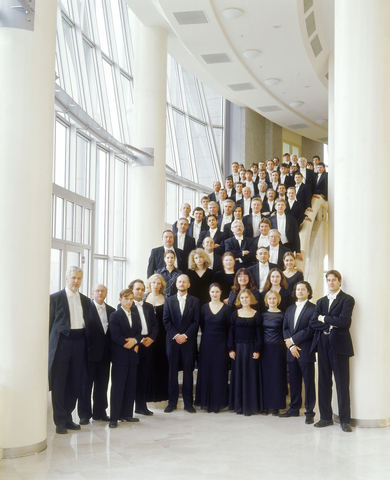
PHOTO: COURTESY OF NTCH
Sunday afternoon's concert (note the early start of 2pm) offers Liszt's Orpheus, Heroide Funebre and Mazepa. Orpheus was the legendary figure who descended to hell to try to bring back his wife back to life, while the Cossack Mazepa led a revolt in the Ukraine against Polish invaders. Heroide Funebre commemorates the victims of the French Revolution.
Tomorrow evening's concert will end with Dvorak's New World symphony. This beautiful work needs no introduction. But Sunday afternoon offers Shostakovich's Symphony No:5, and this does require some background explanation.
It was premiered in Leningrad in 1937 as part of the celebrations marking the 20th anniversary of the Russian Revolution. Stalin's Terror was at its height. Millions had been arrested, on a hideous quota system, and either executed or sent to Siberia on fabricated charges. The whole of Russian society lived in fear, and everyone knew people who were no longer there. Yet Shostakovich was obliged to write something celebratory. In addition he had himself been accused by the Composers' Union of "formalism" (writing music showing an interest in abstract form rather than the revolutionary struggle of the people). His new work was, as a result, anticipated with intense interest.
The result was an enormous success. People wept during the slow movement, and the ovation lasted 40 minutes, longer than the symphony itself, with the composer on stage acknowledging the cheers. But what was it about? Shostakovich had sub-titled it "A Soviet Artist's Practical Creative Reply to Just Criticism," but most critics now agree it was a lament for the terrible suffering of the Russian people. It was disguised as a Communist anniversary celebration, but that first audience recognized it for what it really was. Music, after all, was the only form of protest available because it was unspecific — tragic passages could represent either those who'd suffered on behalf of the Revolution, or those who'd suffered under Stalin. Who could tell?
"The government would have been delighted to execute him," said the great cellist Rostropovich, an old friend of the composer. "But they had never seen such audience success … . So they said 'We've taught him, and now he's writing acceptable music.'"
Pletnev's Russian National Orchestra is a private foundation independent of state sponsorship. As an orchestra that's been hailed as reaching almost inconceivably high standards, anything they perform will be of immense interest to classical music-lovers. But how they play Shostakovich's landmark symphony (once in Taipei and once in Taichung) will surely be the unavoidable focus of their visit.

In late October of 1873 the government of Japan decided against sending a military expedition to Korea to force that nation to open trade relations. Across the government supporters of the expedition resigned immediately. The spectacle of revolt by disaffected samurai began to loom over Japanese politics. In January of 1874 disaffected samurai attacked a senior minister in Tokyo. A month later, a group of pro-Korea expedition and anti-foreign elements from Saga prefecture in Kyushu revolted, driven in part by high food prices stemming from poor harvests. Their leader, according to Edward Drea’s classic Japan’s Imperial Army, was a samurai

Located down a sideroad in old Wanhua District (萬華區), Waley Art (水谷藝術) has an established reputation for curating some of the more provocative indie art exhibitions in Taipei. And this month is no exception. Beyond the innocuous facade of a shophouse, the full three stories of the gallery space (including the basement) have been taken over by photographs, installation videos and abstract images courtesy of two creatives who hail from the opposite ends of the earth, Taiwan’s Hsu Yi-ting (許懿婷) and Germany’s Benjamin Janzen. “In 2019, I had an art residency in Europe,” Hsu says. “I met Benjamin in the lobby

April 22 to April 28 The true identity of the mastermind behind the Demon Gang (魔鬼黨) was undoubtedly on the minds of countless schoolchildren in late 1958. In the days leading up to the big reveal, more than 10,000 guesses were sent to Ta Hwa Publishing Co (大華文化社) for a chance to win prizes. The smash success of the comic series Great Battle Against the Demon Gang (大戰魔鬼黨) came as a surprise to author Yeh Hung-chia (葉宏甲), who had long given up on his dream after being jailed for 10 months in 1947 over political cartoons. Protagonist

Peter Brighton was amazed when he found the giant jackfruit. He had been watching it grow on his farm in far north Queensland, and when it came time to pick it from the tree, it was so heavy it needed two people to do the job. “I was surprised when we cut it off and felt how heavy it was,” he says. “I grabbed it and my wife cut it — couldn’t do it by myself, it took two of us.” Weighing in at 45 kilograms, it is the heaviest jackfruit that Brighton has ever grown on his tropical fruit farm, located


 RSS
RSS