


The soprano Joan Sutherland has never been convinced that much can be accomplished in a "so-called master class," as she explained in a 1998 interview. What can a visiting master say in just a half-hour or so of working with a young musician?
Still, that year, at the behest of the foundation run by her friend and colleague Marilyn Horne, Sutherland offered a master class to several young singers at the Juilliard Theater in New York.
Naturally, before hearing each vocalist, she wanted to learn something of their backgrounds and training. Only with that personal and professional context could she know how to evaluate their work.
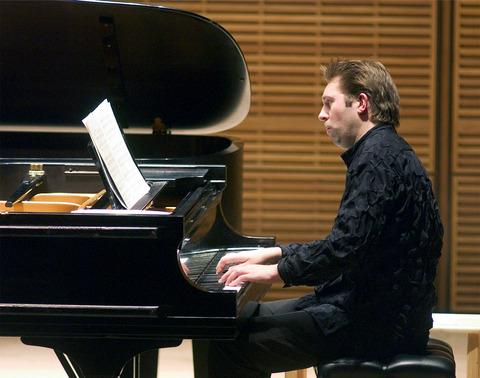
So Sutherland was miffed when she asked the age of an Asian soprano who was up next, and the young woman demurred, laughing nervously and explaining that she preferred not to reveal it. "But you know my age," Sutherland replied. She muttered that this was quite strange but allowed the soprano to sing.
Sutherland was right. Fledgling sopranos typically keep acquiring technique and making vocal adjustments right through their twenties. Whether this student was 21 or 27 was significant information.
I would add that whether a young soprano was trained in Tokyo or Boston, whether she studied singing throughout her childhood or discovered her voice in a college choir, whether she is big-bodied or petite, loose-limbed or stiff: all of these factors are crucial to assessing an individual's gifts and needs.
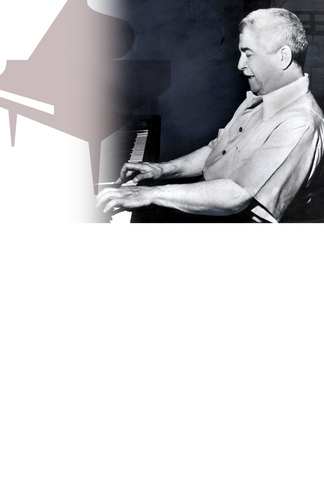
PHOTOS: NY TIMES NEWS SERVICE
In other words, whether you are a master teacher, an opera buff, a concertgoer, or a critic, knowing something of the background of the artist you are hearing will inevitably affect your perceptions.
The question of context surfaced recently in the scandalous story of Joyce Hatto, an English pianist who was born in 1928 and enjoyed a modestly successful career until a cancer diagnosis in 1970 forced her to retire from the concert stage. She died last year.
As has been widely reported, a series of recordings identified as Hatto's were released by a small CD label run by her husband, William Barrington-Coupe, starting in 1989. There were an astonishing 120 releases in all, including complete cycles of the Mozart, Beethoven, and Prokofiev sonatas. But last month, her husband, caught in an act of fraud, confessed that these CDs were performances he took from recordings by other pianists and marketed as Hatto's.
Critics who were fooled by this plagiarism have come in for ridicule, which is not entirely fair. The recorded performances fobbed off as Hatto's, whether by little-known artists or major pianists, were of high quality.
The critics and piano buffs who prized them were sold a false context: They thought they were hearing an overlooked and ailing artist who was enjoying a miraculous rebirth in the safety of the recording studio. Of course, more skeptical sorts would argue that the trumped-up story seemed too good to be true.
In any event, context should theoretically not matter, especially in instrumental music. A singer's voice is unique to that singer's body. But for all the strikingly different characteristics of various pianists, there is arguably a smaller number of variables involved, at least in certain repertory. Schumann's C major Fantasy is open to myriad interpretive approaches, but Rachmaninoff's Third Piano Concerto tends to go a certain way and requires a more specific kind of virtuosity and flair.
Obviously, the context of a performance can completely surprise you. A recording of a Schubert piano sonata that shows a mature sensitivity to high Viennese Classical style might be coming from a master like Artur Schnabel, a leading artist of the new generation like Leif Ove Andsnes, or a student at the University of Wisconsin. The actual playing should be what matters. There is an appealing purity about this argument.
Still, the personal context and the particular circumstances of a performance can profoundly affect the performance itself. This point was well put last month in an op-ed article in the New York Times by Denis Dutton, who teaches aesthetics at the University of Cambridge, analyzing the Hatto affair. "Music isn't just about sound; it is about achievement in a larger human sense," Dutton wrote.
Long ago, orchestra audition committees started the practice of hearing instrumentalists from behind a screen. A worthy goal is at stake here: to eliminate prejudice and ensure that the committee's judgment is not influenced by a musician's age, sex, or ethnicity.
But this policy has a down side. An orchestra is hiring a person as well as a player. Does that person suit the job? Most orchestras take the screen away at least for the final round. Savvy music directors get personally involved at this stage and sit down with the finalists to find out who they are as musicians and people, and how they think. The enthusiasm that a dynamic young violinist would bring to the job or the maturity that would come with a veteran professional should matter just as much as objectively measurable factors like a candidate's technique and tone quality.
For all music lovers the danger of letting context affect your perception of an artist is that it is terribly easy to pigeonhole people. Artists are always capable of transcending themselves and surprising us, something critics in particular must remember.
Some critics maintain that overpreparing for a review assignment will lessen the freshness of their reactions, especially for a new piece. This tabula-rasa approach is perfectly valid. For me, if I have access to a score before hearing the premiere of a new work, I find it valuable to read through the music at the piano. And anything I can learn about the creative artist may enrich my perception.
But the lies that were perpetrated about Hatto were criminal acts. There is a big difference between taking someone's background and context into account and falling for a hoax.

Last week Joseph Nye, the well-known China scholar, wrote on the Australian Strategic Policy Institute’s website about how war over Taiwan might be averted. He noted that years ago he was on a team that met with then-president Chen Shui-bian (陳水扁), “whose previous ‘unofficial’ visit to the US had caused a crisis in which China fired missiles into the sea and the US deployed carriers off the coast of Taiwan.” Yes, that’s right, mighty Chen caused that crisis all by himself. Neither the US nor the People’s Republic of China (PRC) exercised any agency. Nye then nostalgically invoked the comical specter
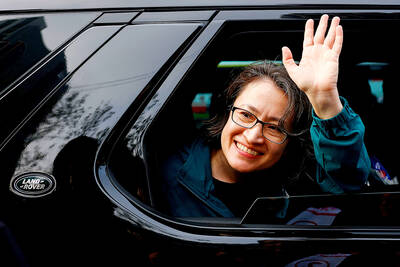
Relations between Taiwan and the Czech Republic have flourished in recent years. However, not everyone is pleased about the growing friendship between the two countries. Last month, an incident involving a Chinese diplomat tailing the car of vice president-elect Hsiao Bi-khim (蕭美琴) in Prague, drew public attention to the People’s Republic of China’s (PRC) operations to undermine Taiwan overseas. The trip was not Hsiao’s first visit to the Central European country. It was meant to be low-key, a chance to meet with local academics and politicians, until her police escort noticed a car was tailing her through the Czech capital. The
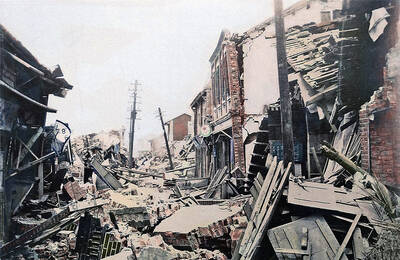
April 15 to April 21 Yang Kui (楊逵) was horrified as he drove past trucks, oxcarts and trolleys loaded with coffins on his way to Tuntzechiao (屯子腳), which he heard had been completely destroyed. The friend he came to check on was safe, but most residents were suffering in the town hit the hardest by the 7.1-magnitude Hsinchu-Taichung Earthquake on April 21, 1935. It remains the deadliest in Taiwan’s recorded history, claiming around 3,300 lives and injuring nearly 12,000. The disaster completely flattened roughly 18,000 houses and damaged countless more. The social activist and

Over the course of former President Ma Ying-jeou’s (馬英九) 11-day trip to China that included a meeting with Chinese Communist Party (CCP) leader Xi Jinping (習近平) a surprising number of people commented that the former president was now “irrelevant.” Upon reflection, it became apparent that these comments were coming from pro-Taiwan, pan-green supporters and they were expressing what they hoped was the case, rather than the reality. Ma’s ideology is so pro-China (read: deep blue) and controversial that many in his own Chinese Nationalist Party (KMT) hope he retires quickly, or at least refrains from speaking on some subjects. Regardless


 RSS
RSS