


Leon Fleisher was a 36-year-old pianist at the peak of his career when he first discovered a slight curling of the fourth and fifth fingers on his right hand. "Within 10 months my fingers had curved inwards until the tips pressed against the palms," he says. "I tried to play through the problem, which only made it worse." As frustrating as the strange spasm was the lack of understanding by the medical profession. Specialists told him it was a type of Parkinson's, it was a form of seizure, it was all in his head.
In fact, Fleisher was suffering from a chronic loss of muscle control known as focal dystonia, an incurable neurological condition — sometimes called musician's cramp or piper's palsy — that can end careers. Fleisher continued to perform by specializing in the piano repertoire written solely for the left hand. But in 2004 he astonished both the medical and musical worlds by making a recovery.
Fleisher's "miracle cure" was a pioneering course of treatment with botulinum toxin, or Botox. Long before Botox became common in beauty regimes, injections into Fleisher's fingers enabled the pianist to make Two Hands, his first conventional recording in more than 40 years.
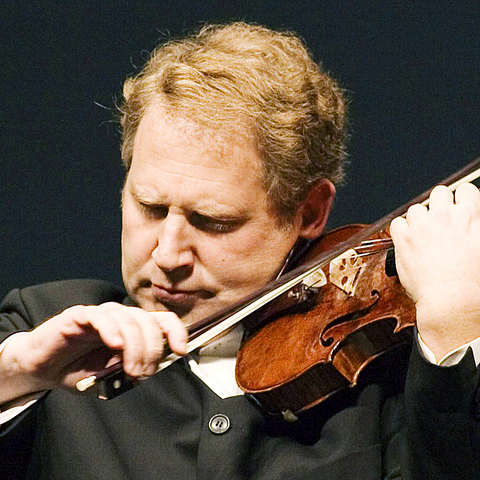
PHOTO: EPA
Fleisher is far from alone. Research indicates that professional musicians are considerably more susceptible to back pain than the rest of the population, and that 52 percent of musicians who experience muscular discomfort will find the problem to be associated with intensive practice or the unusual posture of playing an instrument. Yet performance-related injury remains something of a taboo subject. Few musicians are prepared to admit that common aches and pains could become career-threatening; many orchestral players insure their instruments far more comprehensively than they insure themselves.
Musicians have always punished their bodies in pursuit of ever-higher technical standards. Perhaps the most notorious historical example of performance-related injury was the case of Robert Schumann, who sought to improve his piano technique with a device designed to separate the tendons of the third and fourth finger. Scholars have since doubted whether the "finger tormentor" was really attributable to Schumann's subsequent disability, yet throughout his career he attempted to resuscitate the use of his hand by soaking it in warm brandy, wrapping it in herbal compounds and even thrusting it into the carcasses of freshly slaughtered animals.
Schumann's determination to become a virtuoso may have been inspired by witnessing performances by Nicolo Paganini, whose extraordinary facility on the violin was possibly the result of a rare growth disorder. It has been suggested that Paganini, an uncommonly tall and sinuous man, suffered from Marfan's syndrome — a condition whose benefits (to violinists at least) include elongated fingers with hyper-elastic joints. If so, it would be a rare instance of a medical disorder actually enhancing performance.
The opposite might be the case of the Canadian pianist Glenn Gould, who grew up with a deformation of the spine exacerbated by his unusually hunched position over the keyboard. Experts also suggest that the pianist's famously eccentric behavior and uncanny focus on technical perfection may have been symptoms of Asperger's syndrome (a diagnosis that did not exist during Gould's lifetime); while film footage indicates that Gould's withdrawal from live performance may have been accelerated by a pronounced curling of the fourth and fifth fingers, similar to the dystonia that halted Fleisher's career.
It was not until the mid-1980s that another dystonia sufferer, the American pianist Gary Graffman, broke the silence surrounding performance-related injury. He published an article arguing that "instrumentalists' hand problems — somewhat like social diseases — are unmentionable. Understandably so: if a performer is still performing, or hopes to get back on the road soon, he'd be crazy to advertise his disabilities. Nobody wants a wounded pianist. There is an oversupply of healthy ones. Admitting difficulties is like jumping, bleeding, into piranha-filled waters."
Twenty years on, many orchestral players, particularly those on freelance contracts, are still reluctant to seek the help they need. Dr. Jonathan White, medical adviser to the City of Birmingham Orchestra, says: "There is a huge stigma attached to admitting one might have a problem. Music is a competitive industry, and few players are willing to divulge anything that might affect their employability."
White holds monthly clinics for CBSO players as part of an attachment scheme administered by the British Association for Performing Arts Medicine (BAPAM), a charity that runs clinics in London, Manchester and Glasgow. Since 1984, it has provided training courses for medical practitioners interested in the performing arts, and is seeking to recruit new associates, particularly outside London.
Many BAPAM doctors are instrumentalists themselves. White, a trained organist, contacted the organization after hearing an appeal on Classic FM. Like all medical advisers to British orchestras, he provides his services for free. "Performing arts medicine in this country is at roughly the stage sports medicine was 30 years ago," he says. "We are only just beginning to appreciate that orchestral players are athletes whose bodies cannot be abused."
Perceptions are gradually beginning to change. This year the Association of British Orchestras made its first awards under the new Healthy Orchestra Charter, a joint initiative with the Musicians' Benevolent Fund that sets an official standard for the working conditions of orchestral players. But the UK is still some way behind the Netherlands and France, which make state provision for injured musicians; and there is as yet no recognized qualification in performing arts medicine in this country.
Patrice Berque, a physiotherapist who runs a BAPAM-affiliated clinic in Glasgow, understands musicians' injuries both as an instrumentalist and as a physician. He was a horn player with several European orchestras before focal dystonia of the lip muscles prematurely ended his career. "The problem is that medics and musicians rarely speak the same language," Berque says. "But there's absolute truth in the cliche that prevention is better than cure. The key is to make players aware that a well-regulated practice routine will prevent serious injuries developing later."
The recommendation of 30 minutes' practice followed by a 15-minute break is, however, rarely compatible with the rehearsal schedules of professional orchestras. Berque was on call throughout the BBC Scottish Symphony Orchestra's preparations for Wagner's Parsifal, during which 90 percent of the string players encountered neck or back pain and required massage or stretching exercises to complete the session. Nor is it only orchestral players who are at risk. Berque's research has unearthed a surprisingly high incidence of focal dystonia among bagpipe players.
"No one has yet proved that there is a definite link between rapid, repetitive muscular movement and dystonia," he says. "Yet bagpipe technique requires even greater malleability of the mouth and lips than say, a clarinet or horn. The research has some way to go; it will be very significant if there is a connection."
There is still much about musicians' maladies that remains imperfectly understood. The New Zealand pianist Michael Houstoun recently described his attempts to keep playing by using splints, rubber bands and even learning the Braille alphabet — remedies that seem no more sophisticated than Schumann's contraption.
As for Berque, his condition was misdiagnosed and untreated for so long that it ruled out any return to a playing career. His clinical work at least offers some compensation. "It keeps me in touch with other musicians, and I still feel part of the musical scene," he says. "Obviously, I wish I could still play. But helping others to keep playing is a fair reward."
The British Association for Performing Arts Medicine Web site is at www.bapam.org.uk

In late October of 1873 the government of Japan decided against sending a military expedition to Korea to force that nation to open trade relations. Across the government supporters of the expedition resigned immediately. The spectacle of revolt by disaffected samurai began to loom over Japanese politics. In January of 1874 disaffected samurai attacked a senior minister in Tokyo. A month later, a group of pro-Korea expedition and anti-foreign elements from Saga prefecture in Kyushu revolted, driven in part by high food prices stemming from poor harvests. Their leader, according to Edward Drea’s classic Japan’s Imperial Army, was a samurai
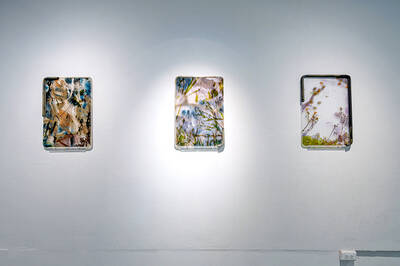
Located down a sideroad in old Wanhua District (萬華區), Waley Art (水谷藝術) has an established reputation for curating some of the more provocative indie art exhibitions in Taipei. And this month is no exception. Beyond the innocuous facade of a shophouse, the full three stories of the gallery space (including the basement) have been taken over by photographs, installation videos and abstract images courtesy of two creatives who hail from the opposite ends of the earth, Taiwan’s Hsu Yi-ting (許懿婷) and Germany’s Benjamin Janzen. “In 2019, I had an art residency in Europe,” Hsu says. “I met Benjamin in the lobby
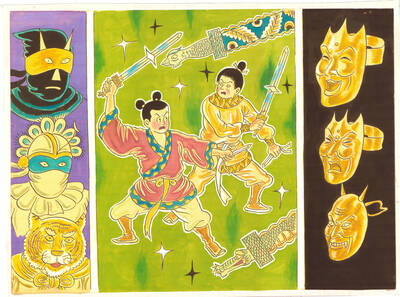
April 22 to April 28 The true identity of the mastermind behind the Demon Gang (魔鬼黨) was undoubtedly on the minds of countless schoolchildren in late 1958. In the days leading up to the big reveal, more than 10,000 guesses were sent to Ta Hwa Publishing Co (大華文化社) for a chance to win prizes. The smash success of the comic series Great Battle Against the Demon Gang (大戰魔鬼黨) came as a surprise to author Yeh Hung-chia (葉宏甲), who had long given up on his dream after being jailed for 10 months in 1947 over political cartoons. Protagonist

Peter Brighton was amazed when he found the giant jackfruit. He had been watching it grow on his farm in far north Queensland, and when it came time to pick it from the tree, it was so heavy it needed two people to do the job. “I was surprised when we cut it off and felt how heavy it was,” he says. “I grabbed it and my wife cut it — couldn’t do it by myself, it took two of us.” Weighing in at 45 kilograms, it is the heaviest jackfruit that Brighton has ever grown on his tropical fruit farm, located


 RSS
RSS