


This month sees the Taiwan release of four items new to DVD from Well Go USA. They're a mixed bag, but with much of interest. Most of all, two of the opera productions show with great clarity how classic works can be successfully modernized, and how they can't. First, however, 18th-century London's biggest theatrical hit.
In 1728 The Beggar's Opera astonished everyone. In reality it wasn't an opera at all but a spoken drama with simple popular songs added. More importantly, it treated material that formal opera never touched — the lives of the poor, in particular the criminal poor. But it also contained upper-class characters, notably people who benefited from the same criminals' activities.
Because of its intense social realism, and in particular its fascination with social class, this was a quintessentially English product. Audiences responded immediately to its truth to life, and John Gay's play-with-songs — in effect the first ever musical — became the most profitable stage show of its time.
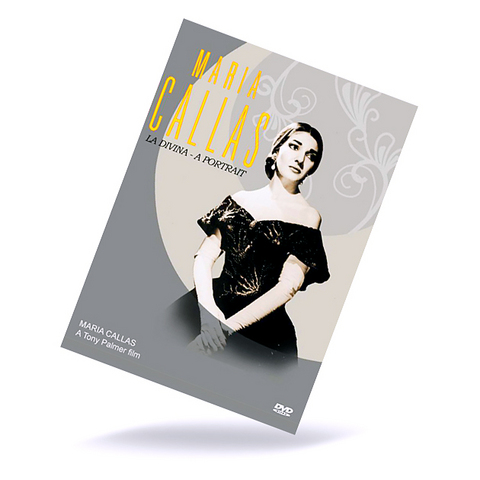
It was entirely appropriate, then, that in reviving it for BBC TV in 1983 director Jonathan Miller drew on a wide range of English comic actors, notably Stratford Johns who plays Peachum, an affluent receiver of stolen goods. But in an even bolder stroke Miller recruited Roger Daltry, vocalist with legendary 1960s band The Who, as Macheath, the working-class lead. Even more bizarrely the musical director was John Eliot Gardiner, a specialist in Baroque Era music.
The result was a great success. Even though as an actor Daltry feels like an amateur among professionals, this English mix of bawdy comedy, simple tunes and what were once catchy lyrics worked very well. It's good and is now available on DVD.
Everyone in the serious opera business agrees that you can't go on for ever performing operas in the way they were intended by their composers. Sooner or later new light has to be let in, and imaginative stage directors allowed to create versions that, though hopefully true to the spirit of the originals, shed new light on the possibilities implicit in them.
One very successful attempt to do this was the English National Opera's 1986 version of Dvorak's Rusalka. Dvorak wasn't usually an opera composer, but this late work has a very remarkable flow and naturalness about it. Largely neglected for a hundred years, it was revived in the last decades of the 20th century and proved much to the taste of the times.
The story tells of a wood-nymph who wants to become a humanbeing to experience love. It originally had a rural setting, in a forest and on the shores of a lake, but the ENO broke radically with this and re-located it to a Victorian nursery. David Pountney, the director, said he thought this was justified because what the opera was really about was a girl becoming sexually aware. The conflict between repression and dreams of freedom that could be said to characterize Victorian girlhood (as seen in many stories, such as the Alice books and the novels of Charlotte Bronte) made this an appropriate change.
The transposition works brilliantly. The stage is filled with glass cages with golden knobs that slide this way and that, and phantasmagoric figures that certainly do resemble the surreal adult world perceived by Lewis Carroll's Alice. Furthermore, it's musically fine into the bargain. The 1980s was the era when the ENO was in its prime, and Mark Elder here conducts the rich score with feeling and understanding. Eilene Hannan is perfect as the young girl Rusalka, and Ann Howard is excellent as the witch Jezibaba, as is John Treleaven as the Prince who Rusalka so fatally falls in love with.

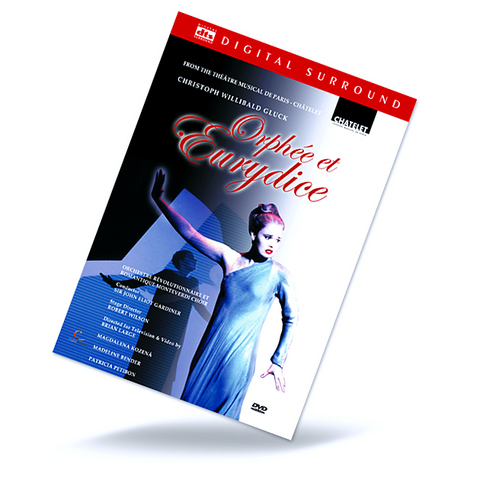
In total contrast is Robert Wilson's 1999 production of Gluck's Orphee et Euridice. Here we are not given surreal dream images but slow-motion abstraction, and a visual screen-picture that is entirely, endlessly, and finally boringly, blue. The three female lead soloists are excellent in themselves, especially Magdalena Kozena as Orphee. The conductor, John Eliot Gardiner again, provides a vivid sound picture, using the revised version made by Berlioz. But there's no Romantic-era dynamism here. Instead, the characters deliver their arias almost without moving, in the style of Japanese Noh drama. The chorus is treated in similar fashion, and the set consists of little more than a miniature ice-berg — wholly appropriate for what is essentially a frigid production.
This is precisely how up-dated opera shouldn't be done. Like Rusalka, it aims for a dream-like effect. But whereas the abstract may hypnotize (literally, put to sleep), most people's dreams are full of detail, however incongruous. I will never watch this DVD again, but I expect I'll watch the ENO Rusalka many more times.
Lastly, another film about Maria Callas. The problem with old stories is that they don't always bear the retelling. Most people who are interested in Callas will already know everything this film, made by Tony Palmer in 1987, 10 years after her death, tells them. But for those who don't know it, this is certainly an informative account, with some profound insights, and even more telling personal memories, coming from the likes of opera director Franco Zeffirelli. If you can bear to hear the Callas story again, watching this DVD would be an excellent way to hear it one more time.
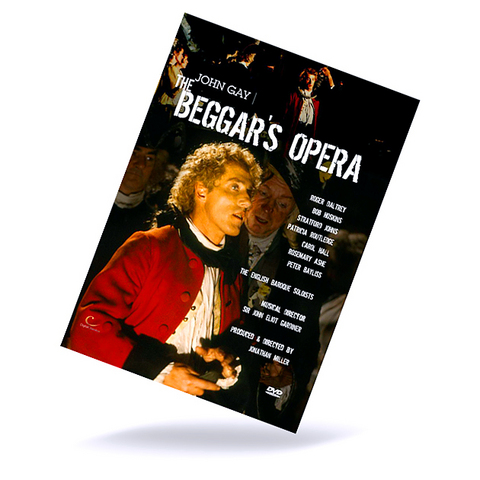
Even so, the time lag tells. All the fur coats, expensive clothes and press adulation go to show how lucky we are that opera singers aren't like this any more. Now out of the fashionable limelight, opera at last has to survive on its own merits.

In late October of 1873 the government of Japan decided against sending a military expedition to Korea to force that nation to open trade relations. Across the government supporters of the expedition resigned immediately. The spectacle of revolt by disaffected samurai began to loom over Japanese politics. In January of 1874 disaffected samurai attacked a senior minister in Tokyo. A month later, a group of pro-Korea expedition and anti-foreign elements from Saga prefecture in Kyushu revolted, driven in part by high food prices stemming from poor harvests. Their leader, according to Edward Drea’s classic Japan’s Imperial Army, was a samurai
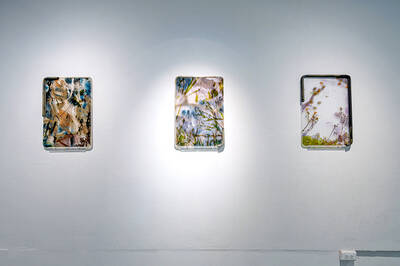
Located down a sideroad in old Wanhua District (萬華區), Waley Art (水谷藝術) has an established reputation for curating some of the more provocative indie art exhibitions in Taipei. And this month is no exception. Beyond the innocuous facade of a shophouse, the full three stories of the gallery space (including the basement) have been taken over by photographs, installation videos and abstract images courtesy of two creatives who hail from the opposite ends of the earth, Taiwan’s Hsu Yi-ting (許懿婷) and Germany’s Benjamin Janzen. “In 2019, I had an art residency in Europe,” Hsu says. “I met Benjamin in the lobby
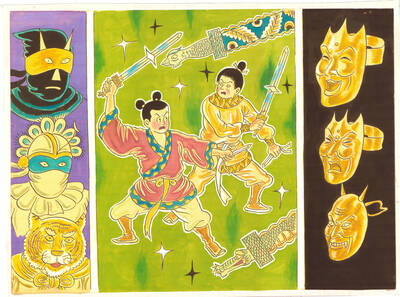
April 22 to April 28 The true identity of the mastermind behind the Demon Gang (魔鬼黨) was undoubtedly on the minds of countless schoolchildren in late 1958. In the days leading up to the big reveal, more than 10,000 guesses were sent to Ta Hwa Publishing Co (大華文化社) for a chance to win prizes. The smash success of the comic series Great Battle Against the Demon Gang (大戰魔鬼黨) came as a surprise to author Yeh Hung-chia (葉宏甲), who had long given up on his dream after being jailed for 10 months in 1947 over political cartoons. Protagonist

Peter Brighton was amazed when he found the giant jackfruit. He had been watching it grow on his farm in far north Queensland, and when it came time to pick it from the tree, it was so heavy it needed two people to do the job. “I was surprised when we cut it off and felt how heavy it was,” he says. “I grabbed it and my wife cut it — couldn’t do it by myself, it took two of us.” Weighing in at 45 kilograms, it is the heaviest jackfruit that Brighton has ever grown on his tropical fruit farm, located


 RSS
RSS