


Researchers in Germany said Thursday that they planned to collaborate with an American company in an attempt to reconstruct the genome of Neanderthals, the archaic human species that occupied Europe from 300,000 years ago until 30,000 years ago until being displaced by modern humans.
Long a forlorn hope, the sequencing, or decoding, of Neanderthal DNA suddenly seems possible because of a combination of analytic work on ancient DNA by Svante Paabo, of the Max Planck Institute for Evolutionary Anthropology in Leipzig, and a new method of DNA sequencing developed by a Connecticut company, 454 Life Sciences.
The initial genome to be decoded comes from Neanderthal bones, 45,000 years old, which were found in Croatia, though bones from other sites may be analyzed later. Because the genome must be kept in constant repair and starts to break up immediately after the death of the cell, the DNA surviving in Neanderthal bones exists in tiny fragments 100 or so units in length. As it happens, this is just the length that works best with the 454 machine, which is also able to decode vast amounts of DNA at low cost.
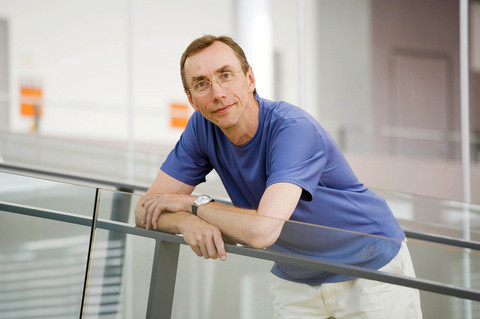
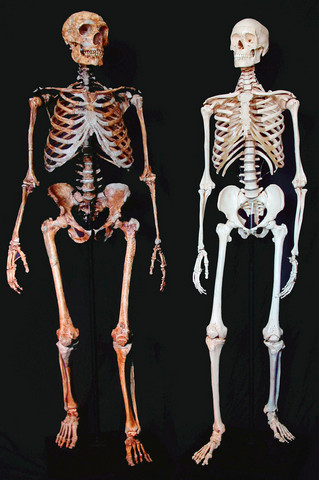
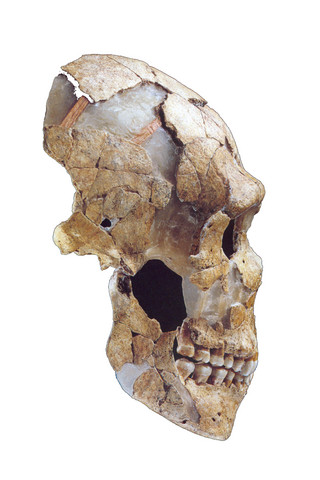
PHOTOS: NY TIMES NEWS SERVICE
Recovery of the Neanderthal genome, in whole or in part, would be invaluable for reconstructing many events in human prehistory and evolution. It would help address such questions as whether Neanderthals and humans interbred, whether the archaic humans had an articulate form of language, how the Neanderthal brain was constructed, if they had light or dark skins, and how big the Neanderthal population was.
One of the most important results that researchers are hoping for is to discover, from a three-way comparison between chimp, human and Neanderthal DNA, which genes have made humans human. The chimp and human genomes differ at just 1 percent of the sites on their DNA. At this 1 percent, Neanderthals resemble humans at 96 percent of the sites, to judge from the preliminary work, and chimps at 4 percent. Analysis of these DNA sites, at which humans differ from the two other species, will help understand the evolution of specifically human traits “and perhaps even aspects of cognitive function,” Paabo said.
The degree of resemblance between humans and Neanderthals is fiercely debated by archaeologists and even issues such as whether Neanderthals had language have not been resolved.
Paabo believes that genetic analysis is the best hope of doing so. He has paid particular attention to a gene known as FOXP2, which from its mutated forms in people seems to be involved in several advanced aspects of language.
A longstanding dispute among archaeologists is whether the modern humans who first entered Europe 45,000 years ago, ultimately from Africa, interbred with the Neanderthals or forced them into extinction. Interbreeding could have been genetically advantageous to the incoming humans, says Bruce Lahn, a geneticist at the University of Chicago, because the Neanderthals were well adapted to the cold European climate — the last ice age had another 35,000 years to run — and to local diseases.
Evidence from the human genome suggests some interbreeding with an archaic species, Lahn said, which could have been Neanderthals or other early humans.
So far no specific evidence of human-Neanderthal interbreeding has been found, Egholm said. But it may require analysis of almost the full Neanderthal genome to rule out all possibility of genetic interchange.
If Paabo and 454 Life Sciences should succeed in reconstructing the entire Neanderthal genome, it might in principle be possible to bring the species back from extinction by inserting the Neanderthal genome into a human egg and having volunteers bear Neanderthal infants. This might be the best possible way of finding out what each Neanderthal gene does, but scientists are quick to point out the great technical and ethical problems in any such venture.
Paabo said that he could not even imagine how such a project could be accomplished and that in any case ethical concerns “would totally preclude such an experiment.”
Lahn described the scenario as “certainly possible but futuristic.”
If functional Neanderthal chromosomes could be created, presumably it would be technically possible to insert them into a human egg whose own chromosomes had been removed, and have a volunteer carry the embryo to term.
But there would be daunting ethical problems in bringing a Neanderthal child into the world again.
“My first consideration would be for a child born alone in the world with no relatives,” said Ronald M. Green, an ethicist at Dartmouth College. The risk would be greater if, following the plot line of Mary Shelley’s Frankenstein, a mate were created as a companion for the lonely Neanderthal. “This was a species we competed with. We would not want to recreate a situation of two competing advanced hominid species,” he said.
But Green said there could be arguments in the future for resurrecting the Neanderthals. “If we learn this is a species that was wrongly pushed off the stage of history, there is something of a moral argument for bringing it back,” he said. “But the status quo is not without merit. Curiosity alone could not justify what could be a disaster for both species.”

Last week Joseph Nye, the well-known China scholar, wrote on the Australian Strategic Policy Institute’s website about how war over Taiwan might be averted. He noted that years ago he was on a team that met with then-president Chen Shui-bian (陳水扁), “whose previous ‘unofficial’ visit to the US had caused a crisis in which China fired missiles into the sea and the US deployed carriers off the coast of Taiwan.” Yes, that’s right, mighty Chen caused that crisis all by himself. Neither the US nor the People’s Republic of China (PRC) exercised any agency. Nye then nostalgically invoked the comical specter

April 15 to April 21 Yang Kui (楊逵) was horrified as he drove past trucks, oxcarts and trolleys loaded with coffins on his way to Tuntzechiao (屯子腳), which he heard had been completely destroyed. The friend he came to check on was safe, but most residents were suffering in the town hit the hardest by the 7.1-magnitude Hsinchu-Taichung Earthquake on April 21, 1935. It remains the deadliest in Taiwan’s recorded history, claiming around 3,300 lives and injuring nearly 12,000. The disaster completely flattened roughly 18,000 houses and damaged countless more. The social activist and

Over the course of former President Ma Ying-jeou’s (馬英九) 11-day trip to China that included a meeting with Chinese Communist Party (CCP) leader Xi Jinping (習近平) a surprising number of people commented that the former president was now “irrelevant.” Upon reflection, it became apparent that these comments were coming from pro-Taiwan, pan-green supporters and they were expressing what they hoped was the case, rather than the reality. Ma’s ideology is so pro-China (read: deep blue) and controversial that many in his own Chinese Nationalist Party (KMT) hope he retires quickly, or at least refrains from speaking on some subjects. Regardless

Approaching her mid-30s, Xiong Yidan reckons that most of her friends are on to their second or even third babies. But Xiong has more than a dozen. There is Lucky, the street dog from Bangkok who jumped into a taxi with her and never left. There is Sophie and Ben, sibling geese, who honk from morning to night. Boop and Pan, both goats, are romantically involved. Dumpling the hedgehog enjoys a belly rub from time to time. The list goes on. Xiong nurtures her brood from her 8,000 square meter farm in Chiang Dao, a mountainous district in northern Thailand’s


 RSS
RSS