


Take the M1 freeway south, past the spas and high-end restaurants of Melrose Arch, through the leafy suburb of Houghton and past the nearby clubs and galleries of Melville. Go past all that, and past downtown's concrete towers and the booming Newtown cultural district, and get off at Rissik Street. Just a block away, in the shadow of the elevated freeway's pillars, there awaits the finest selection of porcupine skin and baboon entrails in all Africa.
And you thought there was no reason to come to Johannesburg.
Actually, most people think there is little reason to come to Johannesburg. South Africa seems to pack more exotic beauty per square kilometer than any other place on earth, from Cape Town's gasp-inducing mountains to the Karoo's desert vistas to the pristine beaches just about everywhere. Johannesburg, on the other hand, is set on a featureless plain 1.7km above sea level ?the famous Highveld. Downtown is best described as faceless, its sprawl and traffic reminiscent of Los Angeles. Its defining feature is the huge yellow hillocks of toxic gold tailings that pock the landscape below downtown. Its selling point is the weather: cloudless 23oC days punctuated by brief, titanic thunderstorms on summer afternoons.

Yet many South Africans insist that it is the one city that no visitor should miss. At more than 6 million people, it is the biggest city in Africa and the most transformed. Twenty years ago, much of Johannesburg was the preserve of South Africa's white minority. Today, it is a stewpot of colors and languages, the fruit not only of liberation but also of a huge influx of immigrants and refugees. Johannesburg is a place where purveyors of muti ?the porcupine skins, ground herbs and baboon entrails touted as cure-alls for everything from flatulence to flagging love affairs ?hawk their wares a few blocks from skyscrapers.
Still greater transformations are imminent. As the principal host for the 2010 World Cup, Johannesburg is embarking on a binge of reconstruction and civic boosterism, hoping to erase the urban-jungle image of the 1990s, when crime skyrocketed and the center city became all but a ghost town. Among other investments, leaders plan a US$3 billion high-speed train to link Johannesburg and Pretoria; a refurbished sports stadium; and a US$400 million public square.
Johannesburg is ?he heart and soul of the country,?said Thabo Molubi, an information-technology executive by day and a sangoma, or traditional healer, in the off hours. ?obody is from Johannesburg, except those of us who are young and were born here. But it's where our roots are.?P>
It's where everyone's roots are. In the city's western exurbs, the national government is busily building a major tourist attraction around a warren of caves where archaeologists have found fossils of some of man's earliest known ancestors. The Cradle of Humankind, www.cradleofhumankind.co.za, a UN World Heritage Site, is being outfitted with an interpretation center, restaurants and a conference center.
By comparison, the rest of Johannesburg seems impermanent, mostly because it is. Little but tallgrass and trees existed here before 1886, when an Australian prospector named George Harrison struck gold on a farm about 8km west of today's downtown. He had found the Witwatersrand (or white water reef) gold field, the richest in history. Within weeks, thousands of prospectors' tents carpeted the area. Oppression followed greed as the government forced blacks into what were essentially labor camps. Near Harrison's strike rose Sophiatown, a center of black art and literature; the apartheid government razed it in the 1950s. Nearby, Soweto ?short for ?outh West Townships??began as a shantytown for black migrant labor.
As apartheid crumbled in the 1980s, white residents and businesses fled north. The city's finest hotels and restaurants now rest in bland, suburban nodes surrounded by walls and electric fences. One could spend days in the great white north, visiting such creations as Montecasino, a gaudy, ersatz Tuscan villa housing a mall, a hotel, a casino and an aviary, or Melrose Arch, a gated mix of condos, galleries and restaurants, and never see a hint of Africa beyond the artisans peddling elongated giraffes and sheet-metal cranes beside highways. A more realistic encounter with Johannesburg's reviving soul may be found in the south, in the black neighborhoods that the mines spawned. The best way to get to them is to hire a guide and car for the day.
A proper place to begin is the Apartheid Museum (www.apartheidmuseum.org), near Soweto, a powerful series of exhibits and multimedia presentations documenting the last century's oppression. Visitors begin the journey with a pass arbitrarily labeling them white or nonwhite; inside, the concrete-and-steel space, with nooses hung from the ceiling and exhibits caged in wire or trapped behind bars, brings home apartheid's brutality with unusual force.
Soweto, a city of more than a million people, is rife with reminders of that brutality. The Hector Pieterson memorial and museum in the Orlando West neighborhood recounts the 1976 Soweto riots, the event that sounded apartheid's death knell. Orlando West is also the world's only neighborhood that housed two Nobel Peace Prize winners, Nelson Mandela and the Anglican bishop Desmond Tutu.
Mandela shared his Ngakane Street house with his former wife Winnie during the years of underground plotting against apartheid that led to his arrest in 1962; now a rather shabby family museum, it is stuffed with artifacts like honorary degrees and gifts from fellow celebrities.
Soweto itself has largely shed its reputation for violence. Increasingly, neighborhoods like Orlando West are havens for middle-class blacks. Clubs like the Rock and the Back Room, which cater to a more affluent clientele, have become hot spots for jazz and kwaito, a Soweto-born adoption of hip-hop, and not just for blacks: thousands of white tourists visit the city each year.
Away from Soweto, Johannesburg visitors can find authentic tastes of city life in places like Alexandra, a century-old township just blocks from the glitzy northern suburb of Sandton, or in the cheek-by-jowl tarpaper shacks of an immigrant-thick shantytown like Diepsloot, in the city's far north.
In Alexandra, as in Soweto, a handful of bed-and-breakfasts offer overnight stays for those who seek a fuller experience. Unlike Soweto, Alexandra is compact and largely impoverished, its tiny block houses and apartments knit by a common history. Visitors should go to either locale with a guide for security, but should not be deterred: There are few more sobering experiences than seeing how one-third of South Africa's 45 million citizens cope daily with poverty.
Out of that poverty has come an astonishingly rich culture. In the space of a few years, Johannesburg has become a hot spot for African arts, primarily in downtown's Newtown cultural district, a historic brickmaking area that is being outfitted with a new science museum and a new home for the Johannesburg Art Gallery to complement the theater, dance and musical centers already there. The carefully restored brick facades and architectural touches lend the district the slightly antiseptic feel of an urban renewal island amid urban decay, which it is; even the original Kippie's, a famous jazz bar that fostered greats like Hugh Masekela, has fallen to the wrecking ball. But the construction of some 2,000 apartments in the area promises to foster more of a sense of community.
In any case, a rising number of private exhibitors like Melville's Goodman Gallery (www.goodman-gallery.com) showcase top regional artists and sculptors, and sites like Amatuli Fine Arts in the northern suburbs, market a continent's worth of native crafts, from Ethiopian Coptic crosses to intricately carved doors from West Africa.
True Johannesburgers accept their city's rough edges, said William Kentridge, whose charcoal sketches and films, which draw on the brutal past, have gained him international fame. They accept the uncertainty loosed by the end of apartheid, as the ticket for living in a place that is changing at warp speed. The rest move to the northern suburbs.
?orth of Empire Road, it's very Western,?Kentridge said. ?outh of that, it's kind of wild. Sometimes it feels out of control; certainly in terms of city planning, it's out of control. But if there's any hope for the city, it's going to come from there.?P>
Exotic beauty and faceless urban sprawl
*Getting there
Cathay Pacific issues electronic tickets starting at NT$25,440 for a direct return flight from Taipei. The tickets are valid from Aug. 16 until Dec. 31. Before Aug. 16 ticket prices start at NT$30,740 excluding airport tax. Restrictions apply.
Tickets valid for travel after Aug.1 6 with Malaysia Airlines begin at $26,500, excluding airport tax or other surcharges. Visit www.zuji.com.tw or call (02) 2733-1222 for more information.
*Where to stay
The Melrose Arch Hotel, 1 Melrose Square, www.africanpridehotels.com, is a slick boutique hotel in the Melrose Arch complex of the city? near northern suburbs, accenting hip d嶰or and fillips like a poolside bar set in ankle-deep water and a sound room filled with top-end audiovisual gear. A double starts at 1,190 South African rands, or US$168 at 7.40 rands to US$1. A Room with a View, 1 Tolip St. Melville, (27-11) 482-5435, www.aroomwithaview.co.za, is a gem of an Italianate guesthouse set high above the city? dining and clubbing center. Some of the 14 rooms have their own conservatories; the owner boasts of a 64km view from the balconies. Doubles range from 350 to 650 rands.
*Where to eat
Moyo, 129 Bree St. Newtown, (27-11) 838-1715, and Melrose Square, (27-11) 684-1477, www.moyo.co.za, specializes in high-end African cuisine from across the continent, from exotic breads to game to stews rich in African spics. The Newtown restaurant is downtown, in the reviving cultural district; the Melrose Square branch is its swank offspring. Meal for two with wine, about 650 rands.
Wombles, 17 Third Ave, Parktown North, (27-11) 880-2470, www.wombles.co.za, a local institution, offers oversized slabs of beef ?up to a kilogram ?in a hunting-lodge atmosphere. The owners are transplanted Zimbabweans. A meal for two with wine can cost about 500 rands.
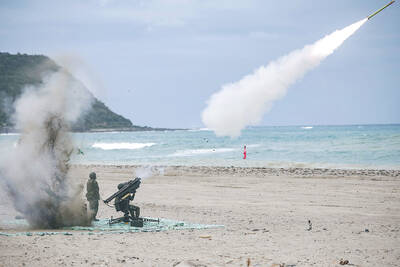
In late October of 1873 the government of Japan decided against sending a military expedition to Korea to force that nation to open trade relations. Across the government supporters of the expedition resigned immediately. The spectacle of revolt by disaffected samurai began to loom over Japanese politics. In January of 1874 disaffected samurai attacked a senior minister in Tokyo. A month later, a group of pro-Korea expedition and anti-foreign elements from Saga prefecture in Kyushu revolted, driven in part by high food prices stemming from poor harvests. Their leader, according to Edward Drea’s classic Japan’s Imperial Army, was a samurai
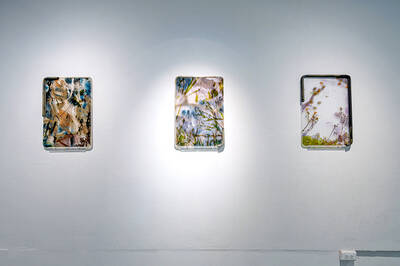
Located down a sideroad in old Wanhua District (萬華區), Waley Art (水谷藝術) has an established reputation for curating some of the more provocative indie art exhibitions in Taipei. And this month is no exception. Beyond the innocuous facade of a shophouse, the full three stories of the gallery space (including the basement) have been taken over by photographs, installation videos and abstract images courtesy of two creatives who hail from the opposite ends of the earth, Taiwan’s Hsu Yi-ting (許懿婷) and Germany’s Benjamin Janzen. “In 2019, I had an art residency in Europe,” Hsu says. “I met Benjamin in the lobby
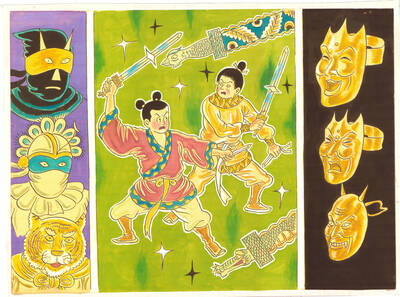
April 22 to April 28 The true identity of the mastermind behind the Demon Gang (魔鬼黨) was undoubtedly on the minds of countless schoolchildren in late 1958. In the days leading up to the big reveal, more than 10,000 guesses were sent to Ta Hwa Publishing Co (大華文化社) for a chance to win prizes. The smash success of the comic series Great Battle Against the Demon Gang (大戰魔鬼黨) came as a surprise to author Yeh Hung-chia (葉宏甲), who had long given up on his dream after being jailed for 10 months in 1947 over political cartoons. Protagonist

A fossil jawbone found by a British girl and her father on a beach in Somerset, England belongs to a gigantic marine reptile dating to 202 million years ago that appears to have been among the largest animals ever on Earth. Researchers said on Wednesday the bone, called a surangular, was from a type of ocean-going reptile called an ichthyosaur. Based on its dimensions compared to the same bone in closely related ichthyosaurs, the researchers estimated that the Triassic Period creature, which they named Ichthyotitan severnensis, was between 22-26 meters long. That would make it perhaps the largest-known marine reptile and would


 RSS
RSS