


Sound is intangible, it leaves no trace but permeates our senses, memories and even ways of thinking, and sometimes moves us to an almost unbearable degree. How then can one capture the elusiveness of sound in a visual form? The most academically ambitious program of the POP Cinema (
"It's impossible to film sound as it has no fixed language and refuses objectification through language. Musical films usually employ emotive elements such as dramas to represent music. But in this program, I want to introduce a new way of seeing and a new form of filming sounds and music," the festival's curator Wang Pai-chang (王派章) said.
Putting aside the festival's philosophical rhetoric, the lineup of 25 fictional, documentary and experimental films presents fascinating works by legendary filmmakers including Satyajit Ray, John Cassavetes, Jean-Luc Godard and Michael Snow. The sheer sound of their names conjures up the incomparable achievement of cinema as an art form. To help audiences navigate these masterpieces and their cinematic representation of sound, the films are broadly grouped into three categories: Music and Memory, Music and Speech, and Music and Self-Destruction.
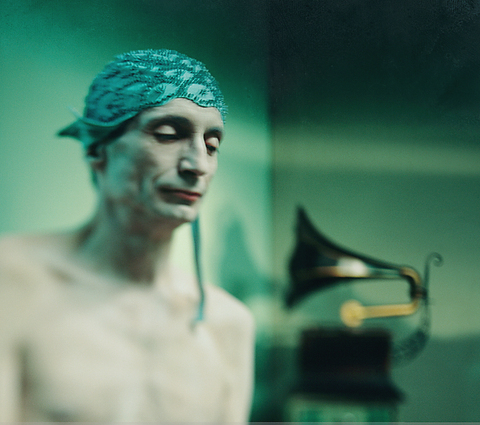
PHOTO COURTESY OF SPOT
The relation between memory and music and the art of sound is an art of time, Wang said.
Sound enters our senses, occupies our bodies and dissipates, leaving traces registered in memories that appear more real than reality itself.
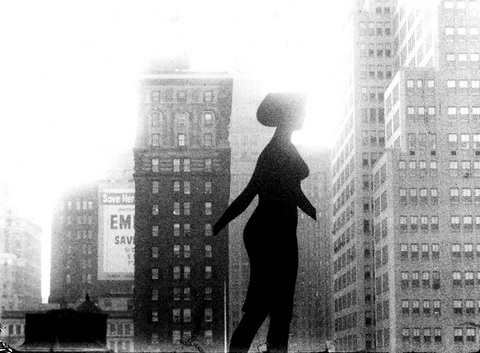
Tosca's Kiss by Swiss director Daniel Schmid and Sound of Brazil by Finnish director Mika Kaurismaki illustrate the translation of music from inside to outside through individuals' perceptions and memories.
PHOTOS COURTESY OF SPOT
Tosca's Kiss is a touching documentary about a group of elderly musicians who live in the Milan retirement home founded by Giuseppe Verdi in 1896. They are classical music professionals who never made it big and now, long forgotten, live lives full of memories. Sound of Brazil is the director's anthro-pological encounter with the colorful diversity of Brazil's musical culture as both an insider, he lived in the country for more than 12 years, and outsider.
Voted one of the 100 most important films in cinema history by the influential French film magazine Cahiers du Cinema, the award-winning film Step Across the Border opens up a dialogue on music so as to create, rather then represent, music. Improvised music and cinema come into existence at the very moment of their collision in the road movie which follows English composer and musician Fred Frith's journey in search of music around the world.
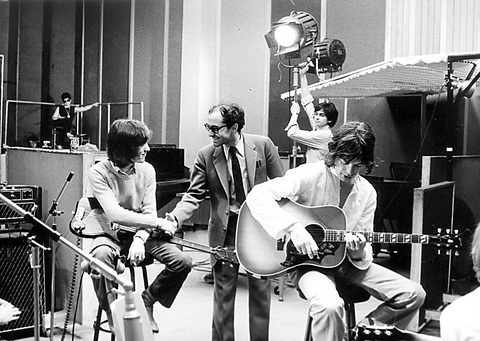
Godard's dialectic collage of the rock band Rolling Stones One Plus One Sympathy for the Devil is also about the forming, or rather the becoming, of music, which is woven into his poignant cultural and political critique. Silent Room by the Canadian duo of audio and visual artists Dominique Skoltz and Herman Kolgen is a cinematic poem without words, offering a set of nightmare-like tableaux evolving around an idea, a thought and an impulse that defy language.
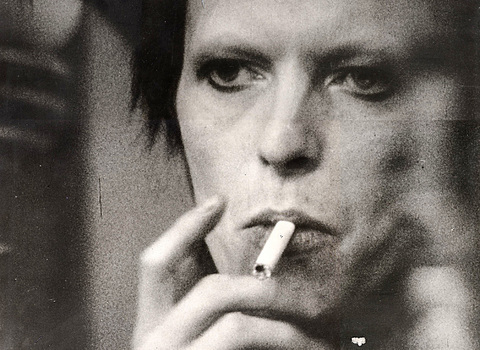
PHOTO COURTESY OF SPOT
A painter, pianist, composer and sculptor, Canadian experimental master Michael Snow explores the relation between seeing and hearing in New York Eye and Ear Control in which the two forms of artistic expression, which stand independently of one another, co-existence to manifest human consciousness.
Coming down to the destructive power of music, Polish-born director Lech Kowalski's Dead On Arrival: A Right of Passage and Born to Lose: The Last Rock `n' Roll Movie and Benjamin Smoke by Jem Cohen and Peter Sillen from the US demonstrate the affinity between drugs and rock music. "It's interesting to see why drug-using is so closely related to the rock music scene. To me, the two share great similarity: people succumb to the power of music just as they yield to the control of drugs," Wang said.
Through the directors' distant yet loving lens, punk band Sex Pistols, US singer Johnny Thunders and the Atlanta-based underground music legend and speed freak Benjamin are seen slowly disintegrating and self-destructing while their idiosyncrasies forever capture the public's imagination.
The underground classic The Connection by US experimental pioneer Shirley Clarke makes the drug culture in 1960s into a fictional, or mocumentary, drama where the director is granted permission to film eight drug addicts in a Manhattan loft apartment while they wait for their heroin dealer to arrive. It has been called the psychedelic version of Waiting for Godot because nothing really happens in the film.
Festival Notes:
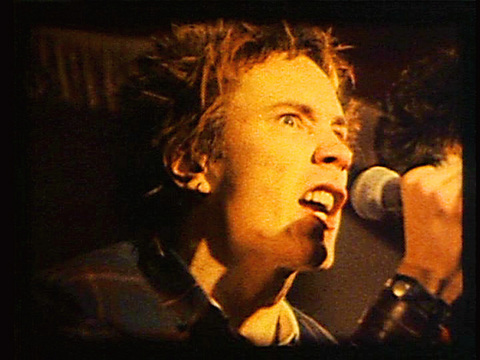
PHOTO COURTESY OF SPOT
What: The Imprint of Sound Conversation of Sound and Image
(聲音的痕跡-影像vs.音樂影展)
When and Where: May 26 to June 9 at SPOT -- Taipei Film House (台北之家-光點電影院): 18 Zhongshan N Rd, Sec 2, Taipei (台北市中山北路二段18號).
June 6 to June 11 at the Wonderful Cinema (萬代福影城): 38 Kungyuan Rd, Taichung (台中市公園路38號)
June 13 to July 4 at the Performance Hall of Taoyuan County Government, Cultural Bureau (桃園縣政府文化局演藝廳): 21 Hsienfu Rd, Taoyuan
(桃園市縣府路21號).
June 27 to July 9 at Kaohsiung Film Archive (高雄市電影圖書館): 10 Hesi Rd, Yencheng district, Kaohsiung (高雄縣鹽埕區河西路10號).
Tickets: Taipei: NT$150, available through NTCH ticketing outlets nationwide or at www.artsticket.com.tw; NT$1,300 for ten-screening package, purchased at Spot. Screenings in Taichung, Taoyuan and Kaohsiung are free of charge.

In late October of 1873 the government of Japan decided against sending a military expedition to Korea to force that nation to open trade relations. Across the government supporters of the expedition resigned immediately. The spectacle of revolt by disaffected samurai began to loom over Japanese politics. In January of 1874 disaffected samurai attacked a senior minister in Tokyo. A month later, a group of pro-Korea expedition and anti-foreign elements from Saga prefecture in Kyushu revolted, driven in part by high food prices stemming from poor harvests. Their leader, according to Edward Drea’s classic Japan’s Imperial Army, was a samurai
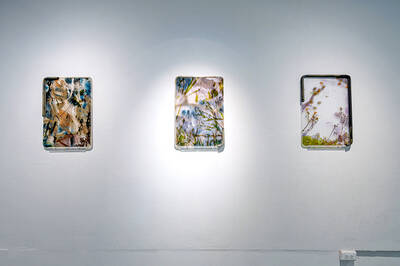
Located down a sideroad in old Wanhua District (萬華區), Waley Art (水谷藝術) has an established reputation for curating some of the more provocative indie art exhibitions in Taipei. And this month is no exception. Beyond the innocuous facade of a shophouse, the full three stories of the gallery space (including the basement) have been taken over by photographs, installation videos and abstract images courtesy of two creatives who hail from the opposite ends of the earth, Taiwan’s Hsu Yi-ting (許懿婷) and Germany’s Benjamin Janzen. “In 2019, I had an art residency in Europe,” Hsu says. “I met Benjamin in the lobby
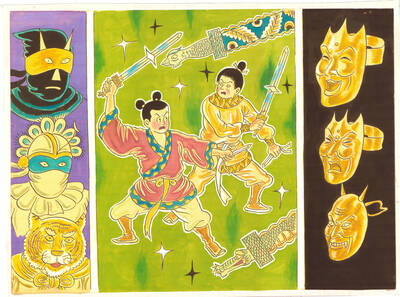
April 22 to April 28 The true identity of the mastermind behind the Demon Gang (魔鬼黨) was undoubtedly on the minds of countless schoolchildren in late 1958. In the days leading up to the big reveal, more than 10,000 guesses were sent to Ta Hwa Publishing Co (大華文化社) for a chance to win prizes. The smash success of the comic series Great Battle Against the Demon Gang (大戰魔鬼黨) came as a surprise to author Yeh Hung-chia (葉宏甲), who had long given up on his dream after being jailed for 10 months in 1947 over political cartoons. Protagonist

Peter Brighton was amazed when he found the giant jackfruit. He had been watching it grow on his farm in far north Queensland, and when it came time to pick it from the tree, it was so heavy it needed two people to do the job. “I was surprised when we cut it off and felt how heavy it was,” he says. “I grabbed it and my wife cut it — couldn’t do it by myself, it took two of us.” Weighing in at 45 kilograms, it is the heaviest jackfruit that Brighton has ever grown on his tropical fruit farm, located


 RSS
RSS