


From the quiet of a high-security lab, away from the furore about human ethics and religious castigation, some of the world's cloning experts have come together on a groundbreaking project.
Working to order, the scientists receive shipments of tissue from around the world, grow them and freeze them in liquid nitrogen, leaving the cells in suspended animation until word comes to revive them and create clones.
Bankrolling the effort is the US billionaire John Sperling, who owns tissue stored in the lab's alarm-fitted "cryotanks." The tissue was taken from his dead dog Missy, and sits alongside slithers of tissue from other pets, mostly cats, their donors the living, the lost and the run-over. For those involved, this is the future of cloning. While the world's attention is focused on whether scientists should be allowed to clone human embryos to make potentially life-saving stem cells, the cloning experts at Sperling's company, Genetic Savings and Clone (GSC), have seen the future and decided it's fluffy.
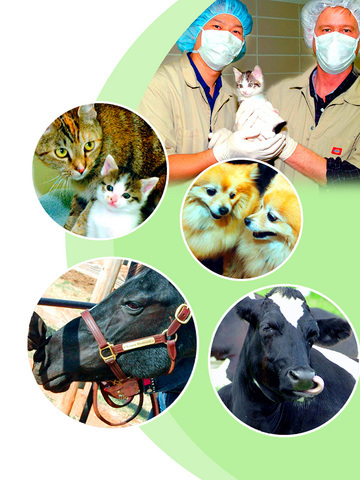
The cloning effort is more than amusement for exceptionally rich and sentimental animal lovers. By commercializing cloning, Sperling's company is taking steps to turn the tedious, painstaking black art of cloning out of the hands of lab experts and into a high-throughput money-making process.
According to Ben Carlson, a spokesman for GSC in Madison, Wisconsin, beyond the US and Canada where the company focuses its marketing, Britons have become the biggest clients, followed by Japanese and Australians. Clients are advised cloning will not reproduce the pet but are reassured that genetically it will be identical. All of the British clients have so far opted to have tissue samples stored -- for a one-off payment of up to NT$47,500 plus a yearly fee of NT$4,750 -- so that in future they have the option to have their pet cloned.
The company has started charging for cloning. So far it has created six cats for pet owners who do not believe nine lives are enough. The first clients paid US$50,000, a fee that dropped to US$32,000 last year.
The business was set up shortly after Ian Wilmut's team at the Roslin Institute in Edinburgh, UK, created Dolly, a cloned sheep, in 1997. In the wake of the excitement, Sperling, a university academic and entrepreneur, contacted the experts Mark Westhusin and Duane Kraemer at Texas A&M University to clone his own rare breed of dog -- a spayed collie-husky mix named Missy. The so-called Missyplicity project achieved a world first in February 2002 with the birth of Cc, short for Copycat, a cloned kitten. Five months later Missy died, the team stumped by the difficulty of dog cloning.
Although the Missyplicity project failed to clone Sperling's dog, GSC was spun out of the university to make money from storing pets' DNA, so it could be used to create clones in the future. Cat cloning services were offered in 2004 and researchers are now trying to crack dog cloning. To date, only one lab, that of the disgraced South Korean stem cell researcher Woo Suk-hwang, has succeeded in cloning a dog, Snuppy, an Afghan hound who celebrated his first birthday last month. On board with GSC is a scientist from the lab.
According to Carlson, people approach the company to have their pets cloned for different reasons. Sometimes the pet is an unusual mix of breeds and sterile, and cloning is seen as the only way to replicate it. But sometimes people just want to see a dead pet's legacy continued. "Many of our clients are motivated by the wish to have a new pet that's related to their favorite pet, and that carries on its lineage."
Testimonials posted on GSC's Web site suggest that sometimes clients believe their clone is a carbon copy of their old pet.
According to GSC, Dan, a forty-something investment adviser, wrote in an e-mail on receiving his cloned kitten, Little Gizmo, last year: "She is exact, exact, exact in all of her mannerisms, habits, traits and personality."
It is the kind of comment that could mislead potential clients into thinking cloning will resurrect their pet rather than replace it with a genetic copy, according to Bruce Whitelaw, a cloning expert at the Roslin Institute. "If it sits on your old cat's favorite pillow watching TV -- well if you put the pillow out and encourage the cat to sit on it, it probably will," he said.
Kraemer, of the original Texas team behind Cc, says research into cloned pigs in which their characters were assessed compared with an age-matched group of non-related pigs, showed the spread in behavioral differences was as great among clones as among other pigs.
Most of GSC's clients, numbered in the hundreds rather than thousands, come from the US. Part of the reason is that the scientists in GSC's lab must receive tissue samples within five days, and they must be taken quickly if the pet has just died. The company sends out the equivalent of a coolbox to a nearby veterinary surgeon who takes the samples.
Another hurdle to foreign clients is that many countries have laws prohibiting the import of animals unless they have received injections for diseases such as rabies.
Carlson says the company is planning to overcome the logistical hurdles by extending the business overseas. Expanding the business to include dog cloning is high on the wishlist, but cloning is still notoriously tricky. The creation of Copycat by the Texas group took place after more than 70 failed attempts to get cloned embryos to lead to a successful pregnancy.
According to Kraemer, even with the lab of top scientists Sperling has gathered, profits are likely to be elusive.
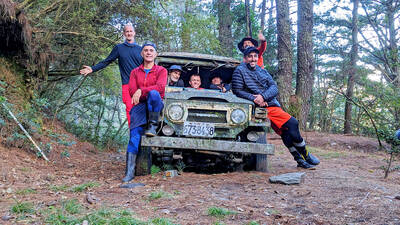
The year was 1991. A Toyota Land Cruiser set out on a 67km journey up the Junda Forest Road (郡大林道) toward an old loggers’ camp, at which point the hikers inside would get out and begin their ascent of Jade Mountain (玉山). Little did they know, they would be the last group of hikers to ever enjoy this shortcut into the mountains. An approaching typhoon soon wiped out the road behind them, trapping the vehicle on the mountain and forever changing the approach to Jade Mountain. THE CONTEMPORARY ROUTE Nowadays, the approach to Jade Mountain from the north side takes an

Last week Joseph Nye, the well-known China scholar, wrote on the Australian Strategic Policy Institute’s website about how war over Taiwan might be averted. He noted that years ago he was on a team that met with then-president Chen Shui-bian (陳水扁), “whose previous ‘unofficial’ visit to the US had caused a crisis in which China fired missiles into the sea and the US deployed carriers off the coast of Taiwan.” Yes, that’s right, mighty Chen caused that crisis all by himself. Neither the US nor the People’s Republic of China (PRC) exercised any agency. Nye then nostalgically invoked the comical specter
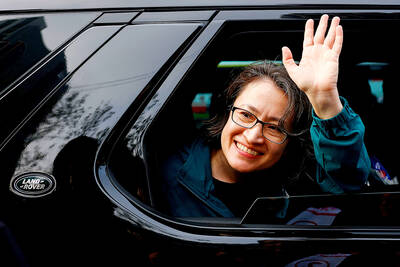
Relations between Taiwan and the Czech Republic have flourished in recent years. However, not everyone is pleased about the growing friendship between the two countries. Last month, an incident involving a Chinese diplomat tailing the car of vice president-elect Hsiao Bi-khim (蕭美琴) in Prague, drew public attention to the People’s Republic of China’s (PRC) operations to undermine Taiwan overseas. The trip was not Hsiao’s first visit to the Central European country. It was meant to be low-key, a chance to meet with local academics and politicians, until her police escort noticed a car was tailing her through the Czech capital. The

April 15 to April 21 Yang Kui (楊逵) was horrified as he drove past trucks, oxcarts and trolleys loaded with coffins on his way to Tuntzechiao (屯子腳), which he heard had been completely destroyed. The friend he came to check on was safe, but most residents were suffering in the town hit the hardest by the 7.1-magnitude Hsinchu-Taichung Earthquake on April 21, 1935. It remains the deadliest in Taiwan’s recorded history, claiming around 3,300 lives and injuring nearly 12,000. The disaster completely flattened roughly 18,000 houses and damaged countless more. The social activist and


 RSS
RSS