


Surgeon's best friend
Some robots assemble cars and some vacuum floors. Soon, at the Providence Saint Joseph Medical Center in Burbank, a robot named Vince will be helping top doctors perform minimally invasive surgery.
The US$1.5 million robot, the first of its model to be installed west of the Mississippi River, is less C-3PO and more many-armed arcade game. A dual-lens camera on one arm captures a three-dimensional image, while three surgical arms enter the patient's body and operate through small incisions.

PHOTO: AFP
Vince is the latest upgrade in the shift toward endoscopic (or minimally invasive) surgery, which began in the 1990s. Unlike invasive surgery, where doctors cut open an area and operate directly, endo-scopic surgery requires only tiny incisions used for the entry of fiber-optic cameras and operating instruments, resulting in less scarring and faster recovery time.
Using endoscopic instruments and small incisions, Vince the robot adds a twist by translating a doctor's hand movements into much finer strokes.
As with most new procedures and equipment, Vince has a learning curve. "It's kind of like learning to dance. ... It takes a while before it becomes reflexive," Schaerf said.
Worth its salt?
Soft water may be, well, harder on your health and the environment than you realize. So say a growing chorus of US municipal water districts and Pasadena-based LifeSource Water, maker of a household water filtration system.
Water softeners work through a process that exchanges "hard" minerals for sodium, removing elements like calcium and magnesium while leaving chlorine in the water intact. Soft water also often has higher lead content (due to its tendency to leach lead from pipes). The resulting brew leaves less soap scum on bathroom tile, but the dubious trade-off has prompted water sanitation experts to speak up on the hazards of drinking -- or even bathing in -- soft water.
India moves to prevent epidemic
India will inoculate about a million children to prevent another epi-demic of Japanese encephalitis in the sprawling state of Uttar Pradesh, an official said on Sunday.
Over 5,800 encephalitis cases were reported last year in the state alone, where health care facilities for the poor are negligible.
The vaccination drive will begin within 10 days, a senior local government official said, starting in an eastern district where an outbreak of the disease last November killed around 1,500 people.
The number of children below 15 years of age in the state is about seven million but officials privately admit that the government does not have the resources to buy vaccines, which are coming from China, to inoculate them all.
"We are expected to get one million vaccines. Children below 10 years of age will be vaccinated in the first go," Manoj Mishra, joint director in the provincial health directorate said.
"More children will be inoculated if we get more vaccines," he said.
Outbreaks usually begin with the onset of the annual monsoon rains between June and September. Mosquitoes carry the disease from pigs to human beings.
Raspberries for rude health
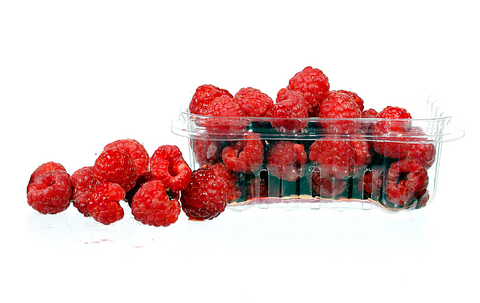
Raspberries are fantastically healthy, even more so than the broccoli, kiwis and tomatoes that are better known for the healthy nutrients and antioxidants they contain.
Researchers at the agricultural college at Wageningen in the Netherlands say the pale red fruit contain much more in the way of healthy substances than any other food they have come across.
They also contain 10 times as much in the way of antioxidants than do tomatoes. Antioxidants neutralize free radicals that damage cells and cause disease.
One disadvantage is that raspberries are rather expensive and available only in small quantities.
Writing in the magazine Bio-Factors, the scientists called for new varieties to be developed to increase yield and for an improvement in taste, as not everyone likes the flavor of raspberry.
Underage boozing
Australian health experts issued a warning yesterday against the fad of milk-based alcoholic drinks, saying new research found many teenagers cannot tell the difference between the cocktails and a milkshake.
With the number of milk-based alcohol drinks in the market growing, including one mix of chocolate milk and vodka marketed under the name Mudshake, Australia's National Drug and Alcohol Research Centre (NDARC) urged manufacturers to rethink their products.
The centre's Jan Copeland, who wrote the report released yesterday, said it was important that alcoholic drinks actually taste like alcohol to discourage under-age drinking.
"Young humans are programmed to like sweet and milky food -- like breast milk for example. The reason they don't take to alcohol is because of the slightly bitter, burning sensation and these drinks take away that barrier," she said.
The survey of youths' responses to the new drinks, which the centre said was the first of its kind worldwide, found that milk-based alcoholic beverages were "extremely palatable" to adolescents as young as 12.
Copeland said some mixtures were so good at masking the taste that many young drinkers could not even tell they contained alcohol.
"We were particularly concerned with the under-16s -- they rated the Vodka Mudshake the same as chocolate milk," she said.
The NDARC stopped short of calling for a ban on the drinks -- often referred to as "alcopops" -- but urged manufacturers to make their products more alcoholic-tasting and to stop targeting young people in their marketing.
"I think the manufacturers should look at their formulations now and look to change them to make them more alcoholic-tasting so that then they're not likely to be inadvertently taken up by adolescents," Copeland told ABC Radio.

Last week Joseph Nye, the well-known China scholar, wrote on the Australian Strategic Policy Institute’s website about how war over Taiwan might be averted. He noted that years ago he was on a team that met with then-president Chen Shui-bian (陳水扁), “whose previous ‘unofficial’ visit to the US had caused a crisis in which China fired missiles into the sea and the US deployed carriers off the coast of Taiwan.” Yes, that’s right, mighty Chen caused that crisis all by himself. Neither the US nor the People’s Republic of China (PRC) exercised any agency. Nye then nostalgically invoked the comical specter
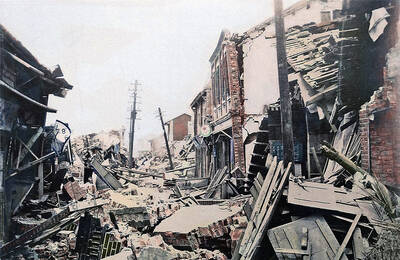
April 15 to April 21 Yang Kui (楊逵) was horrified as he drove past trucks, oxcarts and trolleys loaded with coffins on his way to Tuntzechiao (屯子腳), which he heard had been completely destroyed. The friend he came to check on was safe, but most residents were suffering in the town hit the hardest by the 7.1-magnitude Hsinchu-Taichung Earthquake on April 21, 1935. It remains the deadliest in Taiwan’s recorded history, claiming around 3,300 lives and injuring nearly 12,000. The disaster completely flattened roughly 18,000 houses and damaged countless more. The social activist and

Over the course of former President Ma Ying-jeou’s (馬英九) 11-day trip to China that included a meeting with Chinese Communist Party (CCP) leader Xi Jinping (習近平) a surprising number of people commented that the former president was now “irrelevant.” Upon reflection, it became apparent that these comments were coming from pro-Taiwan, pan-green supporters and they were expressing what they hoped was the case, rather than the reality. Ma’s ideology is so pro-China (read: deep blue) and controversial that many in his own Chinese Nationalist Party (KMT) hope he retires quickly, or at least refrains from speaking on some subjects. Regardless

Approaching her mid-30s, Xiong Yidan reckons that most of her friends are on to their second or even third babies. But Xiong has more than a dozen. There is Lucky, the street dog from Bangkok who jumped into a taxi with her and never left. There is Sophie and Ben, sibling geese, who honk from morning to night. Boop and Pan, both goats, are romantically involved. Dumpling the hedgehog enjoys a belly rub from time to time. The list goes on. Xiong nurtures her brood from her 8,000 square meter farm in Chiang Dao, a mountainous district in northern Thailand’s


 RSS
RSS