


With his latest film, Munich, Steven Spielberg forgoes the emotional bullying and pop thrills that come so easily to him to tell the story of a campaign of vengeance that Israel purportedly brought against Palestinian terrorists in the wake of the 1972 Olympics. An unsparingly brutal look at two peoples all but drowning in a sea of their own blood, Munich is by far the toughest film of the director's career and the most anguished. Spielberg has been pummeling audiences with his virtuosity for nearly as long as he has been making movies; now, he tenders an invitation to a discussion.
The film's title suggests that this is the story of what happened at Munich in September 1972, and it is, though only in part. Most of the action -- and if nothing else, this nail-biter is a full-on action movie -- takes place in the immediate aftermath of Munich, after 11 Israeli hostages were murdered by members of a Palestinian terrorist group known as Black September. Based on George Jonas' disputed book Vengeance: The True Story of an Israeli Counter-Terrorist Team, and adapted to the screen by the oddball couple of Eric Roth and Tony Kushner (Forrest Gump meets Angels in America), the film pivots on five Israeli agents, who, recruited to exact revenge by a country that will officially deny their existence, zigzag Europe as they hunt suspects over months and then years.
With its art-directed verisimi-litude and promiscuous use of archival material (Jim McKay makes a cameo appearance in the film, as does the voice of Peter Jennings) Munich is one of those Hollywood fictions that seem to befuddle those who miss the nuance in the words "inspired by real events." Here, those events begin with members of Black September scaling the Olympic village fence and taking both Israeli athletes and coaches hostage. Most of what happens next, including the agonizing wait at the Olympic village and the catastrophic showdown, emerges piecemeal, in bursts of violence that periodically interrupt the narrative and increasingly trouble the sleep of the story's quavering moral center, a former Mossad agent named Avner (the Australian actor Eric Bana).
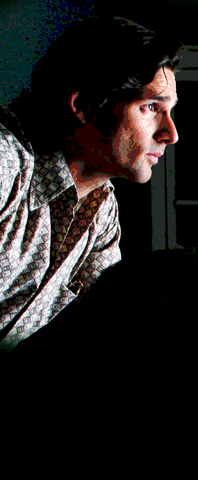
For Black September, Munich is both a theater of cruelty and a means to international visibility. For the Israeli Prime Minister Golda Meir (Lynn Cohen), who personally presses Avner into vengeance, Munich is more than the scene of a crime: it is a reminder, a warning, a defensive call to arms. It is also why, with Meir's blessing, instructions from a Mossad case officer (Geoffrey Rush) and hundreds of thousands of US dollars tucked in a Swiss bank, Avner leaves Jerusalem and his wife and travels to Europe. There, he meets with his team members, any one of whom could star in his own espionage potboiler: the sexy South African in tight pants, Steve (Daniel Craig), the tweedy, pipe-smoking Israeli, Carl (Ciaran Hinds), the smoothly urbane German antiques dealer, Hans (Hanns Zischler) and the nebbishy Belgian toy and bomb maker, Robert (Mathieu Kassovitz).
Despite the brief pop-cultural dissonance brought on by the sight of the Incredible Hulk, whom Bana played in the 2003 blockbuster, sharing the screen with the new James Bond (Craig) and HBO's Julius Caesar (Hinds), the actors quickly make these character types their own. The missions happen just as quickly, if not without incident. In Rome, the team tracks a Palestinian intellectual who has just translated Scheherazade (which, in a Kushner-sounding touch, the translator describes as a "narrative of survival") and may have terrorist connections. When the moment comes for Avner to face his prey, an older man with trembling hands, the agent fumbles his gun. Later in Paris, in a sequence that finds Spielberg outdoing Hitchcock with bravura crosscutting, Avner again nearly botches the job, putting his team and an innocent bystander in danger.
If Bana sometimes seems overly sensitive for an undercover agent it's largely because without his anxious eyes and jittery hands Avner would not be half as sympathetic or rhetorically effective. What makes Avner memorable, more than just an unusually animated action figure, is that he is never more human than when faced with killing another person. More than the story's slow-to-dawn ambivalence about Avner's mission, more than the obvious effort made to ensure that the Palestinian terrorists are more than faceless thugs (they are thugs with faces and speeches), it is Avner's humanity, however compromised, that gives Munich the weight of a moral argument. It's an argument, though, that has little to do with whether Israel has a right to exist or whether the Palestinians have the right of return. Only this matters: blood has its costs, even blood shed in righteous defense.
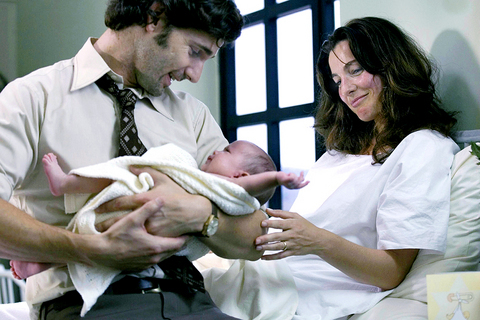
PHOTO COURTESY OF FOX MOVIES
Munich is as much a meditation on ethics as a political thriller, but it takes nothing away from the film to say that the most adrenaline-spiked part of this genre hybrid involves getaway cars, false papers and the sight of the future Israeli Prime Minister Ehud Barak, who pops up during a mission in Lebanon, mowing down terrorists while dressed in a woman's wig and high heels. In between the cloak, dagger and drag, the telephone bombs and a veritable alphabet soup of intrigue (CIA, PLO, KGB), the years pass with increasing desperation and the team's numbers dwindle. Forced into a new kind of exodus, far from the homeland meant to provide justification for their every action, Avner and his men wander the continent that three decades earlier had been the staging ground for the extermination of European Jewry.
For these wandering, bickering, argumentative Jews, every safe house and port of call becomes an occasion for yet another discussion about Israel and identity. Nothing if not conversational, Munich is organized around three crucial dialogues: Meir's discussion of vengeance with her advisers, which ends with her declaration that every civilization finds it necessary to negotiate compromises with its own values; a brief discussion between Avner and a Palestinian who predicts Israel's defeat; and, finally, a bitter encounter between two Israelis who fail to find common ground even in that multicultural utopia known as Brooklyn. With its dead-eye view of Lower Manhattan and the twin towers, this scene makes clear (as if there was any doubt) that Spielberg is as worried about this country as he is about Israel.
As his tours of duty with the historian Stephen Ambrose suggested (Saving Private Ryan, Band of Brothers), Spielberg can give the appearance of wanting to be seen as more than just a Hollywood director, particularly since he added "adult contemp-orary" to his playlist, mixing history in with his dinosaurs. That makes him a soft target, and Munich has already been strafed by op-ed attacks. The accusations might make sense if the filmmaker took us into the terrorists' homes for some moral relativism. But Spielberg is doing nothing more radical here than advancing the idea that dialogue ends when two enemies, held hostage by dusty history and hot blood, have their hands locked around each other's throats. You can't hold your children with your hands so occupied, though evidently you can send them off to war.
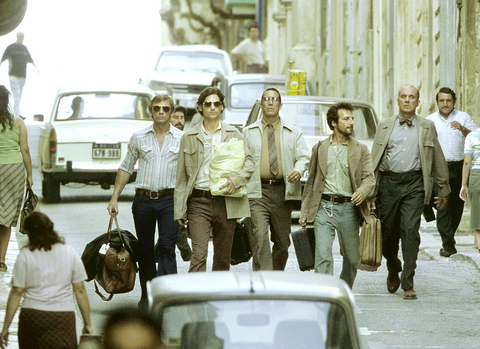
PHOTO COURTESY OF FOX MOVIES
It would do a disservice to Spielberg to linger too long on the pre-emptive attacks on the film: more than anything, Munich is a slammin' entertainment filled with dazzling set pieces and geometric camerawork. Different palettes help keep the narrative flowing,
imparting a contrasting vibe to each landscape: the bleached-out Israeli exteriors are as faded as old family photographs, while the verdant French countryside where Avner meets a mysterious intelligence broker called Papa (Michael Lonsdale) has the seductive tug of an idyll. This pocket of green and Old World civility, embellished from Jonas's book, is the film's shrewdest and most entertaining conceit: a movie within a movie, it is a vision of evil as both seductive romance and bureaucratic banality.
Avner meets Papa through his son, Louis, a dandy with a German shepherd and a sneer played by the French actor Mathieu Amalric. Their organization supplies information for fantastic sums but insists on never doing business with governments, a philosophy that Papa explains during one al fresco meal at his compound. Nestled in haute-bourgeois luxury, surrounded by children and barking dogs, this self-described hero of the Maquis proclaims himself an equal-opportunity hater of all governments. Next to this weary sophisticate, with his blood sausages and free-market nihilism, Avner comes off as a punk, an amateur. But Avner is also an idealist and, unlike Papa, who believes in only his family and money, the Israeli clings to a dream of home. And if that dream remains out of reach, well, Spielberg asks, what other choice does he have?

In late October of 1873 the government of Japan decided against sending a military expedition to Korea to force that nation to open trade relations. Across the government supporters of the expedition resigned immediately. The spectacle of revolt by disaffected samurai began to loom over Japanese politics. In January of 1874 disaffected samurai attacked a senior minister in Tokyo. A month later, a group of pro-Korea expedition and anti-foreign elements from Saga prefecture in Kyushu revolted, driven in part by high food prices stemming from poor harvests. Their leader, according to Edward Drea’s classic Japan’s Imperial Army, was a samurai

Approaching her mid-30s, Xiong Yidan reckons that most of her friends are on to their second or even third babies. But Xiong has more than a dozen. There is Lucky, the street dog from Bangkok who jumped into a taxi with her and never left. There is Sophie and Ben, sibling geese, who honk from morning to night. Boop and Pan, both goats, are romantically involved. Dumpling the hedgehog enjoys a belly rub from time to time. The list goes on. Xiong nurtures her brood from her 8,000 square meter farm in Chiang Dao, a mountainous district in northern Thailand’s

Located down a sideroad in old Wanhua District (萬華區), Waley Art (水谷藝術) has an established reputation for curating some of the more provocative indie art exhibitions in Taipei. And this month is no exception. Beyond the innocuous facade of a shophouse, the full three stories of the gallery space (including the basement) have been taken over by photographs, installation videos and abstract images courtesy of two creatives who hail from the opposite ends of the earth, Taiwan’s Hsu Yi-ting (許懿婷) and Germany’s Benjamin Janzen. “In 2019, I had an art residency in Europe,” Hsu says. “I met Benjamin in the lobby
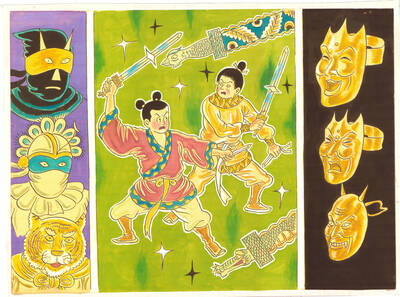
April 22 to April 28 The true identity of the mastermind behind the Demon Gang (魔鬼黨) was undoubtedly on the minds of countless schoolchildren in late 1958. In the days leading up to the big reveal, more than 10,000 guesses were sent to Ta Hwa Publishing Co (大華文化社) for a chance to win prizes. The smash success of the comic series Great Battle Against the Demon Gang (大戰魔鬼黨) came as a surprise to author Yeh Hung-chia (葉宏甲), who had long given up on his dream after being jailed for 10 months in 1947 over political cartoons. Protagonist


 RSS
RSS