


It's fight night at Rajadamnoen kickboxing stadium in downtown Bangkok, but if promoter Pariyakorn Ratanasuban's fighters win, she won't be able to climb into the ring to present them with the winner's belts.
"Because of Thai traditions, people still think that women should not do sport like this," the 25-year-old explains in a boardroom near the ring, where women are barred from entering when men compete.
"Some people think that women should be in the house to be housewives, not doing strong sports like this."
For the last two years, Pariyakorn has run muay Thai fights, as this brand of kickboxing is called in Thailand, and muay ying, the women's version.
Although the fights are usually on the same bill, the men fight first. Women are allowed into the arena to watch, but they are forbidden to enter the ring of two main stadiums in Bangkok.
Ultimately Pariyakorn wants to shake-up the system so that women can make careers from one of the country's biggest sports, both as fighters and as promoters.
If anyone has the credentials to transform one of the most macho parts of Thai society, Pariyakorn does.
She was born into a muay Thai dynasty as the daughter of Songchai Ratanasuban -- Thailand's answer to Don King -- who has dominated the sport for 27 years.
Sport savvy
But she also brings the marketing and media savvy of modern corporate Thailand to a sport steeped in the country's ancient traditions.
Before joining the family business, Pariyakorn received a bachelor's degree in social administration. Then she took a job as an account executive with Thai petrochemical giant PTT, because she wanted to learn how major companies worked so she could apply those methods to her business.
She then studied at night for a master's in general administration.
Those lessons led her to computerize the business, creating a database of the more than 5,000 fighters nationwide Pariyakorn represents, and improving the company's Web site.
She also expanded video sales of famous fights. The company now ships some 8,000 video compact discs a month, mostly overseas to France and Australia. DVDs are planned from February.
Her father still heads the company, although in practice she runs about 80 percent of the business while her mother Saowanee does the accounting and her brother Siraphop handles the international side.
Yet all her talent has not been enough to overcome media and sponsor skepticism over whether women belong inside boxing rings. Men's sports like football and golf dominate Thai media, with some coverage of women's golf and tennis.
Women's fight
Some of the roughly 1,000 female boxers represented by the OneSongchai company have appeared on television as talk show guests and helped increase the sport's exposure, but not as fighters during prime time slots.
"We have on occasions carried items on women's kick-boxing, but more for novelty value than anything else," Bangkok Post sports editor Roger Crutchley says.
Pariyakorn says she meets similar reluctance from sponsors, who aren't sure who would watch muay ying.
"I also would like to give a chance to female boxers," she says.
Muay Thai is frequently a route out of poverty for male fighters, many of whom leave their impoverished villages for Bangkok, where they earn at least 10,000 baht (about US$250) per fight -- more than the average monthly salary back home.
Male boxers start out about eight years of age and their career lasts an average 20 years, fighting about five or six times a year. National men's champions can earn at least US$765 a fight.
For women, the stakes are much lower: The total prize money for the inaugural Queen's Cup women's tournament in 2004 was US$250. They fight an average of just three times a year.
Pariyakorn believes women fighters should be able to find a career in the ring that would help support their families back home.
She hopes to begin that change with a new series of women's fights to be held every three months, starting with a tournament next month to coincide with International Women's Day on March 8, which she hopes will be broadcast on cable television.
But tonight she is working with men, in another one of the crowded, messy and smelly stadiums where it feels like she has spent her whole life.
She's used to the pungent smells of oils and creams applied to warm up muscles.
"Women don't like the smell and it stains shirts," she says from inside a locker room, showing her company's new brand of herbal oil she hopes women fighters will take to using.
In muay Thai, each fight lasts around 25 minutes, broken into five rounds of three minutes each,
followed by two-minute breaks, when fighters return to their corners to sit on small stools inside large metal trays.
These catch their sweat, spit and water as their managers pour drink bottles over their heads and rinse their mouth guards.
When the fight is over, Pariyakorn's father will present the prizes to winners.
Even though she's not allowed in the ring, she walks purposefully through the stadium amid the commotion as young fighters are rubbed down, their hands taped by trainers and gloves forced on.
She disappears into crowds of Thais and puzzled foreign tourists who clutch tickets and stand at attention as the royal anthem plays.
Then two boys spring into the ring, perform traditional bowing rituals, and ready for the first bout of the night.
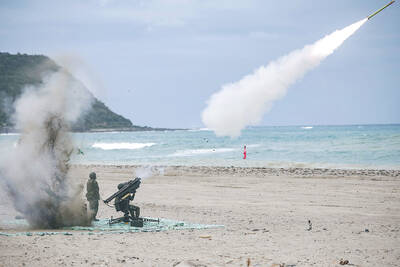
In late October of 1873 the government of Japan decided against sending a military expedition to Korea to force that nation to open trade relations. Across the government supporters of the expedition resigned immediately. The spectacle of revolt by disaffected samurai began to loom over Japanese politics. In January of 1874 disaffected samurai attacked a senior minister in Tokyo. A month later, a group of pro-Korea expedition and anti-foreign elements from Saga prefecture in Kyushu revolted, driven in part by high food prices stemming from poor harvests. Their leader, according to Edward Drea’s classic Japan’s Imperial Army, was a samurai

The following three paragraphs are just some of what the local Chinese-language press is reporting on breathlessly and following every twist and turn with the eagerness of a soap opera fan. For many English-language readers, it probably comes across as incomprehensibly opaque, so bear with me briefly dear reader: To the surprise of many, former pop singer and Democratic Progressive Party (DPP) ex-lawmaker Yu Tien (余天) of the Taiwan Normal Country Promotion Association (TNCPA) at the last minute dropped out of the running for committee chair of the DPP’s New Taipei City chapter, paving the way for DPP legislator Su

Located down a sideroad in old Wanhua District (萬華區), Waley Art (水谷藝術) has an established reputation for curating some of the more provocative indie art exhibitions in Taipei. And this month is no exception. Beyond the innocuous facade of a shophouse, the full three stories of the gallery space (including the basement) have been taken over by photographs, installation videos and abstract images courtesy of two creatives who hail from the opposite ends of the earth, Taiwan’s Hsu Yi-ting (許懿婷) and Germany’s Benjamin Janzen. “In 2019, I had an art residency in Europe,” Hsu says. “I met Benjamin in the lobby
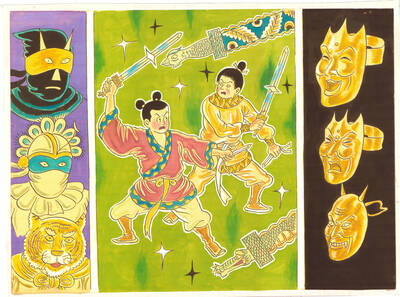
April 22 to April 28 The true identity of the mastermind behind the Demon Gang (魔鬼黨) was undoubtedly on the minds of countless schoolchildren in late 1958. In the days leading up to the big reveal, more than 10,000 guesses were sent to Ta Hwa Publishing Co (大華文化社) for a chance to win prizes. The smash success of the comic series Great Battle Against the Demon Gang (大戰魔鬼黨) came as a surprise to author Yeh Hung-chia (葉宏甲), who had long given up on his dream after being jailed for 10 months in 1947 over political cartoons. Protagonist


 RSS
RSS