


The Taipei Golden Horse Film Festival
With more than two 200 art-house, feature and short films shown in a 14-day period, the country's biggest movie festival is expected to bring floods of film lovers to the screening venues at the Warner Village Cinema complex in Xinyi district.
To present an exciting collection of works by renowned filmmakers and emerging talents alike, films from every continent were selected from major film festivals throughout the year .
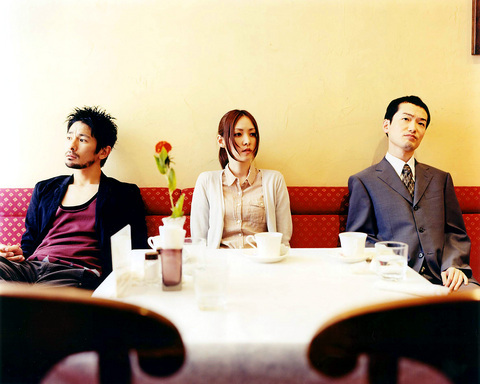
PHOTO COURTESY OF TAIPEI GOLDEN HORSE FILM FESTIVAL
A series of guest speeches, panel discussions, seminars and special screenings are also scheduled to be held during the festival with the aim of strengthening international exchanges in the industry.
After the primary screenings in Taipei, the festival will go on tour until mid-December, stopping at Keelung, Kaohsiung, Changhua, Taichung, Hsinchu and Hualien.
Many of the screenings in Taipei have already sold out but there are still many opportunities to enjoy some outstanding non-Hollywood movies.
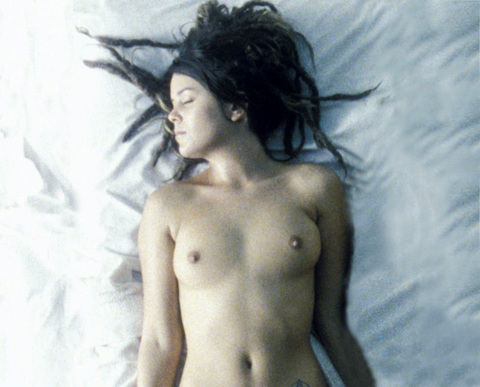
The "Master Class" section presents a collection of works by internationally esteemed directors such as Ingmar Bergman, Peter Greenaway, Jim Jarmusch, Werner Herzog and Wim Wenders from Germany and Raoul Ruiz, Alain Cabalier and Manoel di Oliveira from France.
Abbas Kiarostami, Ken Loach and Ermanno Olmi joined together to make Tickets, a triptych composed of three interconnected stories which take place on a train journey from Central Europe to Rome.
Changing Times by veteran director Andre Techine teams up two of France's national treasures, Catherine Deneuve and Gerard Depardieu, and tells the tale of two aging lovers coming to terms with long-lost love.

Also worth watching is Filmman a poetic documentary about a filmmaker's relationship with his camera, by French director Alain Cavalier. The autobiographic film took nearly 10 years to complete.
The Wild Blue Yonder by Werner Herzog is a space fantasy which fuses images from outer space and underwater scenes to convey the director's views on humankind and the universe.
Regrettably, most spotlighted films in this section sold out quickly, including 85-year-old Ingmar Bergman's final work Saraband, Jim Jarmusch's Cannes winner Broken Flowers and Jean-Pierre Dardenne and Luc Dardenne's second Cannes' Golden Palm Award winner The Child.
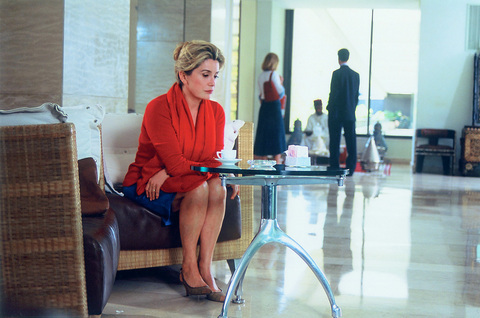
The "Celebration of Cinema" category presents a collection of world cinema films selected from this year's international film festivals.
Lemming, the opening film of this year's Cannes International Film Festival, is about a dead rodent in the drain which triggers the collapse of a couple's once ideal and orderly life.
In Housewarming, the audience gets to see icy-looking French beauty Carole Bouquet playing a lawyer who dances and sings her way through this French comedy.
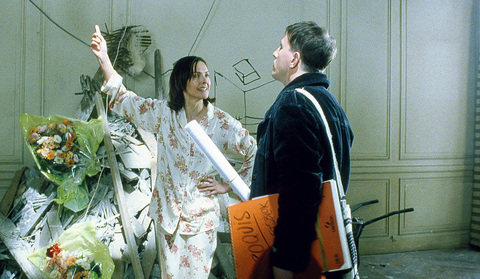
Blood and Bones is an epic film by Sai Yoiachi which depicts the harsh and bloodstained life of a Korean immigrant moving to Japan on the eve of the World War II.
Another film worth watching is The Piano Tuner of Earthquakes by the Quay Brothers. They returned to feature films after a decade to present a fable set in a completley mechanized era. The film mixes animation with puppetry and bizarre costumes.
A big winner at this year's Cesar Awards in France, L'Esquive offers a refreshing look at a 15-year-old boy's life in the suburbs of Paris.

"Global Vision" presents 38 films from 32 countries in Asia, Latin America, North America, Africa and Europe. Cannes winner The Forsaken Land from Sri Lanka follows the story of a woman and a man burdened by love and guilt. A Stranger of Mine traces the lives of five characters in a neurotically funny take on modern life in Japan. Woman of Breakwater from the Philippines brings to light the cruel, sometimes unbearable, stories of people living below the poverty line.
Battle in Heaven and Japon, both desolate cinematic landscapes crafted by Carlos Reygadas the rising star of world cinema from Mexico are must-sees.
Orlando Vargas from Uruguay is a stylish, beautifully composed film about the disappearance of a disheartened businessman.
The Great Ecstasy of Robert Carmichael from the UK is a highly controversial work that puts A Clockwork Orange by Stanley Kubrick to shame.
The Death of Mr. Lazarescu employs a documentary approach to tell of a 63-year-old man's attempts to receive medical attention on one Saturday evening. The film offers a poignant view on the absurdity of modern medical and social welfare systems.
"The Digital Shorts (R)evolution" segment takes a comprehensive look at the development of digital films over the past decade.
The category features six sections curated by two prestigious establishments for digital and experimental cinema, Onedotzero from the UK and Light Cone from France.
The films grouped in this section form an extensive discourse on both the force of digital filmmaking and the complex relation between digital processes, film, cinema and other media.
Included in these selections are rarely seen works by pioneering and important figures on the avant-garde side of cinema, such as Stan Brakhage, Nathaniel Dorsky, Peter Kubelka, Naomi Uman, Mike Hoolboom and Takashi Ito, to just name a few. For those who are keen on exploring cutting-edge work that is sometimes subversive, the films of these six sections are not to be missed.
The "International Digital Shorts Competition," the only competition section in the TGHFF, features nine local productions and 36 international entrants scheduled to be shown from next Tuesday through Friday.
Tony Wu (
The films were selected based on their insight into the potential direction of digital technology and their ability to present new visual and aesthetic experiences.
Such criteria make the category the most cinematically challenging section of the festival.
Empire is a powerful experimental short which questions the US-led war on terrorism by juxtaposing president Bush's speeches with TV commercials from the 1950s and digital graphics of weapons and soldiers. The film offers a world view different from that presented by the mass media and in which the sweet and innocent American life way of life is twisted and deformed by the shadow of imperialism.
While Darwin Sleeps by Paul Bush from the UK is made up of single frames taken from still photographs of 300 insect specimens and edited into a myriad of combinations to create a visually stunning composition. His other short, Shinjuku Samurai, employs similar methods placing single-frame portraits against a fast moving urban landscape. Nomadic Glimpses from Argentina is a theater of voyeurism made up of thousands of fragments.
Another must-see is Austrian master Peter Tscherkassky's Instruction for a Light and Sound Machine, a filmic
discourse on the essence of the media. Murder Face and Lost in Remembering are two enlightening experimental pieces by local filmmaker Ma Chun-fu (

In late October of 1873 the government of Japan decided against sending a military expedition to Korea to force that nation to open trade relations. Across the government supporters of the expedition resigned immediately. The spectacle of revolt by disaffected samurai began to loom over Japanese politics. In January of 1874 disaffected samurai attacked a senior minister in Tokyo. A month later, a group of pro-Korea expedition and anti-foreign elements from Saga prefecture in Kyushu revolted, driven in part by high food prices stemming from poor harvests. Their leader, according to Edward Drea’s classic Japan’s Imperial Army, was a samurai

Located down a sideroad in old Wanhua District (萬華區), Waley Art (水谷藝術) has an established reputation for curating some of the more provocative indie art exhibitions in Taipei. And this month is no exception. Beyond the innocuous facade of a shophouse, the full three stories of the gallery space (including the basement) have been taken over by photographs, installation videos and abstract images courtesy of two creatives who hail from the opposite ends of the earth, Taiwan’s Hsu Yi-ting (許懿婷) and Germany’s Benjamin Janzen. “In 2019, I had an art residency in Europe,” Hsu says. “I met Benjamin in the lobby
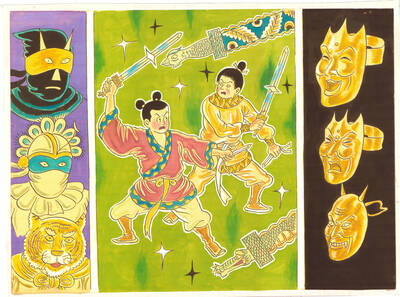
April 22 to April 28 The true identity of the mastermind behind the Demon Gang (魔鬼黨) was undoubtedly on the minds of countless schoolchildren in late 1958. In the days leading up to the big reveal, more than 10,000 guesses were sent to Ta Hwa Publishing Co (大華文化社) for a chance to win prizes. The smash success of the comic series Great Battle Against the Demon Gang (大戰魔鬼黨) came as a surprise to author Yeh Hung-chia (葉宏甲), who had long given up on his dream after being jailed for 10 months in 1947 over political cartoons. Protagonist

Peter Brighton was amazed when he found the giant jackfruit. He had been watching it grow on his farm in far north Queensland, and when it came time to pick it from the tree, it was so heavy it needed two people to do the job. “I was surprised when we cut it off and felt how heavy it was,” he says. “I grabbed it and my wife cut it — couldn’t do it by myself, it took two of us.” Weighing in at 45 kilograms, it is the heaviest jackfruit that Brighton has ever grown on his tropical fruit farm, located


 RSS
RSS