


When a group of women began screening films made by female artists 13 years ago at a small venue, little did they know they had initiated a project that would grow into an international festival that now attracts hundreds of films from around the world.
As a festival centered solely on the issues of gender and sexuality, Women Make Waves Film and Video Festival (WMW) strives to include a breadth of subject matters related to women.
This year's program has significantly altered the event's future direction by including films made by male directors in two newly established sections titled "From Male Points of View" and "Cool or Not? -- Queer Films," which the organizers hope will expand coverage of gender issues from different perspectives.
PHOTOS COURTEST OF WOMEN MAKE WAVES FILM AND VIDEO FESTIVAL
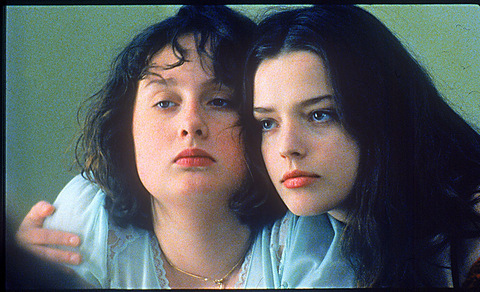
Among the works by male and queer directors, Undressing My Mother is an award-winning documentary about a son who makes a candid recording of his mother's aging and wrinkled body. Don't You Worry, It Will Probably Pass is a four-year project that documents the fear, anxiety, courage and desires of a Swedish teenager in the closet, while Tomboy! Feisty Girls and Spirited Women celebrates tomboys of all ages through examining the subversion of gender stereotypes.
Film buffs looking for masterpieces in the "Director Spotlight" section are in for a big treat this year. The festival will present retrospective programs on three heavyweight female
directors: Margarethe von Trotta, Catherine Breillat and Laura Mulvey. Hailed as the most important German New Wave female director, Von Trotta began her film career as an actress working with prominent figures such as Rainer Werner Fassbinder, Herbert Achternbusch and Volker Schlondorff. The Second Awakening of Christa Klages was her debut as a film director in 1977. Based on a true story, the film focuses on female friendships and self-identity. The
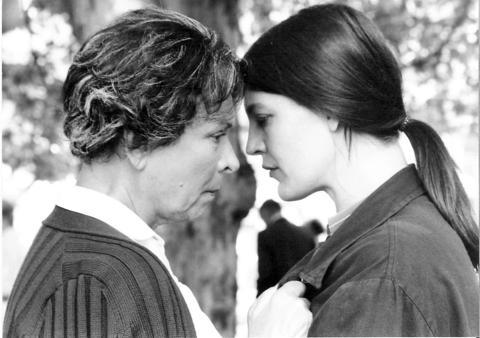
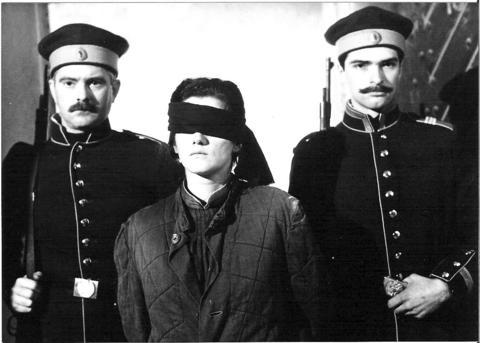
director is famed for employing her unique techniques to depict women's struggles against patriarchal forces and the interactions between individuals and political systems. For example, Rosa Luxemburg (1986) is a biographical film about the revolutionary who devoted herself to democratic socialism and was murdered for her beliefs. Five of Von Trotta's works will be screened at the festival, most of which are premieres in Taiwan.
Catherine Breillat, the French filmmaker/writer notorious for her bold treatment of sex and the human body, made her first film A Real Young Girl in 1976, which was based on her novel Le Soupirail that was published in 1974. Banned in France for 24 years, the film is a violent yet sensual story of a teenage girl discovering her body and sexuality. In her controversial works, Breillat subverts pornographic imagery in an attempt to escape the male gaze. The festival will include five of her works.
The last director under the spotlight is Laura Mulvey, whose 1975 essay Visual Pleasure and Narrative Cinema has heavily influenced feminist film theory. As a prominent film theorist, Mulvey teamed up with her husband, Peter Wollen, between 1974 and 1982 to produce several film projects centered on feminist discourse, semiotics, leftist politics and psychoanalysis. The festival will present the most influential film of their collaborative projects, Riddles of the Sphinx, an avant-garde mixture of Freudian theory and feminist politics.
Apart from feature-length films and documentaries, the festival also has an impressive line-up of animation and European experimental shorts to satisfy film buffs with more edgy tastes. For more information visit WMW's bilingual official Web site at www.wmw.com.tw.
2005 Women Make Waves
Film and Video Festival
Where: Sando Theater in Kaohsiung (
When: Oct. 7 to Oct. 12 in Kaohsiung; Oct. 12 to Oct. 16 in Taipei
Tickets: For daytime screenings in Kaohsiung: NT$150 at the door, NT$130 in advance. For evening and weekend screenings in Kaohsiung: NT$180 at door, NT$150 in advance. For daytime screenings in Taipei: NT$180 at door, NT$150 in advance. For evening and weekend screenings in Taipei: NT$200 at door, NT$180 in advance. Tickets available online at
www.artstickets.com.tw

“Taiwan’s Opposition Leader Comes to US With a Message Straight Out of Beijing” read a May 31 headline in the Wall Street Journal. Top US administration officials and members of Congress almost certainly read the WSJ, and if there was a bullet point takeaway that people in Washington should absorb ahead of Chinese Nationalist Party (KMT) Chair Cheng Li-wun’s (鄭麗文) arrival in DC on June 9, that headline is it. The last few columns have discussed this very topic, and the timing is not coincidental. While those top officials likely do not read the Taipei Times, judging by the number

With weighty, anxiety-inducing geopolitical topics dominating the headlines, checking in on the wild and weird state of local politics can take some of the edge off. This November’s elections will determine who will be in charge of fixing potholes in your neighborhood, not the potholes in Taiwan’s complicated geopolitical space. Recently, after an online interview with a Taipei-based journalist, I commented that Taipei journalists never go further than the MRT can take them. He laughed and agreed. Naturally, the Taipei mayoral race is eating up much of the press attention. TAIPEI CITY Democratic Progressive Party (DPP) candidate Puma Shen (沈伯洋) has
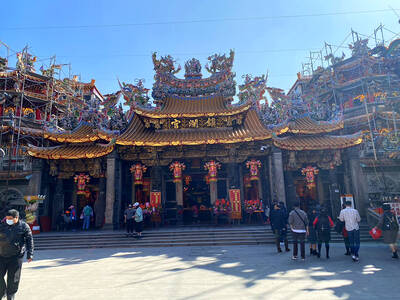
In December of 2008 Lee E-tin (李乙廷), a Miaoli county legislative hopeful, was convicted of vote-buying. Rather than buy votes retail, voter by voter, in the usual manner, Lee had done it wholesale, in a commendably efficient manner: he had visited local temples and made donations to gain their support. Because he did not normally make donations to temples, the court ruled he was attempting to improperly influence voter behavior. The case indicates how important temples are in influencing political life. Both judge and politician appeared to see them in the same way. Beijing sees them that way as well. Democratic Progressive
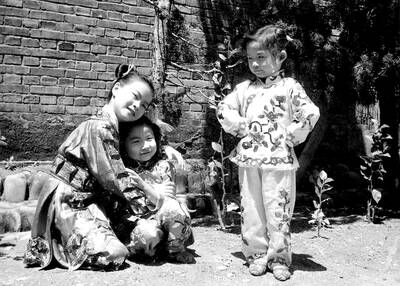
Audiences in Leicester, Cardiff, London and Sheffield will this month gather to watch a series of black-and-white Taiwanese-language films made more than 70 years ago. On the surface, these screenings commemorate the seventieth anniversary of taiyupian (台語片) — Taiwanese-language cinema. Yet the significance of these events extends far beyond nostalgia or film history. They represent a remarkable chapter in Taiwan’s ongoing effort to recover, preserve and reinterpret a cultural heritage that was once thought to have largely disappeared. The centerpiece of the program is the Ho Chi-ming (何基明) directed Xue Pinggui and Wang Baochuan (薛平貴與王寶釧), a film produced in 1955 and


 RSS
RSS