


Most of us are used to picking up loaves of bread or pastries for a quick bite of something to eat but a bakery with a difference is adding a dash of style to the staple food.
Demand for bakery products in Taipei has grown in the last 10 years, with at least one family-run bakery shop in most neighborhoods selling mayonnaise-filled sticky bread.
Increasing numbers of food enterprises have flocked to Taiwan, offering either genuine or quasi-European and Japanese-style creations to the starch?loving public. BreadTalk, the international bakery chain from Sing-apore, is the latest foreign addition to this already saturated market.

"BreadTalk has positioned itself as a trend-setting international brand from the very beginning. We don't just sell bread, but promote a new concept of bread shopping in our bakery boutiques," said the managing director of BreadTalk Group, George Quek (郭明忠).
Clearly, BreadTalk is selling a lifestyle as much as it does bread. Originally located at the high-class neighborhood of Renai Road, BreakTalk had a grand re-opening earlier this month and found a new home in the hypermarket chain Carrefour in Dazhi district (大直).
Located near the Miramar Entertainment Park (美麗華百樂園), the small but ambitious establishment has already drawn plenty of attention. Standing outside its spotless French windows, one can see a spacious white
interior and a well-arranged kitchen on the side. Inside, the store is structured with wooden pillars, pure white walls and tile floor. There is a scent of freshly baked bread.
With the help of its minimalist modern design, BreakTalk reeks of the aesthetics of elegance and refinement. And please note, the men working in the see-through kitchen in white aprons are not merely chefs, but "bread designers" who have their own distinctive and creative visions of the food they create.
Established in 2000, the bakery chain has enjoyed rapid growth and opened up 69 branches in Singapore, China, Hong Kong, Indonesia, Malaysia, Philippines, Kuwait and most recently Taiwan.
BreadTalk sells more than 250 kinds of bread and pastry, with an introduction of 10 new lines or items every six months. The enterprise has its own development and research department to work on new flavors and marketable concepts for the products.
Chefs and consultants in each country are sent to other regions for training and exchanges of skills and ideas are held on a yearly basis.
To further weaken its adversaries and impress the general public, BreadTalk lists on its Web site an array of awards for design and bread-making it has won.
As a veteran businessman in the food industry, Quek has years of experience in Taiwan and knows well the ever-changing tastes of the local market.
"The bakery business is very competitive in Taiwan," he said, "so we spent six months making evaluations of the local market. We have made minor changes on prices and have developed new lines of bread specially catering to local tastes.
"We start from a very solid ground, that is, mastering skills in bread making. And from there, we spice it up with creativity and style. We want to make going to bakery store a fun thing to do. That is why we let consumers see the complete creation of our bread and give an interesting story or concept behind each item."
The name BreadTalk comes from the idea that food has a life of its own and you can read about how each pastry item got its name and why it was so called. "A-bian" and "Crouching Tiger, Hidden Bacon" are examples of the store's efforts to adapt to a local environment with the names of pastries.
Southeast Asian seasonings are applied to many of the items on display, such as Indian curry, coconut butter, spicy shrimp sauce or Thai-style sweet-and-sour sauce. For the less adventurous there are creations, such as baguettes flavored with cranberry, mulberry and wheatgrass. Staples such as toast, pizza and different kinds of breads are also offered.
According to Quek, BreakTalk is finding its way in a more expanded global market with Thailand and India as its next stops. And its ultimate destination? North America and Europe. It will be like bringing coals to Newcastle.
For your information:
BreadTalk is located at 218-2, Lequn 3rd Rd, Taipei (台北市樂群三路218-2號). Tel: (02) 8502 0177. For more information about the chain, you can visit the Web site on www.breadtalk.com

“Taiwan’s Opposition Leader Comes to US With a Message Straight Out of Beijing” read a May 31 headline in the Wall Street Journal. Top US administration officials and members of Congress almost certainly read the WSJ, and if there was a bullet point takeaway that people in Washington should absorb ahead of Chinese Nationalist Party (KMT) Chair Cheng Li-wun’s (鄭麗文) arrival in DC on June 9, that headline is it. The last few columns have discussed this very topic, and the timing is not coincidental. While those top officials likely do not read the Taipei Times, judging by the number

With weighty, anxiety-inducing geopolitical topics dominating the headlines, checking in on the wild and weird state of local politics can take some of the edge off. This November’s elections will determine who will be in charge of fixing potholes in your neighborhood, not the potholes in Taiwan’s complicated geopolitical space. Recently, after an online interview with a Taipei-based journalist, I commented that Taipei journalists never go further than the MRT can take them. He laughed and agreed. Naturally, the Taipei mayoral race is eating up much of the press attention. TAIPEI CITY Democratic Progressive Party (DPP) candidate Puma Shen (沈伯洋) has
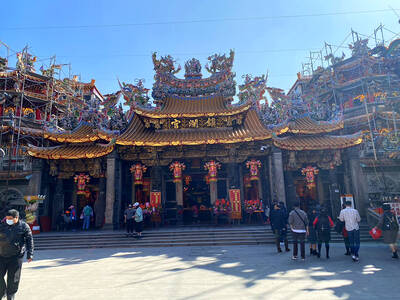
In December of 2008 Lee E-tin (李乙廷), a Miaoli county legislative hopeful, was convicted of vote-buying. Rather than buy votes retail, voter by voter, in the usual manner, Lee had done it wholesale, in a commendably efficient manner: he had visited local temples and made donations to gain their support. Because he did not normally make donations to temples, the court ruled he was attempting to improperly influence voter behavior. The case indicates how important temples are in influencing political life. Both judge and politician appeared to see them in the same way. Beijing sees them that way as well. Democratic Progressive
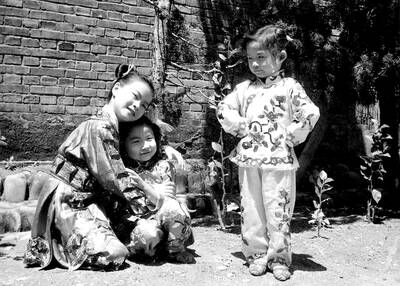
Audiences in Leicester, Cardiff, London and Sheffield will this month gather to watch a series of black-and-white Taiwanese-language films made more than 70 years ago. On the surface, these screenings commemorate the seventieth anniversary of taiyupian (台語片) — Taiwanese-language cinema. Yet the significance of these events extends far beyond nostalgia or film history. They represent a remarkable chapter in Taiwan’s ongoing effort to recover, preserve and reinterpret a cultural heritage that was once thought to have largely disappeared. The centerpiece of the program is the Ho Chi-ming (何基明) directed Xue Pinggui and Wang Baochuan (薛平貴與王寶釧), a film produced in 1955 and


 RSS
RSS