


The prospect of getting trapped inside a malfunctioning elevator car is not pleasant, but it is not an uncommon occurrence. The feeling of losing control, claustrophobia and a lack of oxygen can lead to emotional trauma, panic attacks and even death, particularly if rescuers are slow in extricating passengers.
For every successful inventor dozens fail to get their creations off the ground and no matter how good the invention financial hardship and a lack of support is a cross that many local originators struggle with. Taiwanese inventor Chen Yung-hsin (
Last week 22 people were stuck in a malfunctioning elevator in Kaohsiung for almost an hour, with two passengers rushed to hospital suffering from a lack of oxygen. According to industry figures, more than 200 elevators break down every month in Taipei alone. And the problem is not just confined to Taipei. A recent earthquake measuring 7.2 on the Richter scale in Japan reportedly halted 47,000 elevators.
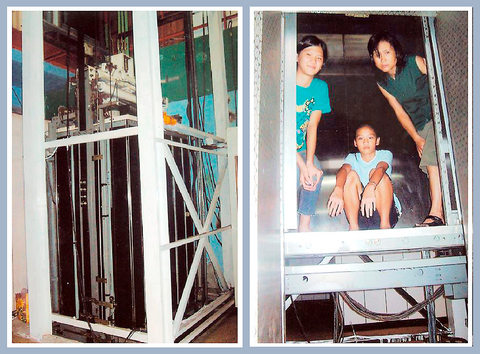
The problem of malfunctioning elevators bothered Chen, an elevator technician and salesman from Tainan, for years. Chen, in his early 50s and a one-time national team tennis player, trained in automatic control engineering at Feng Chia University (
It was after the 9/11 terrorist attacks in New York that Chen heard the story of a volunteer worker from the philanthropic Tzu-chi Foundation (
Saving lives
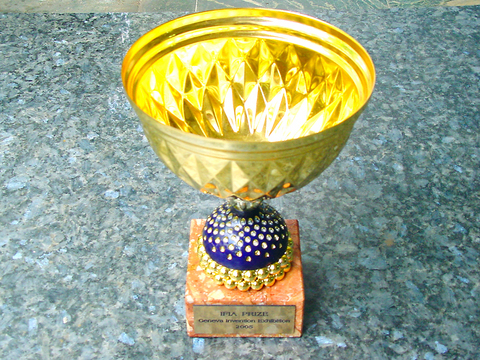
Chen pondered, "Why are lives lost in situations like these when modern technology is so advanced? Elevator passengers have the right not to be trapped, not to mention lose their lives. And yet, mechanical failures often happen."
Chen therefore embarked on a plan to design an "emergency escape elevator device," as he now calls it, which enables passengers to escape when an elevator breaks down.
Initially Chen spent about six months examining the technical issues involved in his plan, and then bet all he had on the project. He then worked day and night in his small workshop at home. His financial resources were depleted within a few months and he had to borrow money from friends, relatives and banks, in addition to selling many of his valuables. At one point, he sold his car and the financial burden nearly put an end to his project.
Chen suffered serious depression in 1999 after being fleeced by one of his close friends for over NT$12 million in a failed investment venture. Chen's depression lasted two years.
Fortunately, through his wife's constant care and encouragement, he recovered from his mental problems. One morning last year while Chen was taking a walk with his wife in his neighborhood, the idea dawned on him of modifying the hydraulic cylinders that control the movement of elevators to solve the problem which had been bugging him for months. He rushed home with his wife to test out his idea which proved successful.
Turning hardship around

Chen traveled all round Taiwan searching for a cylinder to meet his requirements. The technological breakthrough came early last year after 17 alterations to his prototype safety device. Chen's invention functions independently if the electrical power supply to an elevator fails and the car is stuck between floors. It also works if mechanical failure causes an elevator to malfunction trapping passengers inside.
If an elevator is stuck between floors the "emergency escape elevator device" automatically lowers the car one floor down and opens the door allowing passengers to exit. "In case of an elevator break-down, enabling passengers to escape from the elevator car swiftly and safely takes top priority. Repair comes later," Chen said.
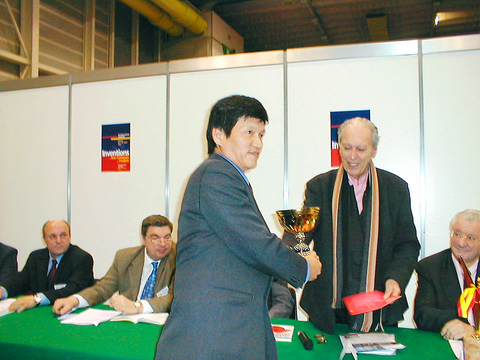
Chen shocked the inventors' circle of Taiwan this year when he was awarded the highest honor by the International Exhibition of Inventions, New Techniques and Products of Geneva (IFIA) for his outstanding achievement. The event, with 42 participating countries and 735 new inventions, was held in Geneva last April, Pittsburgh, in June, and Seoul in December. In September last year, Chen's device won a gold medal at the annual National Invention and Creation Award contest held by the Ministry of Economic Affairs in Taiwan.
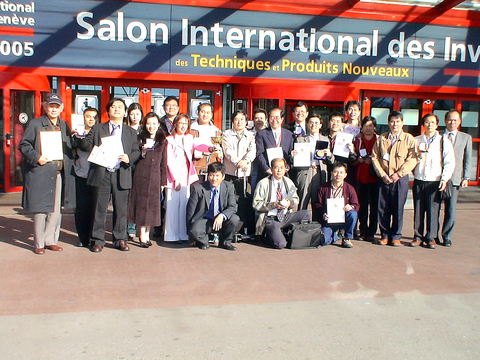
Commenting on Chen's invention, Chen Tsung-tai (陳宗台), president of the Taiwan Inventors Association, said that, " His work is truly marvelous and can save many lives. I hope to see every elevator in the world installed with Chen's device as soon as possible."
Since Chen Yung-hsin is the first Taiwanese inventor to win IFIA's highest prize in Geneva, it is no wonder that big elevator companies such as Otis, Hitachi, Toshiba and others are now negotiating to have the device installed on their products. And yet, Chen's success hasn't made him forget how much anguish he went through to become successful. He said the dilemma he had faced was like a ceramic artist who had ran out of money and had come to the point of burning a last piece of furniture, a piano, to keep the kiln working in the hope of producing a masterpiece. If the artist gave up and let the fire burn out, then all the hard work would amount to nothing. Sacrifice, or not to sacrifice, is a constant conundrum for many inventors with limited resources.
Hard luck

Gordon Teng (鄧鴻吉), based in Taichung County, has been an inventor, winning many international awards, since his high school years. Teng, who comes from a poor family, said he understands how Chen felt as he had to sell his first invention, a water-faucet infrared-ray induction for as little as NT$1.5 million in 1982 just to survive. Both Chen and Teng believe the government could do more to assist inventors so promising new products don't fail to come to fruition due merely to a lack funding.
The government has come in for sharp criticism from observers such as Wang Jun-xiu (王俊秀), ex-president of the National United University, who wrote that neglecting the contribution and welfare of local inventors is
detrimental to Taiwan.
Chen suggested that the government should follow the example of other countries and set up a fund to make loans available for proposed inventions, approved by a team of publicly recognized experts. Moreover, an appraisal system could be arranged to allow private banks or cooperations to invest in an inventor's work in exchange for shares in the company set up to sell the new product. In addition, the government could help provide more thorough and up-to-date information about various inventions in other countries and offer technical help and assistance to prospective inventors.
According to Chen more than 50,000 new inventions are issued patent rights each year in Taiwan and this figure shows how active local inventors are. Both Teng and Chen agree that the environment in Taiwan encourages inventors to realize their creative ideas. For one thing, easy access to machine tools, components and parts is what inventors desperately need. On top of that, various small machine tool shops with experienced technicians are easy to find. These technicians are generally willing to take on small jobs and provide answers for an inventor's curiosity.
Convenience and generally high technical standards are advantages that can easily elevate Taiwan's status to become a world center of excellence for inventions in the near future, Chen and Teng said.

In late October of 1873 the government of Japan decided against sending a military expedition to Korea to force that nation to open trade relations. Across the government supporters of the expedition resigned immediately. The spectacle of revolt by disaffected samurai began to loom over Japanese politics. In January of 1874 disaffected samurai attacked a senior minister in Tokyo. A month later, a group of pro-Korea expedition and anti-foreign elements from Saga prefecture in Kyushu revolted, driven in part by high food prices stemming from poor harvests. Their leader, according to Edward Drea’s classic Japan’s Imperial Army, was a samurai

Located down a sideroad in old Wanhua District (萬華區), Waley Art (水谷藝術) has an established reputation for curating some of the more provocative indie art exhibitions in Taipei. And this month is no exception. Beyond the innocuous facade of a shophouse, the full three stories of the gallery space (including the basement) have been taken over by photographs, installation videos and abstract images courtesy of two creatives who hail from the opposite ends of the earth, Taiwan’s Hsu Yi-ting (許懿婷) and Germany’s Benjamin Janzen. “In 2019, I had an art residency in Europe,” Hsu says. “I met Benjamin in the lobby
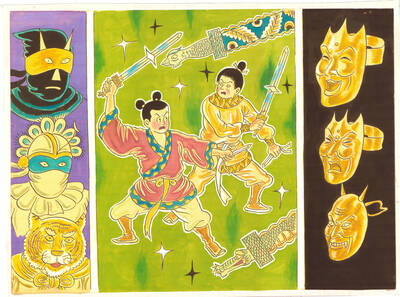
April 22 to April 28 The true identity of the mastermind behind the Demon Gang (魔鬼黨) was undoubtedly on the minds of countless schoolchildren in late 1958. In the days leading up to the big reveal, more than 10,000 guesses were sent to Ta Hwa Publishing Co (大華文化社) for a chance to win prizes. The smash success of the comic series Great Battle Against the Demon Gang (大戰魔鬼黨) came as a surprise to author Yeh Hung-chia (葉宏甲), who had long given up on his dream after being jailed for 10 months in 1947 over political cartoons. Protagonist

A fossil jawbone found by a British girl and her father on a beach in Somerset, England belongs to a gigantic marine reptile dating to 202 million years ago that appears to have been among the largest animals ever on Earth. Researchers said on Wednesday the bone, called a surangular, was from a type of ocean-going reptile called an ichthyosaur. Based on its dimensions compared to the same bone in closely related ichthyosaurs, the researchers estimated that the Triassic Period creature, which they named Ichthyotitan severnensis, was between 22-26 meters long. That would make it perhaps the largest-known marine reptile and would


 RSS
RSS