


If the pioneering stockmen who founded Wrotham Park Lodge in the 1870s had been able to travel forward in time a century or so they would have been dumbfounded. Surrounded only by sienna-colored earth, scrub and savannah, this remote cattle-station in Queensland has been transformed into a five-star retreat, complete with air-con, power showers, internet, sun-decks and exquisite Pacific Rim cuisine.
A far cry from the days of rudimentary homesteads knocked together with corrugated iron and timber, and diets of salt beef and damper.
Nevertheless, the concept of the lodge draws heavily from Queensland's past and traditional outback design. And, unlike normal hotels where guests are left to their own devices, a sense of community between the guests (maximum of 20) and 10 youthful staff is encouraged. But is it enough? With only 30,000 cattle for company and whipcracking displays as evening entertainment, will Australia's latest luxury hotel gamble pay off?

PHOTO: AFP
So remote is Wrotham Park Lodge that supplies (which include crates of champagne, fine Aussie wines, fresh tropical fruit, Cuban cigars and the Queensland delicacy, "1824" marbled beef) are brought in fortnightly by truck or flown in with guests by Cessna. Phonecalls -- via satellite -- are prohibitively expensive. Cairns, the nearest town of note, is about 300km due east, with kilometer upon kilometer of emptiness in between.
Wrotham Park, which covers 6,000km2, was founded in the 1870s gold rush when meat was suddenly much in demand. The scale of the cattle station means that today's "cowboys" use helicopters to muster the cattle, though horsemanship is still a necessary skill.
Guests who coincide with the mustering seasons (April to June, and September to November) may just be lucky enough to witness the real thing.
A half-day tour of the cattle station is part of the Wrotham Park experience and proves an unexpected eye-opener. After hurtling along dirt roads through the bush with one-time jillaroo (Australian for cowgirl) Terri at the wheel, we see the original pens where the cattle were once sorted before being sold on. The hand-hewn rails of the pens, with their towering ironwood posts surrounded by monumental eucalypts make an incongruous historical sight.
The image of the pens somehow adds to the epic quality of the stories we are told of outback hardships, of the cruel system of cattle de-horning and castration, of Aboriginal attacks, bush fires, disease and the tragically high mortality rate. Back in our air- conditioned 4WD, sipping iced mineral water and checking digital cameras, there is a distinct sense of time-travel.
Terri, in her mid-20s, tells us about her mustering days, though on a walk the previous day her main interest seemed to be dung beetles -- having displayed one triumphantly to us after rummaging through a pile of manure. We learn that the furthest she has ever been is to Brisbane (to be fair that's about 2,200km) and she owned her first horse at the age of five.
The tour takes in the working homestead and cattle-station HQ where, by chance, we get to see the thundering of a muster. Our smoko -- morning tea -- is at the very rudimentary stockmen's bar with a pool table, darts and TV for entertainment. The bar is popular with the cowboys at the end of a 12-hour day. Increasingly I realize the light years separating us townie Poms from the locals. Washing my hands at the sink, I notice a bar of five-star lodge soap has been laid out for us -- the alternative was a mud-encrusted sliver.
On the way back we stop at Tin Hut Lagoon, a magical oasis in the dry and dusty scrub. The series of lagoons is studded with white water-lilies, which are considered by the Aborigines to be symbols of the morning star. Grazing in the long grass behind is a group of hump-backed Brahman cattle which, so far, has escaped mustering. It's pure visual poetry and a fitting end to our tour.
Five hours and 150km later, we slope back to our ranch. It all looks too clean, too minimalist, too perfect. At the long communal dining table, we are served a crisp South Australian Riesling to wash down the prawn mousse followed by myrtle-dusted barramundi fillet with shaved fennel and apple salad.
In front of us unfolds a spectacular view of the escarpment and the nothingness beyond. The coup de grace follows in the form of wattle-seed panacotta with poached quince. Meanwhile, back at the real cattle station, the jackaroos are lunching on roast beef and spuds.
With swimming verboten due to the surprise presence of a couple of sharks, the next best thing is the lap-pool. Beside it is a large banquette-edged area designed for sunset cocktails. Stretched out on my day-bed, I watch the sun dip across the river, the backlit clouds followed by splashes of pink and yellow. But I realize that for all the luxury, it's the straight-talking guides and the homespun Aussie touches that really make this five-star lodge somewhere special.

In late October of 1873 the government of Japan decided against sending a military expedition to Korea to force that nation to open trade relations. Across the government supporters of the expedition resigned immediately. The spectacle of revolt by disaffected samurai began to loom over Japanese politics. In January of 1874 disaffected samurai attacked a senior minister in Tokyo. A month later, a group of pro-Korea expedition and anti-foreign elements from Saga prefecture in Kyushu revolted, driven in part by high food prices stemming from poor harvests. Their leader, according to Edward Drea’s classic Japan’s Imperial Army, was a samurai

The following three paragraphs are just some of what the local Chinese-language press is reporting on breathlessly and following every twist and turn with the eagerness of a soap opera fan. For many English-language readers, it probably comes across as incomprehensibly opaque, so bear with me briefly dear reader: To the surprise of many, former pop singer and Democratic Progressive Party (DPP) ex-lawmaker Yu Tien (余天) of the Taiwan Normal Country Promotion Association (TNCPA) at the last minute dropped out of the running for committee chair of the DPP’s New Taipei City chapter, paving the way for DPP legislator Su

Located down a sideroad in old Wanhua District (萬華區), Waley Art (水谷藝術) has an established reputation for curating some of the more provocative indie art exhibitions in Taipei. And this month is no exception. Beyond the innocuous facade of a shophouse, the full three stories of the gallery space (including the basement) have been taken over by photographs, installation videos and abstract images courtesy of two creatives who hail from the opposite ends of the earth, Taiwan’s Hsu Yi-ting (許懿婷) and Germany’s Benjamin Janzen. “In 2019, I had an art residency in Europe,” Hsu says. “I met Benjamin in the lobby
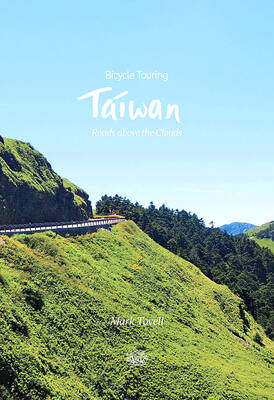
It’s hard to know where to begin with Mark Tovell’s Taiwan: Roads Above the Clouds. Having published a travelogue myself, as well as having contributed to several guidebooks, at first glance Tovell’s book appears to inhabit a middle ground — the kind of hard-to-sell nowheresville publishers detest. Leaf through the pages and you’ll find them suffuse with the purple prose best associated with travel literature: “When the sun is low on a warm, clear morning, and with the heat already rising, we stand at the riverside bike path leading south from Sanxia’s old cobble streets.” Hardly the stuff of your


 RSS
RSS