


Somehow, it's difficult to imagine that Maggie Cheung (
From these performances, it would be easy to picture her as an impregnable fortress of cosmopolitan cool. In reality, she is chatty, casual and candid, and she used to live in unremarkable West Wycombe, in southeast England. When we speak, Cheung she starts reminiscing about the pharmacist and supermarket on her former high street, and the drudgery of life in xenophobic 1970s suburban Britain -- a Britain where "ching chong Chinaman" was a perfectly acceptable insult.
In her latest movie, Clean, she's a lot more like a real person than in her period roles, despite the fact she plays the junkie wife of a dead Canadian rock star. Her character undergoes a harrowing journey of despair, ostracism, drug withdrawal and dispossession, but for the first time, Cheung also gets to do things she might do in real life, such as wearing contemporary clothes, speaking English (and French and Cantonese), playing pool and singing rock tunes. She even looks vaguely dishevelled at times.
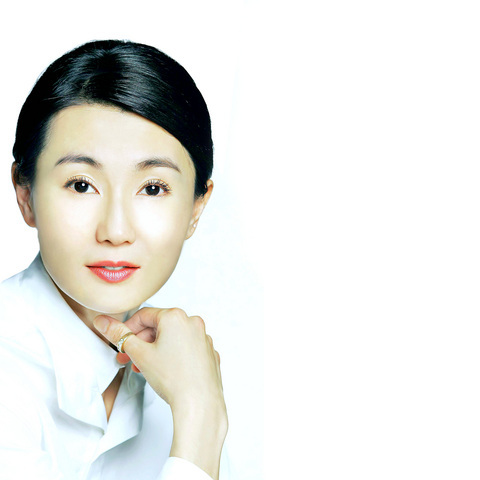
"It was so liberating," she says. "The lady would put some dark circles under my eyes, make my skin look a little dry, give me some chapped lips and I was ready! It's quite the opposite of In the Mood for Love, where it was literally four hours' hair and one of make-up every day. I lost half my hair through all the brushing and teasing. That was such a pain in the arse."
As if to prove the point, she looks almost the same in the flesh as she does in Clean, minus the chapped lips. Even so, aspects of Cheung's life still read more like movie fiction than everyday reality -- such as the fact that she and Clean's director, Olivier Assayas, signed their divorce papers on set.
It's no surprise Cheung won best actress at last year's Cannes film festival: Assayas wrote the film specifically for her, and it's almost a showcase for her talents. "I guess he must have seen me in those kinds of situations," she says. "When I read the script, I thought: that's very similar to who I am. And when you're writing for a person, I guess you put in all the things she likes to do or wants to do, or can relate to. Even playing pool is something that he knows I love."

PHOTO: AP
In light of their separation, though, the Cannes victory was bittersweet: "It made us think we were right to work together, but it seemed from the outside, and Olivier actually mentioned it, which I could kill him for, that it was a present from my ex-husband. For me that prevented me from feeling truly aesthetically happy about it. I don't really want a film as a present, you can get me a diamond ring."
"But it's almost symbolic how we started out with a film and then finished with one. It's something beautiful between us, even if there is no more marriage."
Whatever the status of Clean, 40-year-old Cheung is clearly the sole author of her career, which, having negotiated commercial and arthouse, Asian and European, is practically without parallel. When she returned to Hong Kong from West Wycombe at 17 (she had lived there since she was eight), she went from modelling and adverts to movies, via a second place in the 1983 Miss Hong Kong beauty pageant.
She made a name for herself as Jackie Chan's comically ineffectual girlfriend in Police Story in 1985, and went on to notch up nearly 70 films. At times she worked with the highest-brow directors the local industry had to offer (Wong Kar-wai, Stanley Kwan, Wayne Wang), but more routinely she turned out out generic action movies and romantic comedies.
By the mid-1990s, though, she'd done it all and had enough, so she simply stopped working. "I actually didn't have any plans," she says. "I was at the stage of reading scripts that were all boring, everyone was offering me the same kind of thing. I was kind of hiding in a hole. If Olivier hadn't knocked on my door at that time maybe I'd be doing something else right now."
As it happened, Assayas had spotted her in an earlier film and was in Hong Kong looking for her to cast in Irma Vep, his French movie-making satire revolving around a foreign actress. He tracked her down, they met for a drink, and she was immediately sold.
"I didn't care what the film was about. The offer was very tempting when you're a kind of a lost soul. Someone saying, `Come to Paris for a six weeks, you're gonna work very differently with people who don't know you.' It was just refreshing to be with people who are genuinely into cinema. So I had a really good time." Such a good time, in fact, she married the director and decamped to Paris permanently.
Not for the first time, Cheung was a stranger in a strange town, but one month after the wedding, she went back to Hong Kong to work with Wong on In the Mood for Love. "I left thinking I'd be away for three months and then we could start our married life," she explains.
"But after the 12th month there was still no film, not even half a film. Every day we'd be shooting, but at the same time we were not shooting because we all knew Kar-wai was just watching us, without a real story in his mind. It's not until you go back to that same set, and say the same lines for the sixth time that it's gonna make it on screen." By the time she returned to Paris, she says, "things had just changed".
Cheung and Assayas' break-up was, by both their accounts, amicable, and Cheung doesn't blame Wong at all. But on top of the usual agonies of separation, there was the added complication that Assayas had just completed the script for Clean. "We had one conversation which I remember clearly. We talked about separating and what was going to happen and then it came up: Are we still going to make the film? I said, `If you're still into it, it's easier than what everybody else might think."
It's almost as if the two directors were competing for her, or attempting to write their own version of her. Wong coaxed her back for his next film, 2046, though Cheung wisely agreed to only a few scenes (this time, the shoot went on for years). Even while Wong was urging her to stay and shoot more, Assayas and his crew were waiting for her in Canada to start on Clean.
"These two men, how they like their women to be is so different," she says. "The way Wong sees beauty, or women related to beauty, it has to be that sensual, perfect thing, whereas Olivier is more interested in something more internal and modern. But I feel happy to be able to fit into their desires of what they want to see on the screen. That's what interests me in my work, to transform according to different directors."
As much as the transformations she's made in her life, it's the ones she hasn't made that have made Cheung who she is. The more successful she gets, the more discerning she has become about her roles. As well as her self-imposed exile in the 1990s, she's passed up numerous opportunities to become a global celebrity, including a role as a James Bond girl, and a part in the comic-book movie X-Men.
Cheung readily admits she's a very proud person, and perhaps that's the connection between her lives on screen and off.
"I think it comes from far away inside me, to be strong to survive everything that comes my way. I think, going back to the beginning, feeling like an alien in an English school when I was eight, that set up my pride very early on. I think I'm very defensive, but I'm trying not to be like that any more."
She still plans to take the rest of this year off, rather than cashing in on her Cannes prestige. "Having done so much before, I'm kind of lazy now. Because I've done so many different roles, I don't want to repeat myself. It's getting harder and harder to find something interesting. You never know, I might never make a film again."

Last week Joseph Nye, the well-known China scholar, wrote on the Australian Strategic Policy Institute’s website about how war over Taiwan might be averted. He noted that years ago he was on a team that met with then-president Chen Shui-bian (陳水扁), “whose previous ‘unofficial’ visit to the US had caused a crisis in which China fired missiles into the sea and the US deployed carriers off the coast of Taiwan.” Yes, that’s right, mighty Chen caused that crisis all by himself. Neither the US nor the People’s Republic of China (PRC) exercised any agency. Nye then nostalgically invoked the comical specter

April 15 to April 21 Yang Kui (楊逵) was horrified as he drove past trucks, oxcarts and trolleys loaded with coffins on his way to Tuntzechiao (屯子腳), which he heard had been completely destroyed. The friend he came to check on was safe, but most residents were suffering in the town hit the hardest by the 7.1-magnitude Hsinchu-Taichung Earthquake on April 21, 1935. It remains the deadliest in Taiwan’s recorded history, claiming around 3,300 lives and injuring nearly 12,000. The disaster completely flattened roughly 18,000 houses and damaged countless more. The social activist and

Over the course of former President Ma Ying-jeou’s (馬英九) 11-day trip to China that included a meeting with Chinese Communist Party (CCP) leader Xi Jinping (習近平) a surprising number of people commented that the former president was now “irrelevant.” Upon reflection, it became apparent that these comments were coming from pro-Taiwan, pan-green supporters and they were expressing what they hoped was the case, rather than the reality. Ma’s ideology is so pro-China (read: deep blue) and controversial that many in his own Chinese Nationalist Party (KMT) hope he retires quickly, or at least refrains from speaking on some subjects. Regardless

Approaching her mid-30s, Xiong Yidan reckons that most of her friends are on to their second or even third babies. But Xiong has more than a dozen. There is Lucky, the street dog from Bangkok who jumped into a taxi with her and never left. There is Sophie and Ben, sibling geese, who honk from morning to night. Boop and Pan, both goats, are romantically involved. Dumpling the hedgehog enjoys a belly rub from time to time. The list goes on. Xiong nurtures her brood from her 8,000 square meter farm in Chiang Dao, a mountainous district in northern Thailand’s


 RSS
RSS