


For the last 12 weeks a highly unusual book has been roosting in the nonfiction best-seller list compiled by the New York Times. On Bullshit, by Harry Frankfurt, runs a grand total of 80 pages. But the title is beside the point. It's the length that interests me. It shines like a beacon of hope to overburdened readers bombarded with nonfiction titles that routinely weigh in at 300 to 400 pages, no matter how inconsequential the subject. It dares to say that short can be good.
Two books stare at me from my bookshelf. One is The Command of the Ocean, the middle volume in N.A.M. Rodger's authoritative history of the British navy. It is 907 pages long. When I pick it up, my wrist buckles. Standing next to it, like Laurel next to Hardy, is the winsome Waterloo, by Andrew Roberts. At 143 pages, it barely counts as an appetizer, but as a reading experience it more than holds its own with its heftier shelfmate.
Both books deal with momentous events. Both are admirably researched and stylishly written. But Waterloo demands, at most, a couple of hours of reading time. It delivers the maximum amount of information, and pleasure, in the minimum number of minutes -- an unbeatable deal.
There are a lot of these junior-sized books out there at the moment. Some are slim by design, like the whippet-thin volumes that Paul Strathern, a British academic, has been turning out with machinelike regularity. His various series on great authors, great philosophers and great ideas (Nabokov in 90 Minutes is one title) promise to get readers up to speed on, say, Ludwig Wittgenstein, in 100 pages or so with no dumbing-down.
Some books, for whatever reason, simply happen to be thin. Subject matter has nothing to do with it, either. There are short books on pared-down topics, like American Gothic, Steven Biel's "biography" of Grant Wood's famous painting, and short books on hugely important, world-changing subjects, like Auschwitz, by the German historian Sybille Steinbacher, due out from Ecco in August. It's worth pointing out that long books can seem short, and vice versa. Command of the Ocean runs long but reads short. The author has a vigorous, economical writing style and a rare gift for packaging his facts tightly. American Gothic, with only 156 pages of text, has as much sag and bag as a Thomas Wolfe novel.
All books should be exactly as long as they need to be. There is no ideal length. But like mainstream Hollywood films, nonfiction books have shown a tendency to expand in recent years, for no particular reason. Directors cannot bring a film in at 90 minutes anymore. Likewise, my shelves are overloaded with nonfiction titles that, 30 years ago, would have been 225 or 250 pages. I'm not sure why.
My candidate for the most impressive entry in the less-is-more category is In My Brother's Shadow: A Life and Death in the SS, by the German novelist Uwe Timm. Like all the books discussed here, it runs less than 220 pages of actual text. Far less, in fact. In a mere 150 pages, Timm roams, in a series of disjointed meditations, over most of 20th-century German history.
His starting point is a cryptic diary left by his brother, an SS soldier who fought and died on the Ukrainian front. But jumping back and forth in time, he also touches on the traumatic aftermath of World War I, in which his father served; the bombing of Hamburg, his hometown; and the "economic miracle" of the 1950s. Sensitively translated by Anthea Bell, In My Brother's Shadow is equal parts German history and family history, a profound rumination on the way history shapes and breaks private lives.
I.B. Cohen, the founder of Harvard's history of science department, died in 2003, but he left behind a brief, lively and highly entertaining little book, The Triumph of Numbers: How Counting Shaped Modern Life. Cohen's grand theme is the rise of "number consciousness," or the acceptance of numbers as a regulating power in human affairs, a slow process that did not really get going until the 16th and 17th centuries.
Spontaneously slim books like these come like a bolt out of the blue. Others spring from the minds of clever publishers. James Atlas, who has carved a niche in the short-book market, has two series in production. Eminent Lives, published by HarperCollins, matches writers like Christopher Hitchens with subjects like Thomas Jefferson, or Paul Johnson with George Washington, to take two current examples. Great Discoveries, published by W.W. Norton, applies the same matchmaking approach to the history of science, with excellent results in the two most recent titles to roll off the assembly line: Miss Leavitt's Stars, by George Johnson, and Lavoisier in the Year One, by Madison Smartt Bell.
This brief-lives format can be found throughout the publishers' catalogs. Oxford University Press has its Lives and Legacies series, the most recent being Roger Williams, by Edwin Gaustad. The British novelist Peter Ackroyd has just embarked on a series of short biographies, Ackroyd's Brief Lives, which began with Chaucer earlier this year and will include J.M.W. Turner and Isaac Newton. Times Books is well into the American Presidents, a first-rate series, overseen by Arthur M. Schlesinger Jr., that offers well-edited, sharply written lives in a uniform format. For those of us who dozed through the administrations of Polk, Taylor and Arthur in school, this is a golden opportunity to make amends. Some of the author-subject matchups are intriguing. Mr. Schlesinger has paired E.L. Doctorow with Abraham Lincoln, Louis Auchincloss with Teddy Roosevelt and Gary Hart with James Monroe.
The matchmaking game is a roll of the dice. Wendy Wasserstein on sloth is a delight. Francine Prose's Gluttony reads like a class assignment. Washington Schlepped Here, a tour of the nation's capital by Buckley, is so perfunctory that it might have been written on a napkin during lunch. Even worse, it's a bureaucrat's view of Washington: rarely has a city seemed so boring. By contrast, Blount's tour of New Orleans, Feet on the Street, delivers the goods -- it's a wild, unpredictable ramble up and down the streets of a wild, unpredictable city.
Reaktion Books, a small press with a very high brow, recently initiated a series called Critical Lives that focuses on leading figures in modern culture. Franz Kafka, Pablo Picasso and Jean Genet have been given the treatment so far, and this may be everyone's last, best chance to get a handle on Michel Foucault before he disappears from the radar screen. In Michel Foucault, David Macey does the job in about 150 pages.
Even more compressed is a promising new series from Norton, due out in September, called How to Read. The subjects range from Shakespeare to Hitler, but the approach is uniform. Each author presents about 10 extracts from the writer under discussion and subjects them to a close critical reading. These key texts serve as entry points to the mind and the work of figures like Sigmund Freud and Wittgenstein.
The Modern Library, in its Chronicles series, expands the short-take concept to just about everything. It has included titles by A.N. Wilson on London, Jeffrey Garten on globalization, Colin Renfrew on prehistory and Pankaj Mishra on the rise of modern India. My introduction to the series came with The Company, the snappily told history of an idea that today rules all our lives. The authors, John Micklethwait and Adrian Wooldridge, who both work for The Economist, begin with simple barter exchanges in ancient Mesopotamia and in a little less than 200 pages arrive at their final destination, the multinational corporation. In a couple of hours, the reader travels through all of recorded history and comes out the other end, stuffed with valuable information and pointed toward the future.
Give me more. I mean, less.
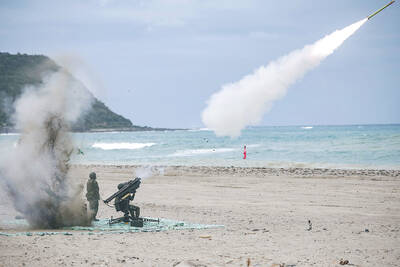
In late October of 1873 the government of Japan decided against sending a military expedition to Korea to force that nation to open trade relations. Across the government supporters of the expedition resigned immediately. The spectacle of revolt by disaffected samurai began to loom over Japanese politics. In January of 1874 disaffected samurai attacked a senior minister in Tokyo. A month later, a group of pro-Korea expedition and anti-foreign elements from Saga prefecture in Kyushu revolted, driven in part by high food prices stemming from poor harvests. Their leader, according to Edward Drea’s classic Japan’s Imperial Army, was a samurai

Located down a sideroad in old Wanhua District (萬華區), Waley Art (水谷藝術) has an established reputation for curating some of the more provocative indie art exhibitions in Taipei. And this month is no exception. Beyond the innocuous facade of a shophouse, the full three stories of the gallery space (including the basement) have been taken over by photographs, installation videos and abstract images courtesy of two creatives who hail from the opposite ends of the earth, Taiwan’s Hsu Yi-ting (許懿婷) and Germany’s Benjamin Janzen. “In 2019, I had an art residency in Europe,” Hsu says. “I met Benjamin in the lobby
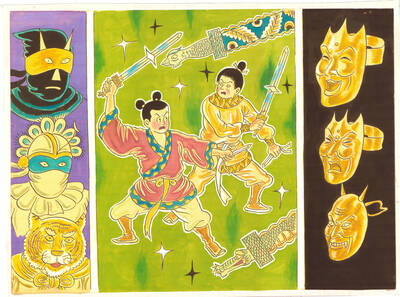
April 22 to April 28 The true identity of the mastermind behind the Demon Gang (魔鬼黨) was undoubtedly on the minds of countless schoolchildren in late 1958. In the days leading up to the big reveal, more than 10,000 guesses were sent to Ta Hwa Publishing Co (大華文化社) for a chance to win prizes. The smash success of the comic series Great Battle Against the Demon Gang (大戰魔鬼黨) came as a surprise to author Yeh Hung-chia (葉宏甲), who had long given up on his dream after being jailed for 10 months in 1947 over political cartoons. Protagonist

The following three paragraphs are just some of what the local Chinese-language press is reporting on breathlessly and following every twist and turn with the eagerness of a soap opera fan. For many English-language readers, it probably comes across as incomprehensibly opaque, so bear with me briefly dear reader: To the surprise of many, former pop singer and Democratic Progressive Party (DPP) ex-lawmaker Yu Tien (余天) of the Taiwan Normal Country Promotion Association (TNCPA) at the last minute dropped out of the running for committee chair of the DPP’s New Taipei City chapter, paving the way for DPP legislator Su


 RSS
RSS