


Following last month's outstanding DVD of the children's opera The Little Prince from Sony comes Igor Stravinsky's Le Rossignol (The Nightingale) from Virgin. The differences are many. Though containing a Chinese child in a leading role, Le Rossignol isn't really for children. Instead, it's a beautiful, indeed extraordinary animated film that's not only highly imaginative in itself, but also draws out to a marvelous extent the imaginative dimensions implicit in the music.
The story is from the Danish writer Hans Andersen, and Stravinsky's text is sung in Russian. That said, this is a very French affair - sophisticated, culturally eclectic, and exceptionally high-tech. Ten animators worked on the post-production of this 50-minute film for an entire year. The result is probably one of the most original DVDs featuring classical music ever made.
The story is set in China, and there is a rich collection of chinoiserie from beginning to end - a fisherman inside a rotating blue china bowl, opening fans that magically change color, costumed courtiers (real and mechanically duplicated), a scale-model porcelain palace both filmed for real and re-created on endless computers, a live nightingale and cellphone iPod images all happily coexist in this dazzling, surreal, dream-China world.

In addition, massed hands tap at computers, black gloves dance across the sky, a fat pink monk laughs inside a pear-shaped jar, and Chinese lanterns bob and whirl, with their tassels following rumbustiously after.
This film seems to take every technique ever used in pop music videos and blend them in a super-stylish amalgam. On numerous occasions it proves itself extra-sensitive to the music, actually using animated versions of the instruments we're hearing as well as picking up on tiny but significant details in the score. The result is a masterpiece, and if it flags slightly after the first half-hour that is small price to pay for the intricate splendors -- sometimes exquisitely beautiful, sometimes deliberately kitschy and syrupy -- that have gone before.
The enormous time it takes to create something like this is the only reason why all classical music shouldn't be subjected to similar treatment. It has the power to transform the genre from stuffy costume drama, or concerts performed by modern people in inappropriate and unnecessary formal dress (see below), back to the genuinely imaginative force the finest music was at its inception, and has the potential of becoming once again.
Director Christian Chaudet's Le Rossignol, in other words, is a DVD in a thousand. There's over an hour of bonus material on how it was made, much of it wearying, but the actual film itself is stunning almost beyond belief. The one shortcoming is that there are no Chinese subtitles.
Toscanini: The Maestro is a package containing a DVD version of RCA Red Seal's excellent 1985 film about Toscanini's life and work, plus a CD of Toscanini recordings used in the film presented at slightly greater length. What is worth having is the DVD. It includes much historical footage, and even includes a few seconds of Verdi's funeral in 1901. The maestro is glowingly remembered by several members of the NBC Orchestra that he led after leaving Italy becuause of the Fascist take-over, and the James Levine of 20 years ago adds his authority to the high estimation of Toscanini that the film espouses.
The film inevitably contains an imba-lance. Toscanini's achievements in early life are largely neglected in favor of his later years for which more footage exists. This, after all, was a man who conducted the first performance of Turandot in 1926. But it's a fine film despite that.
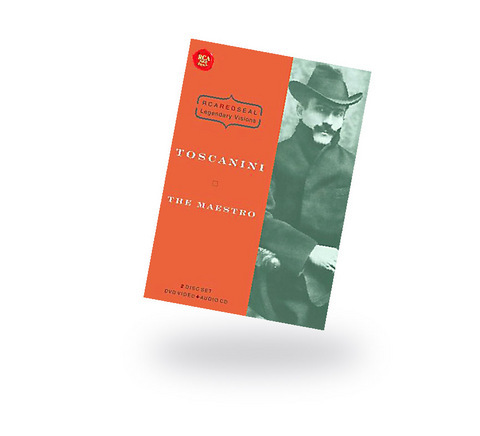
One point Levine makes is that Toscanini, in taking on the NBC job, knew that the acoustics of the hall didn't really suit an orchestra, but accepted it because they favored the recording techniques of the time. What he wanted was to reach the vast new audience that radio offered. Few today will relish the recorded sound of 60 years ago on the accompanying CD, but perhaps will tolerate it in order to understand the approach of a veteran maestro who in his youth knew Verdi.
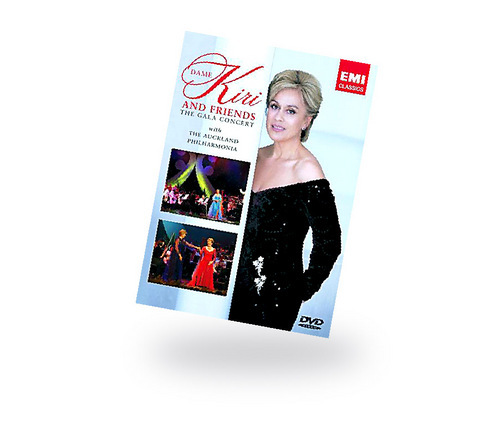
It's tempting to say that Dame Kiri and Friends is everything that classical music needs to get away from. It shows a concert last year in Auckland performed by Kiri Te Kanawa dressed up to the nines plus some of her fellow New Zealanders, not all of them talented. The formal evening dress does for the exercise from the start -- classical music will never survive if it is made to depend on such divisive pretension. The addition of a number from The Lord of the Rings and a Maori song if anything makes matters even worse.
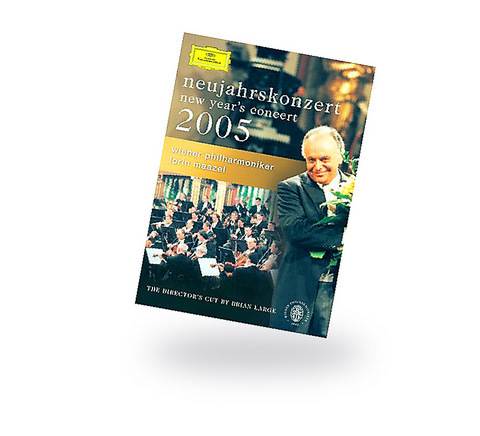
And finally we have yet another of the dreaded New Year Concerts from Vienna. Year after year they come out, with virtually identical music and an almost certainly identical super-affluent Viennese audience. Only the conductor -- this time Lorin Maazel -- changes. There are, it's true, some optional danced episodes this time (someone at least was conscious of the shortcomings of this dreary annual ritual), but for the rest the Alpine scenes added as a tourist-promoting bonus gave the only pleasure I derived from this mournful DVD.

In late October of 1873 the government of Japan decided against sending a military expedition to Korea to force that nation to open trade relations. Across the government supporters of the expedition resigned immediately. The spectacle of revolt by disaffected samurai began to loom over Japanese politics. In January of 1874 disaffected samurai attacked a senior minister in Tokyo. A month later, a group of pro-Korea expedition and anti-foreign elements from Saga prefecture in Kyushu revolted, driven in part by high food prices stemming from poor harvests. Their leader, according to Edward Drea’s classic Japan’s Imperial Army, was a samurai

Approaching her mid-30s, Xiong Yidan reckons that most of her friends are on to their second or even third babies. But Xiong has more than a dozen. There is Lucky, the street dog from Bangkok who jumped into a taxi with her and never left. There is Sophie and Ben, sibling geese, who honk from morning to night. Boop and Pan, both goats, are romantically involved. Dumpling the hedgehog enjoys a belly rub from time to time. The list goes on. Xiong nurtures her brood from her 8,000 square meter farm in Chiang Dao, a mountainous district in northern Thailand’s
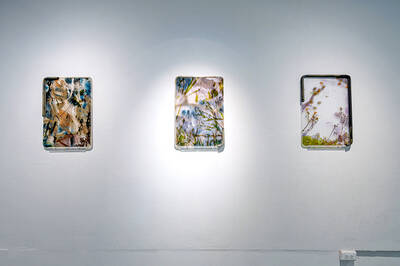
Located down a sideroad in old Wanhua District (萬華區), Waley Art (水谷藝術) has an established reputation for curating some of the more provocative indie art exhibitions in Taipei. And this month is no exception. Beyond the innocuous facade of a shophouse, the full three stories of the gallery space (including the basement) have been taken over by photographs, installation videos and abstract images courtesy of two creatives who hail from the opposite ends of the earth, Taiwan’s Hsu Yi-ting (許懿婷) and Germany’s Benjamin Janzen. “In 2019, I had an art residency in Europe,” Hsu says. “I met Benjamin in the lobby
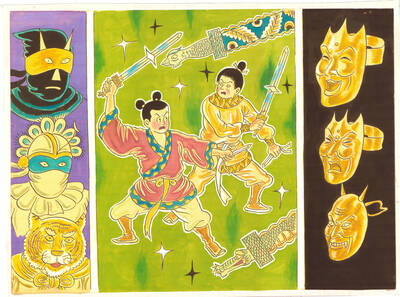
April 22 to April 28 The true identity of the mastermind behind the Demon Gang (魔鬼黨) was undoubtedly on the minds of countless schoolchildren in late 1958. In the days leading up to the big reveal, more than 10,000 guesses were sent to Ta Hwa Publishing Co (大華文化社) for a chance to win prizes. The smash success of the comic series Great Battle Against the Demon Gang (大戰魔鬼黨) came as a surprise to author Yeh Hung-chia (葉宏甲), who had long given up on his dream after being jailed for 10 months in 1947 over political cartoons. Protagonist


 RSS
RSS