


The thousands of gaming enthusiasts who turned out in force at the recent Taipei Game Show to smash their way through the latest PC and console games weren't the show's only winners.
In a break from past shows, some of the exhibition's biggest hits were games developed, produced and manufactured here in Taiwan.
This was the first time since the show's inception that the popularity of local game developers like TWP (第三波), Softstar (大宇) and XPec (樂陞科技) over-shadowed the gaming giants from Japan and Korea that previously stole most of the attention.

PHOTOS COURTESY OF XPEC ENTERTAIMENT
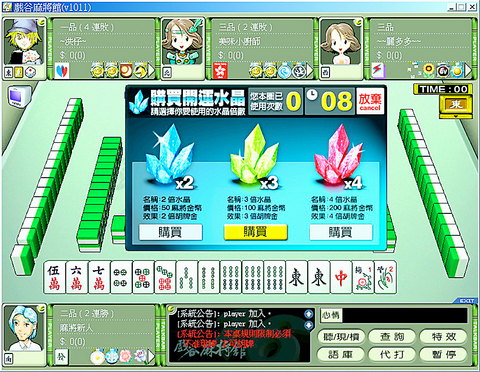
One of the most prominent players in the advancement of Taiwan's gaming industry has been TWP, whose online game Mahjong Palace (戲谷麻將館), released in 2002, has seen success domestically and internationally that has taken even the company by surprise.
The award-winning game currently has 20,300 casual users in Taiwan and over 25,000 overseas logging on to play on any given day. Since the release of its first-generation online mahjong game, the company has up to 4 million registered users worldwide.
"We've proved that the market for casual online games is massive. Both production and retail costs of online games are cheap in comparison to those of stand-alone PC games and pirating of them is impossible," said Chou Mou-shyh, vice president of TWP Corp.
Due to Taiwan's strict anti-gambling laws, all of TWP's mahjong games rely on virtual winnings. Players pay an initial log-on fee, but after that all winnings remain imaginary and no real cash changes hands.
"We plan to develop a children's online game in the near future. With the number of youngsters who own computers increasing every year, the market for such games is bottomless," Chou said.
Another local crowd-puller was Softstar, whose Monopoly 7 (大富翁七) took top honors in the Stand Alone category at this year's Game Star Awards.
Established in 1988, Softstar has notched up an impressive record of award-winning titles since 1995, when Taiwan's first game awards were held.
The company has a string of hits that includes Sky Sword (軒轅劍) and Angel Republic (天使帝國) and continues to produce some of the most popular local games.
Uncertain future
The recent game show proved that there is currently a huge market for PC games. But according to industry insiders, local PC game developers may be facing a less favorable future.
The future of gaming in Taiwan, they say, looks set to center around the world's three leading console systems -- Sony's PS series, Microsoft's X-Box and Nintendo's Game Cube.
According to longtime gamer Lucifer Chu (朱學燴), breakthroughs in computer-graphic capability means that PC gamers whose machines aren't up to speed or don't have the latest graphics card could be left out in the cold.
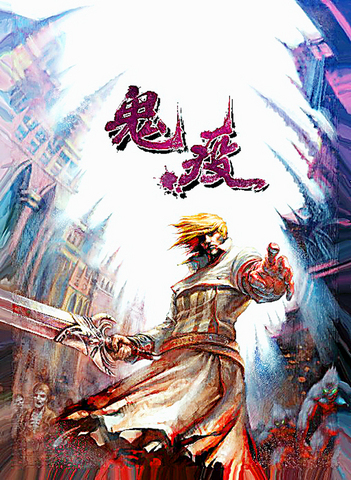
PHOTO COURTESY OF XPEC ENTERTAIMENT
"You might pay an average of NT$1,000 for a game, but when you consider that in addition to this you have to pay another couple of thousand for the latest 3D graphics card or sound booster, then gamers will eventually turn to console systems, which don't require any such modifications."
PC gamers' constant need to upgrade hasn't gone unnoticed by console game manufacturers. In a lesson learned from PC-game manufacturers, which first began marketing localized versions of PC games four years ago, console manufacturer Microsoft is now marketing versions of its international console hits specifically for the Taiwan market.
"For a long time, local console gamers have had to play either English or Japanese-language versions of the top games simply because they had no choice," said Cary Chen (陳傑樺) of Microsoft Taiwan.
PHOTOS COURTESY OF TWP
"Now we're seeing more and more local and localized games entering the marketplace," he said.
According to Chen, until as recently as two years ago, local gamers' purchasing and playing habits were easy to predict. The company's top-selling Western games in Taiwan were driving and fighting games with little if any storyline and hence little English to deal with.
This meant that until very recently, local gamers had been unable to enjoy the blistering action of games such as the hit adventure shooter, Oddworld: Stranger's Wrath and TV-related games like CSI. Sales of such games have been negligible.
Despite having very few localized titles, Sony remains the market leader in console gaming in Taiwan. Its PS2 system continues to dominate, with a 53-percent share of the console market compared to Microsoft's X-Box, which currently has a 35-percent market share. Sony's lead could be slashed in the near future, however, as more and more gamers turn to Microsoft's localized games.
"I think [Microsoft's] new marketing strategy, which is based on localization, will close the gap as Chinese-speaking gamers realize there is a market specially designed for them."
New products
Microsoft Taiwan's Chinese-language games include hits like Project Gotham, Fable and Payload II. Despite having localized some of its games, Microsoft does not expect to expand its market share to reach that of Singapore, where the X-Box console enjoys a 70-percent market share.
"Historically, Taiwan has always been closer to Japan than to the West and gaming trends have mirrored this in Taiwan," Chen said.
"Because of the popularity of Japanese comic books, gamers have, and still do, opt to play games based on Japanese comic book heroes," he said.

PHOTO: GEORGE TSORNG, TAIPEI TIMES
One local company to successfully capitalize on the local market's affinity for Japanese comic books is XPec Entertainment, which produced the first X-Box game to be developed and produced Taiwan in 2003.
Titled EX-Chaser in Asia and Blackstone: Magic and Steel in Europe and the US, the role-playing/puzzle-solving game was a hit in Japan, where it was the sixth bestselling X-Box game in 2003. XPec repeated this success a year later with the first X-Box Online-enabled game Daemon Vector.
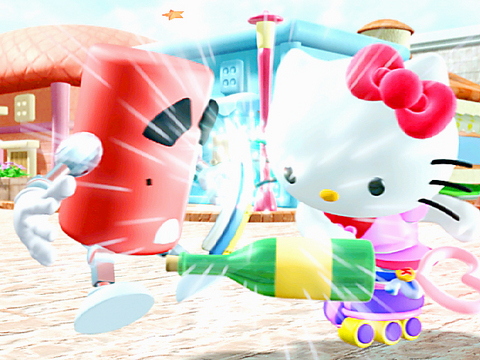
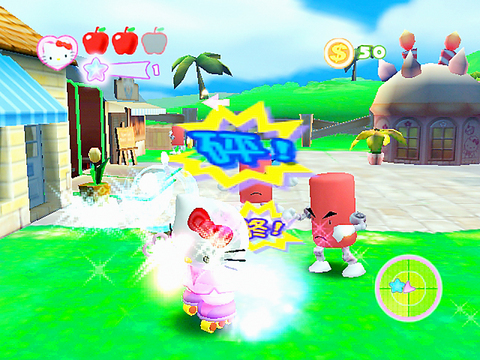
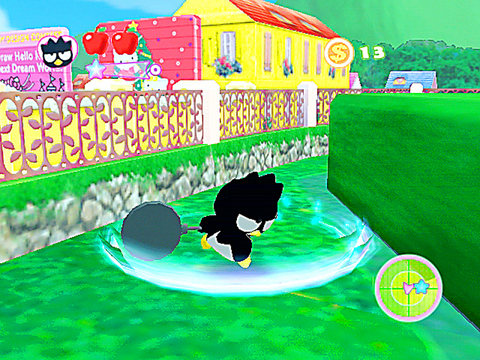
Already one of Taiwan's leading console-game developers, XPec hopes to increase its global standing in the coming months with the first 3D third-person adventure game to feature the popular Japanese cartoon character Hello Kitty.
Hello Kitty: Mission Rescue took XPec two and half years and a staggering US$2.5million to develop. It has been translated into three languages -- Chinese, Japanese and English -- and is expected to be a huge hit with gamers when released in Asia in the coming months.
Most importantly for Taiwan's fledgling console-game developers, Mission Rescue is expected to put them on the map and prove to the world that Taiwan, like Japan, is a credible place for console developers to produce cutting-edge games.
"Be it in Asia, Europe or the US, the future of gaming is in the console market. The next generation X-Box and PS systems will be released within two years and nothing currently on the market will be able to compete with them," said Tony Wang (王彥凱), producer of Hello Kitty: Mission Rescue.
"Next generation console systems will blow everything else out of the water," he said.

Last week Joseph Nye, the well-known China scholar, wrote on the Australian Strategic Policy Institute’s website about how war over Taiwan might be averted. He noted that years ago he was on a team that met with then-president Chen Shui-bian (陳水扁), “whose previous ‘unofficial’ visit to the US had caused a crisis in which China fired missiles into the sea and the US deployed carriers off the coast of Taiwan.” Yes, that’s right, mighty Chen caused that crisis all by himself. Neither the US nor the People’s Republic of China (PRC) exercised any agency. Nye then nostalgically invoked the comical specter

Relations between Taiwan and the Czech Republic have flourished in recent years. However, not everyone is pleased about the growing friendship between the two countries. Last month, an incident involving a Chinese diplomat tailing the car of vice president-elect Hsiao Bi-khim (蕭美琴) in Prague, drew public attention to the People’s Republic of China’s (PRC) operations to undermine Taiwan overseas. The trip was not Hsiao’s first visit to the Central European country. It was meant to be low-key, a chance to meet with local academics and politicians, until her police escort noticed a car was tailing her through the Czech capital. The

April 15 to April 21 Yang Kui (楊逵) was horrified as he drove past trucks, oxcarts and trolleys loaded with coffins on his way to Tuntzechiao (屯子腳), which he heard had been completely destroyed. The friend he came to check on was safe, but most residents were suffering in the town hit the hardest by the 7.1-magnitude Hsinchu-Taichung Earthquake on April 21, 1935. It remains the deadliest in Taiwan’s recorded history, claiming around 3,300 lives and injuring nearly 12,000. The disaster completely flattened roughly 18,000 houses and damaged countless more. The social activist and

Over the course of former President Ma Ying-jeou’s (馬英九) 11-day trip to China that included a meeting with Chinese Communist Party (CCP) leader Xi Jinping (習近平) a surprising number of people commented that the former president was now “irrelevant.” Upon reflection, it became apparent that these comments were coming from pro-Taiwan, pan-green supporters and they were expressing what they hoped was the case, rather than the reality. Ma’s ideology is so pro-China (read: deep blue) and controversial that many in his own Chinese Nationalist Party (KMT) hope he retires quickly, or at least refrains from speaking on some subjects. Regardless


 RSS
RSS