


A saying goes "eating gray mullet's golden eggs can bring you lots of good fortune every year!" Mullet roe -- also called black gold (烏金) -- is a must-have seafood treat on New Year's Eve dinner tables and propitiously, the cold fronts of the Lunar New Year period provide good catches.
In Taiwan, a large number of mullet come together and lay golden eggs in Kaohsiung County's Chiehting Township. The area is famous for selling and serving mullet roe that not only satisfies the appetites of visitors, but also allows them to take in the beauty of Taiwan's southern coastline.
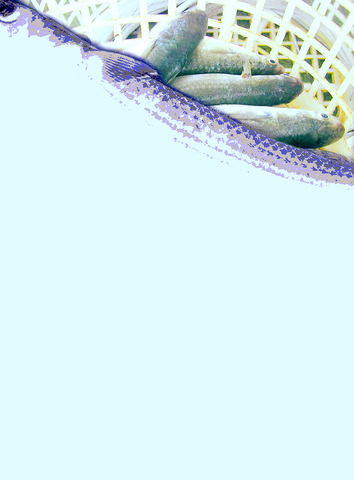
There is no better place than the Hsingta Evening Fish Market (興達黃昏漁市) on the shore of the Hsingta Harbor in southern Taiwan to purchase mullet roe.
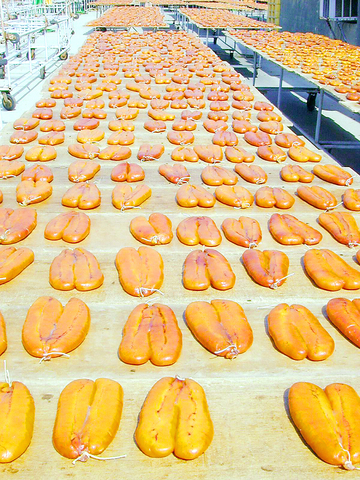
PHOTO: TAIPEI TIMES
Dusk is the most bustling time in the fish market. Reminiscent of a bygone era, fishermen yell into the crowd as they sell their catch in the open air, while pairs of mullet roe also catch people's attention and give the fish market more flavor and vitality.
A wide array of mullet roe can be selected from the Hsingta Harbor fish market, and since mullet processing factories are located nearby, people can also buy dried, processed mullet roe in the market.
Same-day catches of fresh, spotted crab, grass shrimp and mud crab stand out in vivid colors and arouse people's appetites. Their attractive prices make it doubly hard for people to resist.
If your stomach rumbles after shopping around the fish market, visitors can try a wide selection of seafood at stands in the cooked-food section of the market. Some recommended fresh dishes include oyster omelet, fried squid balls, squid potage and other fresh-made snacks.
A female mullet-roe processor called Auntie Yu-feng has nearly 20 years' experience in the roe-processing industry. In front of the factory one day in January, a large number of reddish mullet eggs -- the final catch of the spawning season -- were spread out under the sun.
But dried mullet roe is not simply processed by sun drying. Processing can be complicated and time-consuming.
While dexterously gathering fresh mullet roe that had been sun dried for a day, Auntie Yu-feng explained that sun drying is just a preliminary step, one that requires all-day attention. Roe needs to be turned over frequently for equal sunlight distribution and must be salted once every hour.
In general, processing mullet roes takes two to three days. The roe is cleaned of blood, gall bags, bits of intestines and membrane. It is washed thoroughly and drained, then rolled in fine salt: about 454g of salt per 4.5kg of roe.
The roe is removed from the salt after 6 to 12 hours and brushed well to remove excess salt. It is then laid out to dry.
The roe must be turned at least every hour during the first day and must be brought indoors in the evening. Boards and weights are placed on the roe during the first night or two to compress them slightly.
The roe is cured for about one week -- if drying conditions are good -- until it is reddish-brown and feels hard. Dried roe is dipped in melted beeswax, cooled for 15 minutes, wrapped in waxed paper and stored in a cool dry place.
When the mullet roe is buried in salt and hung to mature it continues to produce water, oil and salt crystals, so it's necessary to frequently wipe and turn over the roe. The mullet roe is flattened and reshaped with wood planks, after dark, and after a while, it are ready to be packaged for sale.
In the past, the fishermen of Chiehting Township could catch big hauls of "black gold" as a means of obtaining a living for a year. Locals even called mullet roe hsin yu (信魚), reliable fish, because, every year, the roe would arrive on the Kuroshio current off Taiwan's southwestern coast.
Mullet roe catches have declined in recent years and Auntie Yu-feng sighed and complained about how few mullet have made the journey along Taiwan's western coast, where the water in the southern Taiwan Strait has become too warm for the fish.
Unfortunately, apart from lengthy expeditions and dynamite fishing by Chinese fishermen, a reduced number of boats for mullet fishing have also contributed to recent low yields.
The poor local harvests have meant that most mullet roe is now imported from China, and mullet is no longer a source of prosperity for local fishermen in places like Chiehting Township, a place that has about a hundred years of mullet-catching history.
Mullet sold in the market can be primarily classified as marine-captured (or wild), imported and cultured. There is another kind of mullet called hsieh tzu (血子), deemed a second-class mullet because of dark-red bruises on its flesh from being roughly handled during transportation.
Deep-sea mullet usually commands premium prices, but such mullet is mostly imported from China, Brazil and Australia. It's difficult to distinguish different types of mullet, but there are several tips to keep from getting mixed up.
"Wild mullet roe looks slender and darker compared to artificially cultured roe, the flesh of which is thicker, fattier and a lighter color," said Aunty Yu-feng. Furthermore, pairs of roe sacs in which the eggs live must not be damaged and should be symmetrical. All the eggs should be similar in size.
Price can also be a basis for mullet-roe selection. Roe of marine-captured mullet fetch the highest price in the market, and the bigger the roe sac, the higher in price.
Due to low mullet crops in recent years, whether imported or artificially cultured, the price of all mullet roe this year has increased by 10 percent. In the market today, 200g of mullet roe costs at least NT$300 (US$10).
Other than mullet roe, Hsingta Fish Market is also famous for selling other mullet products such as processed stomach and mullet's air bladder, which are also regarded as luxury items for epicures.
-- translated by Lin Ya-ti";

In late October of 1873 the government of Japan decided against sending a military expedition to Korea to force that nation to open trade relations. Across the government supporters of the expedition resigned immediately. The spectacle of revolt by disaffected samurai began to loom over Japanese politics. In January of 1874 disaffected samurai attacked a senior minister in Tokyo. A month later, a group of pro-Korea expedition and anti-foreign elements from Saga prefecture in Kyushu revolted, driven in part by high food prices stemming from poor harvests. Their leader, according to Edward Drea’s classic Japan’s Imperial Army, was a samurai

Located down a sideroad in old Wanhua District (萬華區), Waley Art (水谷藝術) has an established reputation for curating some of the more provocative indie art exhibitions in Taipei. And this month is no exception. Beyond the innocuous facade of a shophouse, the full three stories of the gallery space (including the basement) have been taken over by photographs, installation videos and abstract images courtesy of two creatives who hail from the opposite ends of the earth, Taiwan’s Hsu Yi-ting (許懿婷) and Germany’s Benjamin Janzen. “In 2019, I had an art residency in Europe,” Hsu says. “I met Benjamin in the lobby
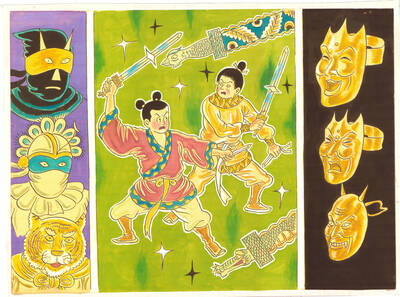
April 22 to April 28 The true identity of the mastermind behind the Demon Gang (魔鬼黨) was undoubtedly on the minds of countless schoolchildren in late 1958. In the days leading up to the big reveal, more than 10,000 guesses were sent to Ta Hwa Publishing Co (大華文化社) for a chance to win prizes. The smash success of the comic series Great Battle Against the Demon Gang (大戰魔鬼黨) came as a surprise to author Yeh Hung-chia (葉宏甲), who had long given up on his dream after being jailed for 10 months in 1947 over political cartoons. Protagonist

Peter Brighton was amazed when he found the giant jackfruit. He had been watching it grow on his farm in far north Queensland, and when it came time to pick it from the tree, it was so heavy it needed two people to do the job. “I was surprised when we cut it off and felt how heavy it was,” he says. “I grabbed it and my wife cut it — couldn’t do it by myself, it took two of us.” Weighing in at 45 kilograms, it is the heaviest jackfruit that Brighton has ever grown on his tropical fruit farm, located


 RSS
RSS