


Sony Taiwan has packaged eight Yo-Yo Ma DVDs and now offers them as a single box set, complete with a leather-bound diary. None of the items is new, but three of them are masterpieces, three reasonably interesting, and two more or less failures.
The bulk of the collection consists of six films made in the 1990s featuring Ma playing Bach's six cello suites. None is a straightforward performance -- instead, all elaborate on the music in various ways, extending it (you might think) from the music's half hour or less to the 57 minutes or so required for convenient TV screening.
The first is uniquely depressing -- a documentary on the efforts of Ma and a garden designer to persuade the hard-nosed Boston City authorities to commission a public garden inspired by the Suite No:1. They fail, and the project is eventually taken over by Toronto. But long sequences of Boston's and Toronto's windy city centers, plus all those gray men in Boston talking about "the real world," make this a DVD to avoid.
Suite No: 2 isn't much better. Here the plan was to integrate the music with the famous etchings of imaginary prisons by the 18th century engraver Piranesi. These momentous designs are re-created in three dimensions on a computer, and Ma is then shown playing the suite as if perched in a variety of its niches, alcoves and so on. It doesn't work, and everyone appears to have become distraught in the process. At one point even the genial Ma loses his cool and is heard saying "We'll be here all night" and wanting to "get out of here."
A senior recording executive, remarking on it being a "sort of a spiritual thing" while turning up the reverb to levels Ma clearly finds unacceptable, doesn't help matters. An architect, Moshe Safdie, sagely comments that you can't imitate buildings on computers, and it's to this film's credit that his dissenting remarks are left in.

Fortunately the remaining four are a great improvement. The exquisite Suite No: 3 has Ma working with choreographer Mark Morris and his dance troupe. It has the great advantage, unique in the set, of putting the talk in the first half of the film, and then playing the suite uninterrupted, accompanied by the finished dance, in the second. Here at last, you feel, are two genuine artists happily working together.

The fourth DVD consists of a mini-drama centered around a performance Ma is due to give of the relevant suite. The story concerns illness, with four characters who are either dying, suffering psychosomatic symptoms, or trying to persuade the doctor that they're ill. As a drama, it is not a major success, but it nonetheless deserves credit as a serious and honorable attempt.
The fifth suite has Japanese kabuki actor Tamasaburo Bando executing a series of dances while Ma plays. They discuss the project beforehand, Bando speaking in Japanese and with only Chinese subtitles available. Ma states his belief that this is the most profound of the suites, and associates it with the death of his father. The dances -- all with Bando playing a female role -- are very strong, and this film is consequently one of the better to come out of this project.
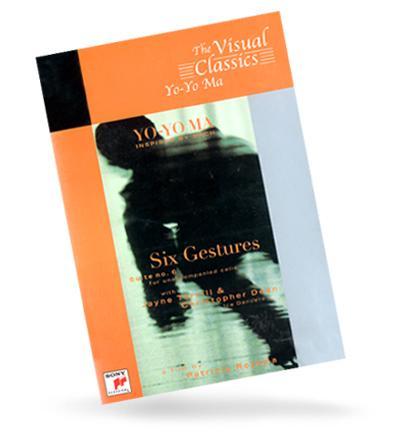
And then suddenly the sixth, entitled Six Gestures, is an overwhelming masterpiece. Its ingredients -- skaters Torvill and Dean, an actor playing Bach, Ma playing the Suite No:6 as a busker -- seem incongruous. But the result is a stupendous success, fabulously moving, and the only breath-taking one in the entire six. About death, love and joy, it was poetically directed by Patricia Rozema, and is highly recommended.
Of the two other DVDs, the newer of them, Appalachian Journey Live in Concert, is a recording of Ma in the Lincoln Center's Avery Fisher Hall in 2000 with violinist Mark O'Connor and double-bass player Edgar Meyer. It serves to cement Ma's love affair with mostly Irish-inspired American folk music.
This magnificent DVD should be seen by anyone interested in music. All five musicians appearing in the concert are very fine, and what is astonishing is that the public music-making veers towards the classical as often as it does to traditional folk. Cross-over may be the order of the day, but Ma has great taste and only co-operates with the best.
The third outstanding item in this box is Yo-Yo Ma at Tanglewood, already reviewed in this column (Taipei Times, 15 April 2004). It's exceptionally memorable in every way and full of great riches, as well as being good value at an hour and 40 minutes.
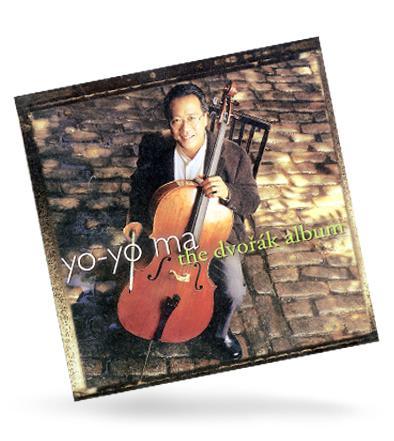
Finally, a Ma CD. The Dvorak Album is a compilation to celebrate the 100th anniversary of the composer's death in 1904, with items recorded between 1982 and 1995. There's the Cello Concerto, played by the New York Philharmonic under Kurt Masur with unusual delicacy, though somewhat lacking in passion, plus four other short works.
Incidentally, Ma will be performing in Taipei on Nov. 2. The program has yet to be announced.
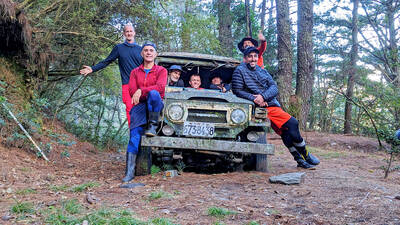
The year was 1991. A Toyota Land Cruiser set out on a 67km journey up the Junda Forest Road (郡大林道) toward an old loggers’ camp, at which point the hikers inside would get out and begin their ascent of Jade Mountain (玉山). Little did they know, they would be the last group of hikers to ever enjoy this shortcut into the mountains. An approaching typhoon soon wiped out the road behind them, trapping the vehicle on the mountain and forever changing the approach to Jade Mountain. THE CONTEMPORARY ROUTE Nowadays, the approach to Jade Mountain from the north side takes an

Last week Joseph Nye, the well-known China scholar, wrote on the Australian Strategic Policy Institute’s website about how war over Taiwan might be averted. He noted that years ago he was on a team that met with then-president Chen Shui-bian (陳水扁), “whose previous ‘unofficial’ visit to the US had caused a crisis in which China fired missiles into the sea and the US deployed carriers off the coast of Taiwan.” Yes, that’s right, mighty Chen caused that crisis all by himself. Neither the US nor the People’s Republic of China (PRC) exercised any agency. Nye then nostalgically invoked the comical specter
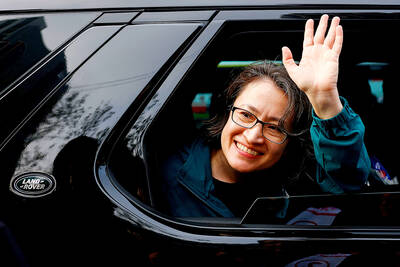
Relations between Taiwan and the Czech Republic have flourished in recent years. However, not everyone is pleased about the growing friendship between the two countries. Last month, an incident involving a Chinese diplomat tailing the car of vice president-elect Hsiao Bi-khim (蕭美琴) in Prague, drew public attention to the People’s Republic of China’s (PRC) operations to undermine Taiwan overseas. The trip was not Hsiao’s first visit to the Central European country. It was meant to be low-key, a chance to meet with local academics and politicians, until her police escort noticed a car was tailing her through the Czech capital. The
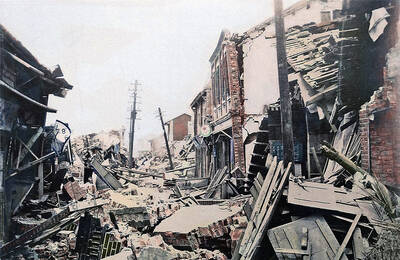
April 15 to April 21 Yang Kui (楊逵) was horrified as he drove past trucks, oxcarts and trolleys loaded with coffins on his way to Tuntzechiao (屯子腳), which he heard had been completely destroyed. The friend he came to check on was safe, but most residents were suffering in the town hit the hardest by the 7.1-magnitude Hsinchu-Taichung Earthquake on April 21, 1935. It remains the deadliest in Taiwan’s recorded history, claiming around 3,300 lives and injuring nearly 12,000. The disaster completely flattened roughly 18,000 houses and damaged countless more. The social activist and


 RSS
RSS