


In a small area of Ximending bounded by cinemas, the Danshui River and a strip of karaoke bars and hotels, are lanes and alleys that cater to hip-hop crews and consumers of Asian fashion. It is a lively section of Taipei, with rehearsal spaces for bands and film workshops, mixed with vendors and by-the-hour hotels. There are hundreds of places to eat and all-night cafes.
Taking a stroll and probably getting lost is not a bad way to kill some time if it involves lunch or dinner and a break for coffee. On the way you'll see a hoard of graffiti. It's not unlike taking a stroll through a contemporary art gallery's exhibition of ghetto artists. Among the prominent artists, there is the sublime Arnold -- who is rumored to be doing his military service -- and Ragdoll. Tags are in Chinese and English. The boom-box greetings of the competing storeowners are the rhythm of the streets, with a half-abandoned car spray-painted with the terse statement: Fuck Nike.
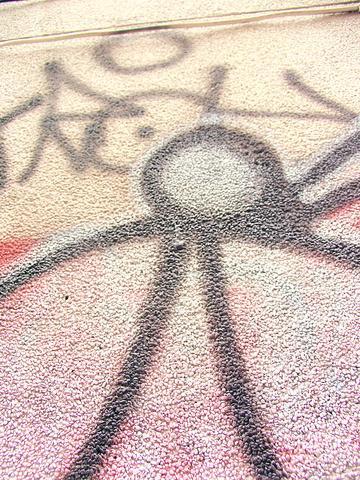
PHOTO: JULES QUARTLY, TAIPEI TIMES
Though papers reported gangland street fights over drugs a few years back, Ximending is now heavily patrolled and has a lot of closed circuit TV cameras mounted on streetlamps.
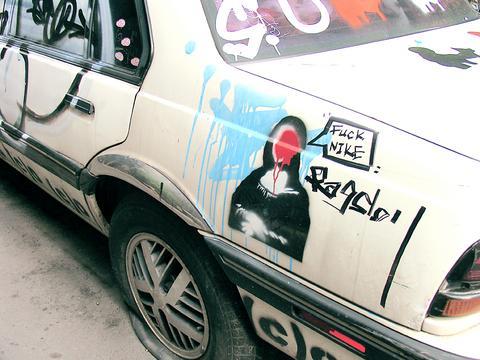
PHOTO: JULES QUARTLY, TAIPEI TIMES
It feels like a peaceful, sub-tropical urban jungle. At night there are 24-hour tea and coffee houses, bowling alleys, PC game places and arcades. There are a few nightclubs and many karaoke and red-envelope bars (so called because men pay for a song with a red envelope containing money). At dawn, the clientele and hostesses from the piano bars on Chengdu Road spill out into the street and toward the line of yellow taxis.
Originally a public burial ground when it was first developed in 1885, Ximending's name derives from being one of the five gates of Taipei. It was an entertainment district developed by the Japanese in the first half of the century and flourished in the1950s and 1960s, when it first became a fashionable hotspot for the prospering Chinese Nationalist Party soldiers and locals.
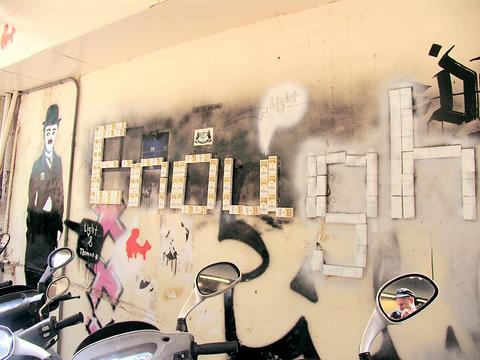
PHOTO: JULES QUARTLY, TAIPEI TIMES
Japan is back now, at least when it comes to fashion. Young women wear minutely planned and accessorized looks inspired by manga comic characters. They wear shorts and layers of long colorful socks with flat sandals or boots. The guys are a mixed bunch of shorts, cargo pants, baggy jeans, extra-large clothing, hats and shades.
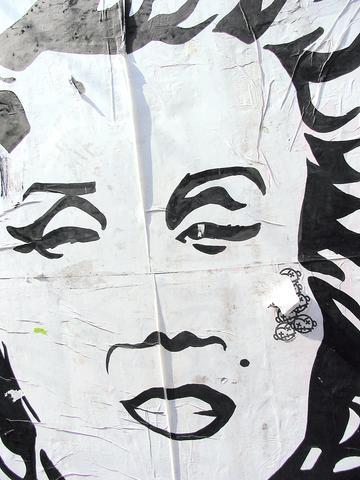
PHOTO: JULES QUARTLY, TAIPEI TIMES
Ohtomo (大
Mao (毛
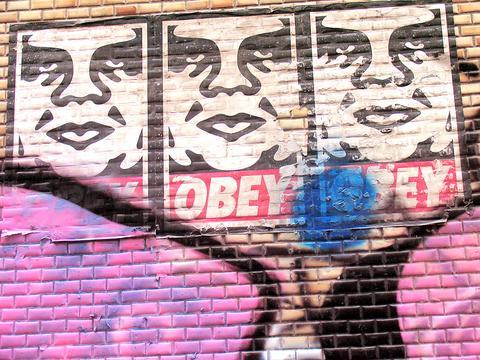
PHOTO: JULES QUARTLY, TAIPEI TIMES
They both say business is good.
PHOTO: JULES QUARTLY, TAIPEI TIMES
At Doobiest, on Wuchang Street, many of the clothes and accessories are from the US, with labels like Tribal USA and Dickies. The Denon turntables are prominently displayed, but a CD plays in the background. XXXL shirts and pants are being sold to the guys, hot pants for the ladies. There is an Apple computer and 12-inch records. At another hip-hop store nearby, kids admire a custom-made low-rider bike with high handlebars and chrome accessories.
Down on Emei Street are some large works of graffiti, more stores with names like Pinky, Mother Fucker, K.O.S (king of the streets) and Vicious. They aim for the broad spectrum of punk-death metal combinations, soul, R 'n' B and US skateboarder styles. A little further and the hip-hop boutiques make way for hotels, karaoke parlors and all-night fried rice and noodle diners that always seem to have a little sashimi and a lot of Taiwan Beer.

Last week Joseph Nye, the well-known China scholar, wrote on the Australian Strategic Policy Institute’s website about how war over Taiwan might be averted. He noted that years ago he was on a team that met with then-president Chen Shui-bian (陳水扁), “whose previous ‘unofficial’ visit to the US had caused a crisis in which China fired missiles into the sea and the US deployed carriers off the coast of Taiwan.” Yes, that’s right, mighty Chen caused that crisis all by himself. Neither the US nor the People’s Republic of China (PRC) exercised any agency. Nye then nostalgically invoked the comical specter
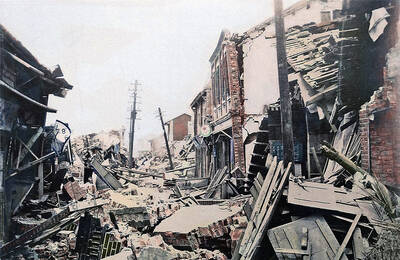
April 15 to April 21 Yang Kui (楊逵) was horrified as he drove past trucks, oxcarts and trolleys loaded with coffins on his way to Tuntzechiao (屯子腳), which he heard had been completely destroyed. The friend he came to check on was safe, but most residents were suffering in the town hit the hardest by the 7.1-magnitude Hsinchu-Taichung Earthquake on April 21, 1935. It remains the deadliest in Taiwan’s recorded history, claiming around 3,300 lives and injuring nearly 12,000. The disaster completely flattened roughly 18,000 houses and damaged countless more. The social activist and

Over the course of former President Ma Ying-jeou’s (馬英九) 11-day trip to China that included a meeting with Chinese Communist Party (CCP) leader Xi Jinping (習近平) a surprising number of people commented that the former president was now “irrelevant.” Upon reflection, it became apparent that these comments were coming from pro-Taiwan, pan-green supporters and they were expressing what they hoped was the case, rather than the reality. Ma’s ideology is so pro-China (read: deep blue) and controversial that many in his own Chinese Nationalist Party (KMT) hope he retires quickly, or at least refrains from speaking on some subjects. Regardless

Approaching her mid-30s, Xiong Yidan reckons that most of her friends are on to their second or even third babies. But Xiong has more than a dozen. There is Lucky, the street dog from Bangkok who jumped into a taxi with her and never left. There is Sophie and Ben, sibling geese, who honk from morning to night. Boop and Pan, both goats, are romantically involved. Dumpling the hedgehog enjoys a belly rub from time to time. The list goes on. Xiong nurtures her brood from her 8,000 square meter farm in Chiang Dao, a mountainous district in northern Thailand’s


 RSS
RSS