


Since 1904, Rolls-Royce has stood for everything that luxury and comfort can offer on four wheels: vehicles crafted by hand with exclusive leather and precious wood finishings.
But behind the story is the biography of two very different men who created "the best car in the world" out of virtually nothing. It is a history of many highlights and tragedy.
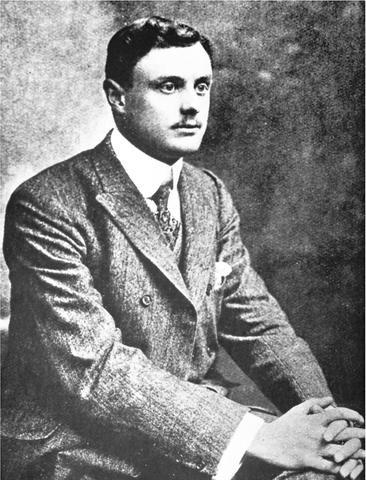
PHOTO: DPA
It was on May 4, 1904 that Charles Stewart Rolls and Frederick Henry Royce met for the first time in the Midland Hotel in Manchester. The two men could not be more different. Rolls was the wealthy son of an aristocrat, Royce a self-made businessman.
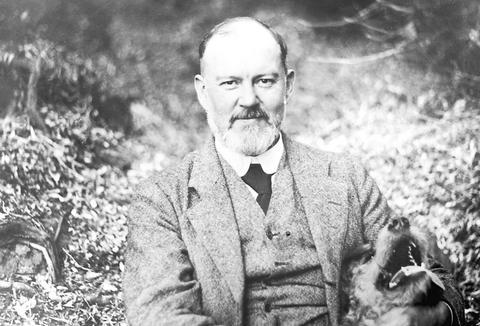
Born in 1863, Royce grew up in poverty as the fifth child of James Royce and Mary King. At the age of 10 he had to supplement the family income by selling newspapers and later worked as a telegraph boy.
His fate took a turn for the better when an aunt found him a job as an apprentice at the Great Northern Railway Works.
There Royce's natural talent for engineering was soon discovered. At the age of 21 he managed to establish with a friend his own firm, F.H. Royce & Co, producing electrical components and door knobs.
Charles Stewart Rolls was born 14 years later than Royce in the year 1877 as the third son of Lord and Lady Llangattock. He studied engineering at Cambridge and took part in races with everything that moved, from bicycles and motorcycles to cars.
In 1902 Rolls became a car trader, opening CS Rolls & Co in London. For a time in 1903, Rolls held the world speed record, driving a car at 150kph.
But there was something that really troubled him. All the cars he sold were imports and England was at the time still a developing country as far as motor vehicle production was concerned.
Royce was also familiar with the imports. In the course of the years he had become a wealthy man. There was a stock flotation in 1894 of his firm, which was by then building electric engines and electric cranes.
Taking an interest in the new technology he bought a French Decauville. But he soon was annoyed by the car's unreliability. Royce was not even satisfied after rebuilding the Decauville. He built his own car.
After the maiden drive in his car was a successs, he built two more cars -- one for his business partner Ernest Claremont and one for his friend Henry Edmunds, who was so thrilled with the car that he told a friend about it.
This friend, Claude Johnson, was a partner of Rolls.
Thereafter followed the first meeting of Rolls and Royce. After a test drive with the Royce car, Rolls was thrilled.
The 41-year-old businessman and the 27-year-old aristocrat quickly found common ground.
It was decided that Rolls would sell all the cars that Royce could build. The cars would be marketed under the name Rolls-Royce Motor Cars. In December 1904 the company presented two-, three- and four-cylinder cars at the Paris Motor Show.
But the real myth was created by a model presented in 1906. At first it was only known as the 40/50 HP.
But the 12th car produced was in complete silver livery and was soon known by the name Silver Ghost. Ultimately the entire model line was known under that name.
Meanwhile Claude Johnson, a manager of the company, soon emerged as an advertising genius. He allegedly announced that this new six-cylinder Rolls-Royce was not only one of the best but "the best car in the world."
There was a lot of truth to this slogan: impressively, a Silver Ghost accomplished an uninterrupted drive of 20,000km without a single breakdown, which was an almost impossible feat at the time.
But Rolls and Royce were not given much time to enjoy their success. With his love of speed, Rolls had turned to flying. He was the first man to cross the English Channel both ways by air. Soon afterwards he was the first Briton to die in an aircraft accident.
He crashed during an air exhibition on July 12, 1910 aged only 32.
He did not even live to see the emblem of Rolls-Royce unveiled in 1911. Through John Scott Montagu, a friend of Rolls and Johnson, Royce got in touch with the artist Charles Sykes, asking him to design a figure symbolizing the quality of the vehicle.
Sykes sat down and asked Montagu's secretary, Eleanor Thornton, to stand as a model. From that sketch came the famous radiator grille figure with outspread arms -- "The Spirit of Ecstasy."
Meanwhile the firm moved to a new factory in Derby. But the decades of hard work were taking their toll on Royce. His health failing, he spent most of his time on the French Riviera because of the more favorable climate.
Royce did not live to see the second move of the car production facilities to the legendary works at Crewe in 1947. He died in 1933. The myth lives on.
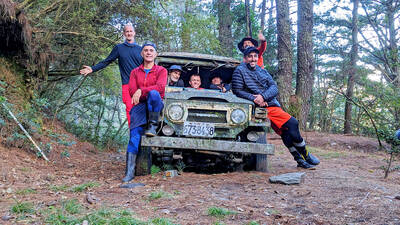
The year was 1991. A Toyota Land Cruiser set out on a 67km journey up the Junda Forest Road (郡大林道) toward an old loggers’ camp, at which point the hikers inside would get out and begin their ascent of Jade Mountain (玉山). Little did they know, they would be the last group of hikers to ever enjoy this shortcut into the mountains. An approaching typhoon soon wiped out the road behind them, trapping the vehicle on the mountain and forever changing the approach to Jade Mountain. THE CONTEMPORARY ROUTE Nowadays, the approach to Jade Mountain from the north side takes an
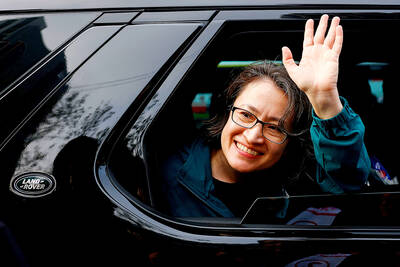
Relations between Taiwan and the Czech Republic have flourished in recent years. However, not everyone is pleased about the growing friendship between the two countries. Last month, an incident involving a Chinese diplomat tailing the car of vice president-elect Hsiao Bi-khim (蕭美琴) in Prague, drew public attention to the People’s Republic of China’s (PRC) operations to undermine Taiwan overseas. The trip was not Hsiao’s first visit to the Central European country. It was meant to be low-key, a chance to meet with local academics and politicians, until her police escort noticed a car was tailing her through the Czech capital. The

Last week Joseph Nye, the well-known China scholar, wrote on the Australian Strategic Policy Institute’s website about how war over Taiwan might be averted. He noted that years ago he was on a team that met with then-president Chen Shui-bian (陳水扁), “whose previous ‘unofficial’ visit to the US had caused a crisis in which China fired missiles into the sea and the US deployed carriers off the coast of Taiwan.” Yes, that’s right, mighty Chen caused that crisis all by himself. Neither the US nor the People’s Republic of China (PRC) exercised any agency. Nye then nostalgically invoked the comical specter
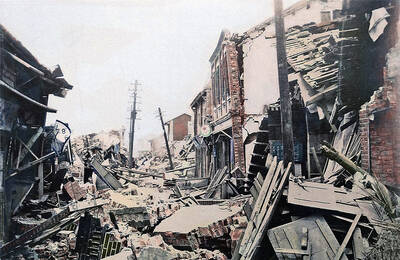
April 15 to April 21 Yang Kui (楊逵) was horrified as he drove past trucks, oxcarts and trolleys loaded with coffins on his way to Tuntzechiao (屯子腳), which he heard had been completely destroyed. The friend he came to check on was safe, but most residents were suffering in the town hit the hardest by the 7.1-magnitude Hsinchu-Taichung Earthquake on April 21, 1935. It remains the deadliest in Taiwan’s recorded history, claiming around 3,300 lives and injuring nearly 12,000. The disaster completely flattened roughly 18,000 houses and damaged countless more. The social activist and


 RSS
RSS