


Blood Horses
By John Jeremiah Sullivan
FSG
"I was never a fan. I was something else: an ignoramus." That's how Sullivan describes his attitude toward sports as a kid, even though his father was a veteran sportswriter named Mike Sullivan. Before his father's death, Sullivan asked what he remembered most from his 30-year career. Mike replied that it was watching the 1973 Kentucky Derby, when Secretariat overtook Sham on his way to a glorious Triple Crown. "That was just beauty, you know?" he said. Sullivan's boyhood and his relationship with his father are laced through this profile of horses and racing, although if it weren't for that personal thread it would very much resemble the books of New Yorker writer John McPhee. Like McPhee, Sullivan comes at his subject from all sides, discussing everything from the limestone of central Kentucky to Saudi Prince Ahmed bin Salman's speedy exit from a yearling auction after the Sept. 11 attacks to Sullivan's hilarious encounter with two drunks after the 2002 Kentucky Derby. It's an engaging book that ends with Funny Cide's bid for last year's Triple Crown.
The Body of David Hayes
By Ridley Pearson
Hyperion
Pearson is one of those novelists (there are many) whose success isn't the result of talent or storytelling prowess, but of his belief at the start that he could attempt to write bestsellers and actually pull it off. He's industrious, persistent and brave enough to take characters off the beaten path, although seldom with much finesse. Liz Boldt, wife of Seattle police Lieutenant Lou Boldt, has survived cancer, embraced religion (which didn't sit well with Boldt), had two kids and become a bank executive. Now she's revisited by David Hayes, who had an affair with her six years ago and has just spent four years in prison for the electronic theft of US$17 million from Liz's bank. Police never found the money, never figured out how Hayes hid it and never uncovered the identity of the shady millionaire who was robbed. After lots of computer mumbo jumbo (and some stiffly rendered jealousy on Boldt's part), we are treated to blackmail and torture by the Russian mob. Pearson will appear in Scottsdale next month. Watch the books calendar for details.
The King of America
By Samantha Gillison
Random House
This atmospheric novel is based on the life and death of Michael Rockefeller, son of Nelson Rockefeller and heir to the family fortune, who disappeared off New Guinea in 1961 while doing anthropological fieldwork. Through her character, Stephen Hesse, Gillison explores the power that wealth bestows upon people who have done nothing to deserve it, as well as the familial politics that might swirl around an incredibly rich man. The young Stephen and his mother, low-born first wife of Nicholas Hesse, are relegated to a limbo of invisibility when the senior Hesse divorces her and has a new family with a woman of better social standing. It's only later that Stephen gets to know his father, and as he struggles to impress Nicholas he must also deal with the ways people respond to his name. His trip into the wilds of New Guinea (Gillison lived there as a child and describes it vividly) ends with the mysterious fate of the young Rockefeller, whose body was never found, giving rise to rumors that he was murdered and eaten by angry islanders.
Art Against the Odds
By Susan Goldman Rubin
Crown
This is an interesting book for older kids about people who have created art in anonymity, often under difficult circumstances. They include Chicago janitor Henry Darger, an eccentric who grew up in an asylum for "feeble-minded" children and later, in secret, created a body of wondrous paintings and drawings that were discovered after his death in 1973; Mine Okubo, who made pen and ink drawings of things she saw in a Japanese internment camp during World War II; Helga Weissova, a teenager whose watercolors depicted life in the German concentration camps where she lived from 1941 to 1945; American slaves who sewed elaborate quilts in the years before the Civil War, as well as the descendents of slaves who make quilts "the old way" in Gee's Bend, Alabama; and Ronnie White, Arthur Keigney and Crystal Stimpson, prison inmates who made stark, revealing paintings of life behind bars. Their stories show that artistic expression produces flickers of defiance even in the most hellish places.
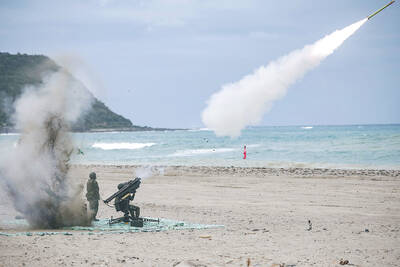
In late October of 1873 the government of Japan decided against sending a military expedition to Korea to force that nation to open trade relations. Across the government supporters of the expedition resigned immediately. The spectacle of revolt by disaffected samurai began to loom over Japanese politics. In January of 1874 disaffected samurai attacked a senior minister in Tokyo. A month later, a group of pro-Korea expedition and anti-foreign elements from Saga prefecture in Kyushu revolted, driven in part by high food prices stemming from poor harvests. Their leader, according to Edward Drea’s classic Japan’s Imperial Army, was a samurai

The following three paragraphs are just some of what the local Chinese-language press is reporting on breathlessly and following every twist and turn with the eagerness of a soap opera fan. For many English-language readers, it probably comes across as incomprehensibly opaque, so bear with me briefly dear reader: To the surprise of many, former pop singer and Democratic Progressive Party (DPP) ex-lawmaker Yu Tien (余天) of the Taiwan Normal Country Promotion Association (TNCPA) at the last minute dropped out of the running for committee chair of the DPP’s New Taipei City chapter, paving the way for DPP legislator Su
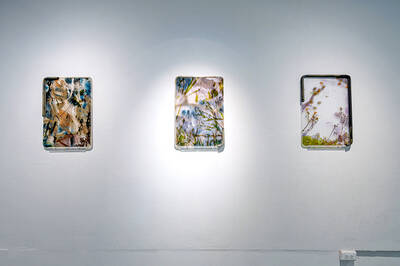
Located down a sideroad in old Wanhua District (萬華區), Waley Art (水谷藝術) has an established reputation for curating some of the more provocative indie art exhibitions in Taipei. And this month is no exception. Beyond the innocuous facade of a shophouse, the full three stories of the gallery space (including the basement) have been taken over by photographs, installation videos and abstract images courtesy of two creatives who hail from the opposite ends of the earth, Taiwan’s Hsu Yi-ting (許懿婷) and Germany’s Benjamin Janzen. “In 2019, I had an art residency in Europe,” Hsu says. “I met Benjamin in the lobby
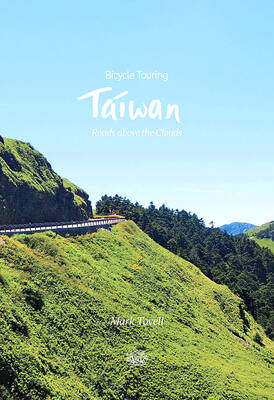
It’s hard to know where to begin with Mark Tovell’s Taiwan: Roads Above the Clouds. Having published a travelogue myself, as well as having contributed to several guidebooks, at first glance Tovell’s book appears to inhabit a middle ground — the kind of hard-to-sell nowheresville publishers detest. Leaf through the pages and you’ll find them suffuse with the purple prose best associated with travel literature: “When the sun is low on a warm, clear morning, and with the heat already rising, we stand at the riverside bike path leading south from Sanxia’s old cobble streets.” Hardly the stuff of your


 RSS
RSS