


Home to over 300,000 artifacts dating from 3,000 BC to the early 19th Century, the Museum of the Institute of History and Philology (
Located on the southern peripheries of Academia Sinica (
Established by the Institute of History and Philology (
A combination of poor funding and shortage of both manpower and space, however, led to the private museum's sudden closure just over a decade later.
"The storage and research environments weren't very good and the display areas were small, cramped and rather unsightly. To make matters worse there was only one custodian to look after the entire building," said Wu Cheng-shang (
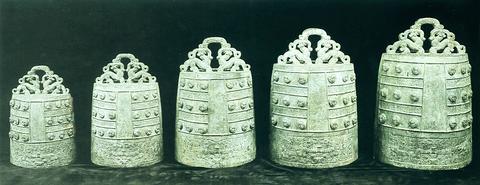
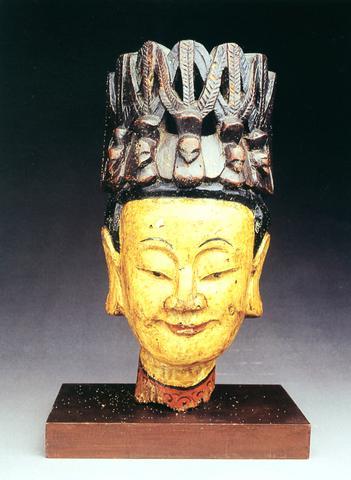
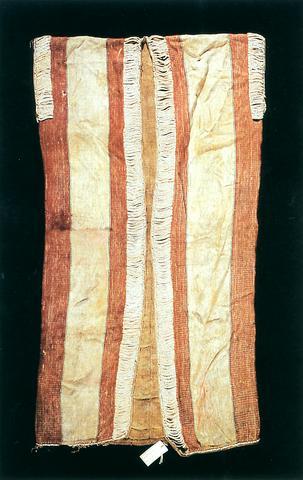
Reopened in 2002, the institute sets out to exhibit an eclectic collection of some of the most archeologically and historically important artifacts in its possession, regardless of their esthetic nature.
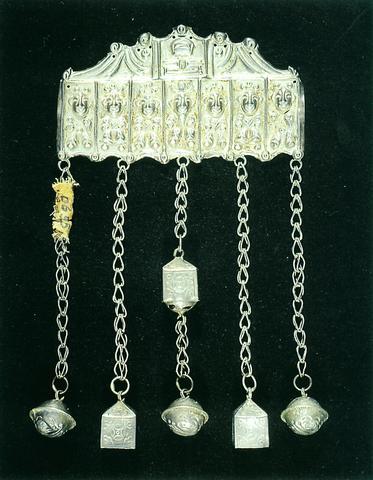
The redesign has allowed the museum to paint a succinct picture of the history and archeology of China. While the building remains too small to exhibit all of the hundreds of thousands of pieces in the collection, there are at least 5,000 artifacts on display at any given time.
There are: small pieces of chariots excavated from the royal tombs of the Shang Dynasty (14 BC to 11 BC); Han Dynasty (206 BC to 220 AD) wooden military documents relating to the supply of frontier posts discovered in Mongolia; Ming Dynasty (1368 to 1644) documents from the archives of the Grand Secretariat; and Ching Dynasty (1644 to 1911) maps of Taiwan.
While the institute continues to amass material and work in close cooperation with historical and archeological institutes in China, much of the material on display has been in the ownership of the institute since its founding in Canton, now Guangzhou, in 1928 -- the year that saw the establishment of anthropological and historical studies in China by scholars like Fu Ssu-nien (
In addition to the archeological and historical material the museum gives patrons an insight into how these pioneers of archeology managed to work against a backdrop of the constant threat of banditry and with the most basic equipment.
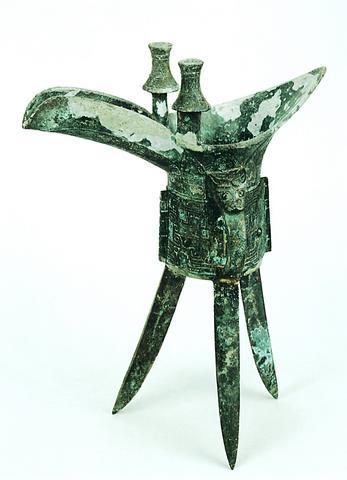
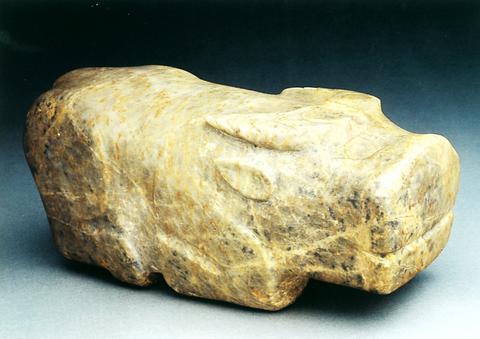
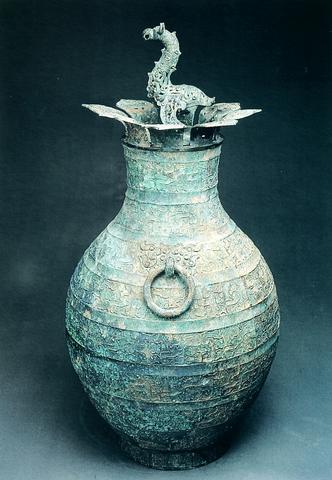
The section many scholars and historians consider to be the most important of all the institute's artifacts are those on display in the first floor's archeology exhibition halls. Excavated by the founding fathers of Academia Sinica between 1928 to 1947, the items include pottery from the Neolithic Lung-shan Culture (2,600 BC to 2,000 BC), a collection of mortuary utensils employed by shamans during the Eastern Chou period (771 BC to 221 BC), as well as artifacts unearthed from a Western Chou tomb (1122 BC to 770BC).
"With the exception of the National Palace Museum this is the largest collection of such material on public display in Taiwan," said Shih Pin-chu (

The museum's second floor houses a selection of the institute's most important and remarkable historical documents. Here visitors can gaze upon rare Tang (618 to 907) and Sung Dynasty (960 to 1280) texts, as well as collections of 18th century paintings of Taiwan's plain-dwelling Aboriginal tribes. The most striking piece of documentation is a map created by cartographers in 1760 illustrating the boundaries that divided the early Han Chinese settlers and the threatening indigenous
Aborigines.


In late October of 1873 the government of Japan decided against sending a military expedition to Korea to force that nation to open trade relations. Across the government supporters of the expedition resigned immediately. The spectacle of revolt by disaffected samurai began to loom over Japanese politics. In January of 1874 disaffected samurai attacked a senior minister in Tokyo. A month later, a group of pro-Korea expedition and anti-foreign elements from Saga prefecture in Kyushu revolted, driven in part by high food prices stemming from poor harvests. Their leader, according to Edward Drea’s classic Japan’s Imperial Army, was a samurai

Approaching her mid-30s, Xiong Yidan reckons that most of her friends are on to their second or even third babies. But Xiong has more than a dozen. There is Lucky, the street dog from Bangkok who jumped into a taxi with her and never left. There is Sophie and Ben, sibling geese, who honk from morning to night. Boop and Pan, both goats, are romantically involved. Dumpling the hedgehog enjoys a belly rub from time to time. The list goes on. Xiong nurtures her brood from her 8,000 square meter farm in Chiang Dao, a mountainous district in northern Thailand’s
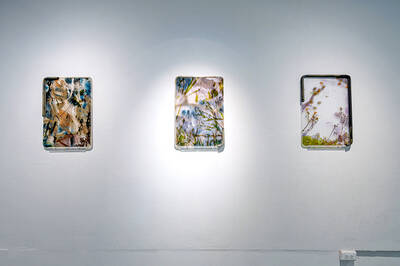
Located down a sideroad in old Wanhua District (萬華區), Waley Art (水谷藝術) has an established reputation for curating some of the more provocative indie art exhibitions in Taipei. And this month is no exception. Beyond the innocuous facade of a shophouse, the full three stories of the gallery space (including the basement) have been taken over by photographs, installation videos and abstract images courtesy of two creatives who hail from the opposite ends of the earth, Taiwan’s Hsu Yi-ting (許懿婷) and Germany’s Benjamin Janzen. “In 2019, I had an art residency in Europe,” Hsu says. “I met Benjamin in the lobby
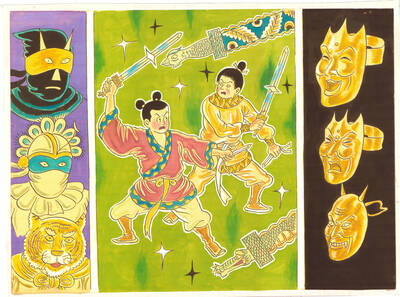
April 22 to April 28 The true identity of the mastermind behind the Demon Gang (魔鬼黨) was undoubtedly on the minds of countless schoolchildren in late 1958. In the days leading up to the big reveal, more than 10,000 guesses were sent to Ta Hwa Publishing Co (大華文化社) for a chance to win prizes. The smash success of the comic series Great Battle Against the Demon Gang (大戰魔鬼黨) came as a surprise to author Yeh Hung-chia (葉宏甲), who had long given up on his dream after being jailed for 10 months in 1947 over political cartoons. Protagonist


 RSS
RSS