


Indonesia has reaffirmed its status as a cigarette manufacturer's and puffer's paradise. Early last month, the Finance Ministry announced a freeze on excise tax hikes on cigarettes for this year in an effort to encourage local cigarette manufacturers to boost their annual production to 200 billion sticks, about 1,000 cigarettes per capita.
The policy decision flies in the face of international norms; most governments nowadays urge their populations to smoke less to avoid cigarette-related diseases and unnecessary deaths.
"The government has effectively legalized cigarette-related deaths," said Marius Widjajarta, spokesman for the Indonesian Consumer Health Empowerment Foundation.
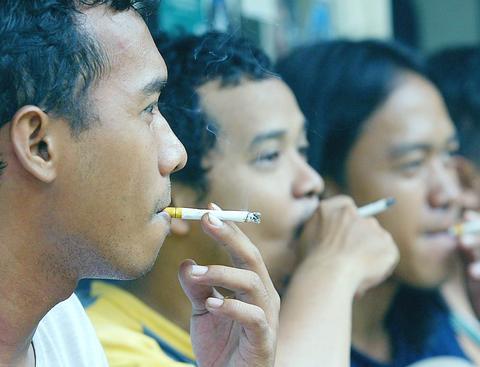
PHOTO: DPA
Indonesia ranks fifth among the world's leading tobacco consuming countries, with a 62 percent smoking prevalence among men aged over 15. The prevalence rate for women is only 1.3 percent.
Annually, Indonesia records more than 3 million illnesses and 400,000 deaths attributed to tobacco, but since there is little socialized medicine, cigarette consumers pay their own hospital and funeral fees.
The government's decision to freeze cigarette taxes defies advice from the WHO and World Bank whose studies have demonstrated that higher taxes on cigarettes are the best way to force people, especially the poor, to quit smoking.
World Bank studies have also found that governments reap higher revenues when cigarette taxes are raised, even though consumption declines.
Under the 32-year reign of former autocrat President Suharto, the local cigarette industry enjoyed low taxes and little regulation. Production increased from 14.3 billion sticks in 1969 to 230.7 billion sticks in the year 2000. The vast majority of cigarettes manufactured in Indonesia are kreteks, sweet-smelling clove-flavored cigarettes that account for some 88 percent of all sales.
Under Suharto, the kretek industry enjoyed hands-off treatment partly because his son, Hutomo "Tommy" Mandalaputra, had been granted a monopoly over the domestic trade in cloves, which make up 30 to 40 percent of the kretek's ingredients.
That monopoly ended in 1998, when the Indonesian economy collapsed amid the Asian regional crisis and Suharto was forced to resign.
His immediate successor, President B.J. Habibie, passed the country's first law regulating the tobacco industry in 1999.
The law prohibited cigarette advertisements on TV during the daytime and banned smoking in public hospitals, but still allowed cigarette companies to advertise on billboards and sponsor sporting and cultural events.
The economic crisis also prompted the government to reconsider its tax policy on cigarettes.
Since 1998, Indonesia has increased excise tax on cigarettes annually, with the tax reaching an average of 31 percent of the retail price in 2003, although this is still low by regional standards.
With the higher excise tax rates, the government's revenues from the cigarette industry doubled from 10.1 trillion rupiah (US$1.2 billion) in the year 2000 to 21.2 trillion (US$2.3 billion) in 2002.
Last year the government earned 26.3 trillion rupiah off cigarette sales, slightly below its target of 27 trillion. Last year, cigarette sales dropped to 186 billion compared with 204 billion in 2002.
The tax shortfall was the reason given by the finance ministry for freezing excise tax hikes on cigarette prices this year, but anti-smoking campaigners claim the real reason has more to do with the upcoming elections this year.
"This tax freeze policy came from the parliament after lobbying by the cigarette companies," said Soewarto Kosen, a tobacco expert at the National Institute of Health Research and Development.
Kretek manufacturers are powerful players on the Indonesian economy. The three largest companies -- Gudang Garum, Sampoerna and Djarum -- account for 76 percent of the cigarette market, and are listed among Indonesia's top 10 companies in sales and profits.
They also have political clout, as many cigarette companies are known to give funds to political parties for their election campaigns. Indonesia is scheduled to hold a general election on April 5, and its first direct presidential election on July 5.
Many cabinet ministers have openly supported the tobacco industry because it is a significant source of employment, a hot issue in a country where an estimated 45 million people are without work.
Some 245,000 Indonesians are employed in cigarette factories, while 900,000 work as tobacco farmers and another 1.2 million are clove farmers.
With many of Indonesia's kretek companies and tobacco farms based in Java, which accounts for more than 60 percent of the country's population, and voters, health officials are holding their breath until after the election to resume their anti-smoking campaigns.
"We hope that after the election, this decision to freeze cigarette taxes will be re-examined by a new government," said Kosen.
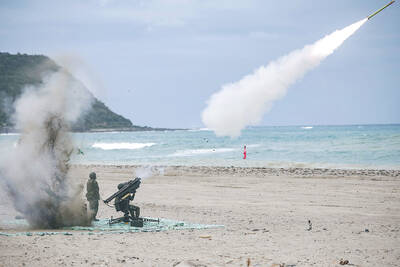
In late October of 1873 the government of Japan decided against sending a military expedition to Korea to force that nation to open trade relations. Across the government supporters of the expedition resigned immediately. The spectacle of revolt by disaffected samurai began to loom over Japanese politics. In January of 1874 disaffected samurai attacked a senior minister in Tokyo. A month later, a group of pro-Korea expedition and anti-foreign elements from Saga prefecture in Kyushu revolted, driven in part by high food prices stemming from poor harvests. Their leader, according to Edward Drea’s classic Japan’s Imperial Army, was a samurai

The following three paragraphs are just some of what the local Chinese-language press is reporting on breathlessly and following every twist and turn with the eagerness of a soap opera fan. For many English-language readers, it probably comes across as incomprehensibly opaque, so bear with me briefly dear reader: To the surprise of many, former pop singer and Democratic Progressive Party (DPP) ex-lawmaker Yu Tien (余天) of the Taiwan Normal Country Promotion Association (TNCPA) at the last minute dropped out of the running for committee chair of the DPP’s New Taipei City chapter, paving the way for DPP legislator Su

Located down a sideroad in old Wanhua District (萬華區), Waley Art (水谷藝術) has an established reputation for curating some of the more provocative indie art exhibitions in Taipei. And this month is no exception. Beyond the innocuous facade of a shophouse, the full three stories of the gallery space (including the basement) have been taken over by photographs, installation videos and abstract images courtesy of two creatives who hail from the opposite ends of the earth, Taiwan’s Hsu Yi-ting (許懿婷) and Germany’s Benjamin Janzen. “In 2019, I had an art residency in Europe,” Hsu says. “I met Benjamin in the lobby
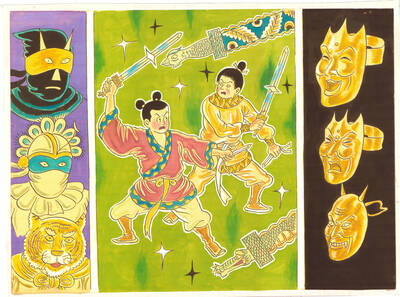
April 22 to April 28 The true identity of the mastermind behind the Demon Gang (魔鬼黨) was undoubtedly on the minds of countless schoolchildren in late 1958. In the days leading up to the big reveal, more than 10,000 guesses were sent to Ta Hwa Publishing Co (大華文化社) for a chance to win prizes. The smash success of the comic series Great Battle Against the Demon Gang (大戰魔鬼黨) came as a surprise to author Yeh Hung-chia (葉宏甲), who had long given up on his dream after being jailed for 10 months in 1947 over political cartoons. Protagonist


 RSS
RSS