


In the new village of Hamstreet, in south-east England, Richard Dumill goes to the bathroom and prepares for a new day. It is 2020 and as he flushes the toilet his sample is automatically analyzed and sent to the local doctor.
The cholesterol level is slightly high because of the heavy dinner of farmed cod and chips but the computer in the doctor's office discounts the readings as not exceptional.
There is a slight hum as the family water purifier switches on and as he walks down the hallway he taps the electricity meter and sees it shows that the family is in credit: his own windmill generator and solar panels are putting more energy into the grid than the household is using, adding to the family income.
Downstairs his wife, Sarah, is complaining. The so-called "smart fridge" has malfunctioned and the order for milk and bread which should have reached the local delivery service has not been sent. The grocer will have to be telephoned instead. Food deliveries go in a special lockable box rather than on the doorstep since theft of these increasingly expensive essentials is a growing problem.
This start to the day of the average British family is part of a vision of how life will have changed for everyone by 2020, put together by UK Environment Agency scientists.
Both parents now work to pay off the 55-year mortgage on their house. Sarah works as a counsellor for people who have a genetic predisposition to a variety of diseases like cancer and heart trouble that means they cannot qualify for insurance or mortgages.
Richard normally works from home but is going in a shared hydrogen powered car to the office at the waste and recycling brokerage where he works. He rarely sees any of the recycled tin or plastic in which he deals but quotes prices for the futures market in which companies buy waste products to use in future manufacturing. Under international trading rules, he has to account for where all the waste material goes.
When working at home, a telephone gadget in his ear, which operates on electricity generated by his brain, allows his manager to speak to him at any time during working hours. This, among many new electronic devices which are supposed to make him more efficient, Richard regards with skepticism.
Today as he drives to work he carefully picks his route to avoid congestion charges on the motorway or in any of the towns on the way. His company long ago moved out of its central London headquarters to cut costs.
The former industrial estates, which gradually emptied and became derelict as manufacturing declined to 9 percent of UK gross domestic product, have been taken down and replaced with water- and energy-efficient housing estates. The whole area is planted with trees to form what has been christened the Dartford Forest.
The couple have a daughter Britney, adopted like many other children: sperm counts for the average male in Britain have dropped to 30 percent to 1940s levels, because the chemicals widely used in food and farming have so damaged fertility. It is no satisfaction that many big food manufacturers have gone bankrupt in the last few years because of class actions brought by people no longer able to have children.
The clampdown on preservatives in food and high oil prices mean that sending fresh food long distances is prohibitively expensive. The family keep chickens to have a supply of fresh eggs and grow vegetables because so much imported food is now an expensive luxury.
The warmer climate means melons can be grown outdoors, although it also has led to a malaria scare in nearby Tunbridge Wells. The agency's picture of life in Britain in 2020 is not all bad. The air is cleaner, public transport is much better, and because of congestion charges and home working traffic jams are becoming a distant memory.
Worldwide there are serious problems for less technology based societies. Large parts of central Africa are becoming uninhabitable because of climate change. The sea is encroaching on many low lying coastal areas causing a huge refugee crisis.
The vision of a vastly changed lifestyle for the Dumill family, which includes travelling by train to eastern Europe for holidays on the Black Sea coast because air travel is so expensive, is based on papers being presented to a two day conference, 2020 Vision, in London starting yesterday. It is jointly sponsored by The Guardian.
Among the speakers were the UK environment secretary, Margaret Beckett, and Tony Juniper, director of Friends of the Earth, who both warn of the dangers to Britain of the inequality between rich and poor countries.
Yesterday, Beckett was expected to say that destruction of the environment at current levels is going to be a long term threat to peace and security in the UK. Millions of people will be on the move across the world because of flooding and droughts. Along with the UK international development minister, Hilary Benn, she has ordered a new report on water and sanitation and a taskforce has been set up to push Britain towards sustainable development. This kind of initiative will lead to every household having its own water purification and recycling unit to cut down on the need for new supplies.
Beckett's taskforce will look at the long term need to change the taxation policy to regulate waste and increase technology and innovation. Among the suggestions the UK Environment Agency is making is an individual household allocation of greenhouse gas emissions measured by smart card, exceeding which will lead to extra taxes.
Barbara Young, the agency's chief executive, will tell the conference that gadgets and technical fixes are only part of the answer, and a cultural shift in society is required. Modernizing regulations so that use of resources like power, water and wood are minimized is essential. The electronic devices will merely help us to measure what is going on and prevent our excesses.
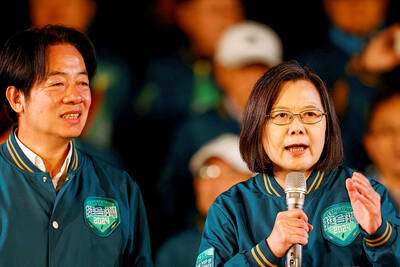
Last week Joseph Nye, the well-known China scholar, wrote on the Australian Strategic Policy Institute’s website about how war over Taiwan might be averted. He noted that years ago he was on a team that met with then-president Chen Shui-bian (陳水扁), “whose previous ‘unofficial’ visit to the US had caused a crisis in which China fired missiles into the sea and the US deployed carriers off the coast of Taiwan.” Yes, that’s right, mighty Chen caused that crisis all by himself. Neither the US nor the People’s Republic of China (PRC) exercised any agency. Nye then nostalgically invoked the comical specter
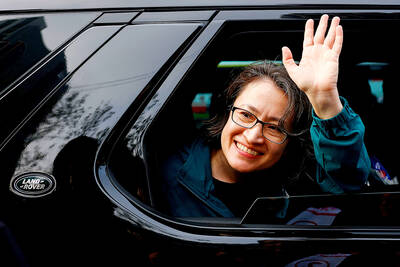
Relations between Taiwan and the Czech Republic have flourished in recent years. However, not everyone is pleased about the growing friendship between the two countries. Last month, an incident involving a Chinese diplomat tailing the car of vice president-elect Hsiao Bi-khim (蕭美琴) in Prague, drew public attention to the People’s Republic of China’s (PRC) operations to undermine Taiwan overseas. The trip was not Hsiao’s first visit to the Central European country. It was meant to be low-key, a chance to meet with local academics and politicians, until her police escort noticed a car was tailing her through the Czech capital. The
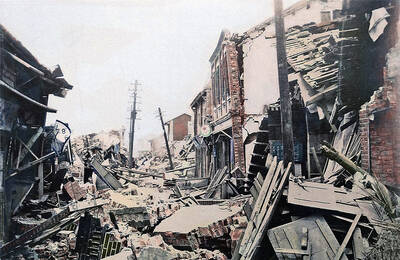
April 15 to April 21 Yang Kui (楊逵) was horrified as he drove past trucks, oxcarts and trolleys loaded with coffins on his way to Tuntzechiao (屯子腳), which he heard had been completely destroyed. The friend he came to check on was safe, but most residents were suffering in the town hit the hardest by the 7.1-magnitude Hsinchu-Taichung Earthquake on April 21, 1935. It remains the deadliest in Taiwan’s recorded history, claiming around 3,300 lives and injuring nearly 12,000. The disaster completely flattened roughly 18,000 houses and damaged countless more. The social activist and

Over the course of former President Ma Ying-jeou’s (馬英九) 11-day trip to China that included a meeting with Chinese Communist Party (CCP) leader Xi Jinping (習近平) a surprising number of people commented that the former president was now “irrelevant.” Upon reflection, it became apparent that these comments were coming from pro-Taiwan, pan-green supporters and they were expressing what they hoped was the case, rather than the reality. Ma’s ideology is so pro-China (read: deep blue) and controversial that many in his own Chinese Nationalist Party (KMT) hope he retires quickly, or at least refrains from speaking on some subjects. Regardless


 RSS
RSS