


First it came, then it went away. Now the Migration Music Festival (
This year's festival is a pared-down version of the eight-day, two-city festival of two years ago, but will still offer exhibitions, workshops, panel discussions and "traveler's tales" in conjunction with Chinese Culture University's expanded education department, who have co-organized the event along with Trees Music and Art (
Festival coordinator Vanya Chung (
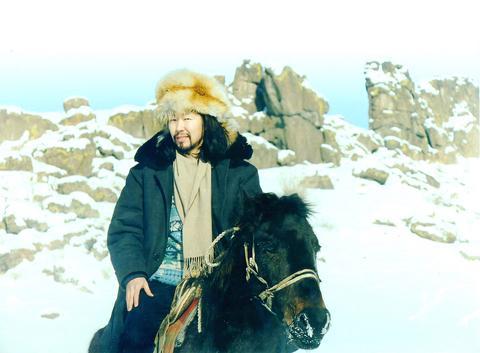
PHOTO COURTESY OF MIGRATION MUSIC FESTIVAL
"Six of this year's bands are rooted in an Asian tradition but have been working to expand those traditions. They've put a lot of pressure into bringing back traditional music despite pressure to make it more commercial," Chung said.
A total of eight groups will perform, beginning tonight with local "hip-hop Hakka" outfit Crazyjazz and the Hip-Hak Band, followed by Takashi Hirayasu from Okinawa. The remaining six acts to take the stage tomorrow night and Sunday are Yat-Kha, from the Republic of Tuva, Iran's Chemirani Trio, Indonesia's SambaSunda, and Basque percussionists Ttukunak. Aboriginal songster Kimbo Hu (
"This year's festival is smaller, but because of that we've been able to focus more on our themes and presenting a good sampling of where Asian music and folk traditions are heading," Chung said, adding that the music is far more progressive than many people perceive folk music being.
For more English-language information regarding the exhibitions, workshops, panel discussions and "traveler's tales" to be held at Chinese Culture University, check out the festival's Web site at http://www.treesmusic.com/2003migration/index_en.htm.
Festival-goers are recommended to arrive early as limited seating is available in the auditorium, though, with a blanket, the surrounding hillside can also be quite accommodating.
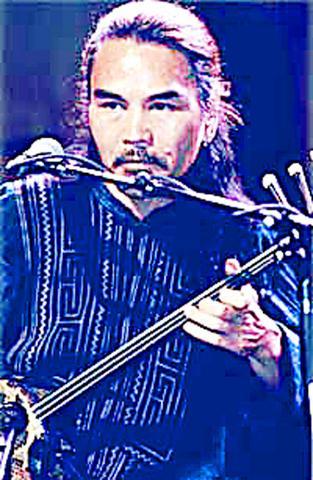
Yat-Kha (Tuva)
Listening to them talk about their homeland might alone be entertaining. The Republic of Tuva sits on the northwestern shoulder of Mongolia in the Russian Steppes. It's known both as the geographical center of Asia and one of the most remote places on earth.
Yat-Kha was born of the giant state ensembles of the former Soviet Union the who were commissioned to play the traditional music of the nation's many regions. Several of Yat-Kha's musicians played in Tuva's official ensemble and one of them, Albert Kuvezin, would later form Yat-Kha.
The band is named after the giant Tuvan zither and the group combines this and other traditional instruments such as an igil and the morinhuur, or Mongolian cello, with Kuvezin's grinding, electric guitar. Perhaps most notable of the band's sound is its use of khoomei, the traditional double-bass throat singing, which Kuvezin uses to such bone-rattling effect.
Yat-Kha's lineup has changed of late, with two of its members taking "paternity leave." Sailyk Ommun has since joined the band and provides sultry, bluesy vocals to offset Kuvezin's guttural growl and complement his Sonic Youth-inspired guitar.
Somewhere between punk and protected tradition, Yat-Kha's sound is as remote as the place they come from.
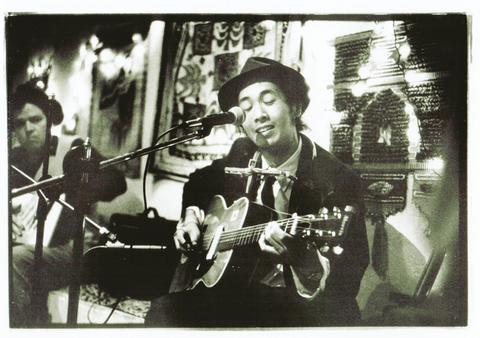
Takashi Hirayasu (Okinawa, Japan)
Hirayasu got his start playing blues, R&B and rock to GIs in the many bars and clubs surrounding the US' military base in Okinawa. In his early 20s, he developed an interest in shima-uta, Okinawan island songs. He began learning the sanshin, the three-string traditional instrument similar to a banjo.
He'd later join Shoukichi Kina and his family band, Champloose, as a guitarist and arranger and it was with them that Japan got its first taste of shima-uta-inspired rock. It was the late 1970s and the sound would become poplar enough to attract the attention of Ry Cooder, who asked Hirayasu to join him on his 1980 album Bloodline. (Cooder reportedly never got the gist of shima-uta and Hirayasu and others had to re-record, adapting their styles to something Cooder could understand.) Champloose inspired Soul Flower Union, arguably Japan's most influential roots band. In the 1990s, while concentrating on his solo career, Hirayasu would be joined by Takashi Nakagawa and Hiroshi Kawamura of Soul Flower Union, and together they recorded a cover of Soul Flower Union's classic, Mangetsu No Yube.
Later pairings with guitarist Bob Brozman would propel Hirayasu onto the world stage, where he has performed to audiences in Canada, the US, Europe and South Africa.
Chemirani Trio (Iran)
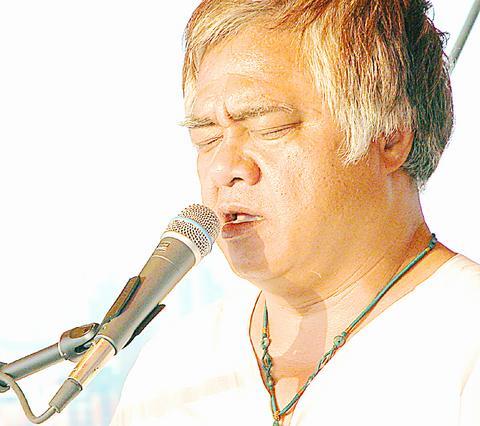
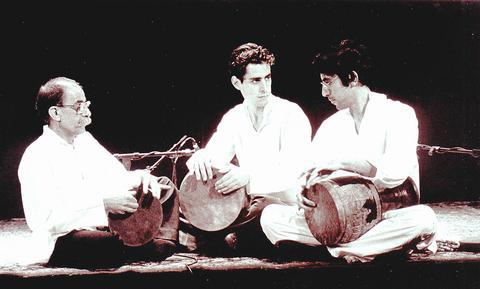
Until recently, Dimachid Chemirani was considered one of only two living masters of the zarb, a classical drum which originated in northern Iran. He learned to play the instrument under the great zarb master Hussein Teherani, whose revolutionary work changed the zarb from an accompaniment to a solo instrument. Since it is played with the fingers and not the palms, it is considered both melodic and percussive, with as many notes as a piano and limitless combinations of rhythm and melody.
After moving to France, Chemirani's work on the zarb became more innovative. He also became a reputable teacher whose two brightest pupils were, not surprisingly, his sons, Keyvan and Bijan. They not only studied the zarb under their father, but learned other percussion instruments such as the daf, udu and bandir. In 1999, the elder Chemirani decided his sons' skills were good enough to join him on stage and the three became the Chemirani Trio.

Tsukunak (Basque, Spain)
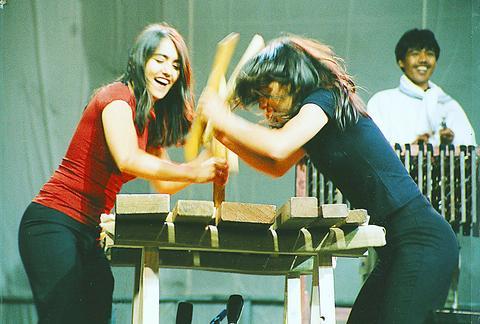
Maika and Sara Gomez are twin sisters who play the txalaparta, a traditional Basque instrument comprised of several wood planks resting atop lambskin-covered baskets or braces. It's played by two percussionists who each use two cudgels in rhythm with one another.
According to tradition, the txalaparta finds its origin in the gallop of horses. More romantically, its music is said to be the natural rhythm discovered between the two players. It was first used to communicate between Basque communities across remote valleys, but has since become the instrument whose rhythms are most commonly heard at weddings and community functions. Decades ago, it was about to disappear, but a resurgence of interest has since brought the instrument back into popular Basque culture, thanks in part to to the the Gomez sisters, who have enriched it with innovative rhythms and variations.
SambaSunda (Indonesia)
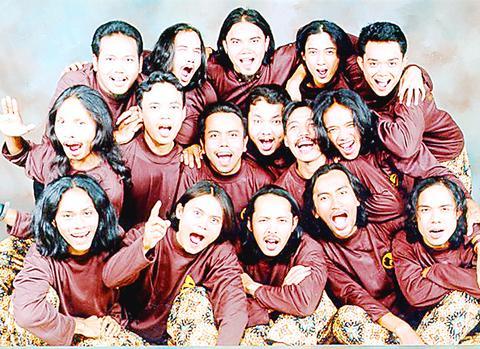
A 14-piece gamelan ensemble that takes its influences and instruments from across Indonesia and Asia. The group incorporates instruments such as the suling, a bamboo flute, kendang, or type of drum and a variety of other things not recently heard in Taiwan. They mix kebyar, kromong, jaipong and other musical styles of Bali with Latin samba to produce a sunda, or easy and relaxed, sound. Think of the ethereal, woodwind-dominated music that plays in boutiques selling NT$500 soap -- that' s SambaSunda.
The group was founded by Ismet Ruchimat, who excelled at an early age on the kendang, but is comfortable playing most any instrument found on the Indonesian archipelago. He formed the group wanting to create Indonesia's quintessential gamelan and has, by many accounts, done just that. At its largest, SambaSunda has had 19 members and included a number of vocalists. They're sure to fill the amphitheater at Da'an Forest Park with one of the fuller sounds on offer at this year's Migration Music Festival.
David Chen and the Muddy Basin Ramblers (Taiwan/UK/US)
Chillicothe, Ohio native David Chen came to Taiwan six years ago with a healthy hankering to front his own band. He and the Muddy Basin Ramblers have played a mix of country, blues, jug-band music and early swing jazz for over a year.
Accompanying Chen's guitar picking are Ramblers Conor Prunte from Harrow, England and Will Thelin from Omaha, Nebraska who both play the harp ? harmonica, that is. Thelin also plays the kazoo and tap dances. California native Tim Hogan keeps the beat. All three of the Ramblers have been quite settled in Taipei for several years.
Kimbo and friends (Taiwan)
Known as much for his work as an activist for Aboriginal rights as for his music, Kimbo Hu (
CrazyJazz and the Hip-Hak Band (Taiwan)
The Crazyjazz and the Hip-Hak Band proudly hail from Taiwan's Hakka community and have worked to create a funky sound for traditional Hakka songs. Their efforts paid off last year when the group took top accolades in two categories at the Golden Melody Awards.
A-hsi (

In late October of 1873 the government of Japan decided against sending a military expedition to Korea to force that nation to open trade relations. Across the government supporters of the expedition resigned immediately. The spectacle of revolt by disaffected samurai began to loom over Japanese politics. In January of 1874 disaffected samurai attacked a senior minister in Tokyo. A month later, a group of pro-Korea expedition and anti-foreign elements from Saga prefecture in Kyushu revolted, driven in part by high food prices stemming from poor harvests. Their leader, according to Edward Drea’s classic Japan’s Imperial Army, was a samurai

The following three paragraphs are just some of what the local Chinese-language press is reporting on breathlessly and following every twist and turn with the eagerness of a soap opera fan. For many English-language readers, it probably comes across as incomprehensibly opaque, so bear with me briefly dear reader: To the surprise of many, former pop singer and Democratic Progressive Party (DPP) ex-lawmaker Yu Tien (余天) of the Taiwan Normal Country Promotion Association (TNCPA) at the last minute dropped out of the running for committee chair of the DPP’s New Taipei City chapter, paving the way for DPP legislator Su

Located down a sideroad in old Wanhua District (萬華區), Waley Art (水谷藝術) has an established reputation for curating some of the more provocative indie art exhibitions in Taipei. And this month is no exception. Beyond the innocuous facade of a shophouse, the full three stories of the gallery space (including the basement) have been taken over by photographs, installation videos and abstract images courtesy of two creatives who hail from the opposite ends of the earth, Taiwan’s Hsu Yi-ting (許懿婷) and Germany’s Benjamin Janzen. “In 2019, I had an art residency in Europe,” Hsu says. “I met Benjamin in the lobby

It’s hard to know where to begin with Mark Tovell’s Taiwan: Roads Above the Clouds. Having published a travelogue myself, as well as having contributed to several guidebooks, at first glance Tovell’s book appears to inhabit a middle ground — the kind of hard-to-sell nowheresville publishers detest. Leaf through the pages and you’ll find them suffuse with the purple prose best associated with travel literature: “When the sun is low on a warm, clear morning, and with the heat already rising, we stand at the riverside bike path leading south from Sanxia’s old cobble streets.” Hardly the stuff of your


 RSS
RSS