


Few would deny, martial arts films are a unique genre of Chinese-language movies, a type that is hard to copy or even imitate in other cultures or regions.
In recent years, thanks to films like Crouching Tiger, Hidden Dragon, martial arts films have come out of their shells and gone from being just cult movies to becoming a popular genre.

The recent hype for films like The Matrix, Charles Angels and their never-ending sequels are the best proof of the extensive influence of martial arts movies.
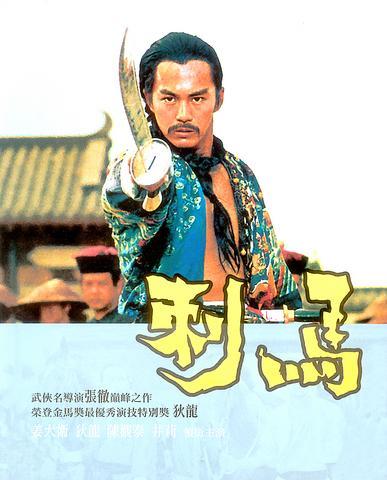
PHOTO COURTESY OF THE CLASSIC MARTIAL ARTS FILM FESTIVAL-LEGENDA
Similarly Japanese-period dramas, films about samurai culture and samurai stories, are also something special in Japanese movies.
Quentin Tarantino's upcoming film Kill Bill is another example, for the film is a clear homage to both Hong Kong action movies and Japanese samurai movies. For martial arts fans or those who anticipate seeing Kill Bill, it is imperative to check out The Classic Martial Arts Film Festival-Legendary Swordsman vs. Samurai (經典武俠影展 - 當俠客遇上武士).
This is the fifth installment of POP Cinema, a government funded mini film festival series to promote non-Hollywood movies to a wider audience.
Clearly, this martial arts collection is the most exciting chapter so far in POP Cinema's history.
The film festival began yesterday in Kaohsiung, at the Kaohsiung City Film Library, and will go on to Sept. 26. Afterwhich it will go to Taipei at SPOT-Taipei Film House from Sept. 26 to Oct. 10.,
proceeding then to the Image Museum in Hsinchu from Oct. 8 to Oct. 19.
Legendary local martial arts film actor Shih Jun (
Seventeen classic films (12 Chinese martial arts films and five Japanese samurai films) will be screened in the showcase. Dragon Inn (龍門客棧,1968), the opening film of the festival is a must-see film for martial arts fans.
The film becomes a reference for many later martial arts films including Crouching Tiger. In 1992, Hong Kong director Tsu Hark also produced New Dragon Inn as a tribute to Hu's classic. For audiences nowadays, the pace of the 1968 film may be slow and the kung-fu may not be fast enough, but the cinematography and the narrative is still very impressive.
Come Drink With Me (大醉俠, 1966) is Hu's first martial arts film and is about a woman who dresses as a warrior in order to save her brother. The scene when there is a rumble at an inn and the woman faces off against rivals from different martial arts sects, is another classic that Ang Lee adapted in Crouching Tiger. He also made Zhang Ziyi (章子怡) act in that scene.
A Touch of Zen (俠女,1971) is a story about an evil power ruthlessly capturing and killing the good, but at the end Hu questions the martial arts chivalry spirit with a philosophical touch. A fight in the bamboo woods has also become another widely imitated scene.
The film was the first winner at Cannes for a Taiwan film, taking the prize for technical achievement in 1975.
Also presented as epic stories, Japanese samurai movies exhibit a different style. Samurai 3: Duel at Ganryu Island (1956), another opening film deals with Musashi Miamoto, the legendary swordsman. After winning 60 duels, he hesitates take up another challenge to fight a young Shogun on the small island of Ganryu.
There are also two classics from the Japanese master Akira Kurosawa. Tsubaki Sanjuro (1962) looks at young samurais facing corruption and killings within the clan. Should they join in with the killings to end corruption or will they fall into the same trap as the conspirators?
Ran (1985), a winner in Cannes and at the British Academy Awards, is an epic about a cruel and powerful warlord facing treachery among his sons, who eventually sees his kingdom fall apart. It's Kurosawa's version of Shakespeare's King Lear.
Another master of martial arts movies is Chang Cheh (張徹). Director John Woo (吳宇森) sees Chang as his long-time mentor. And obviously Woo's excellence in depicting brotherhood and heroic sacrifice originate in Chang's movies.
Iron Bodyguard (大刀王五, 1973) is set in the turmoil of revolution in the Ching dynasty. Local bodyguard Big Blade Wang Wu receives an offer to rescue revolutionaries from prison. He decides to take the job and plans a seemingly suicidal assault.
Blood Brothers (刺馬, 1973), another Chang masterpiece, is a film about friendship, betrayal and revenge. In both Chang films movie fans can recapture the heroic glamour of actors Ti Lung (狄龍) and David Chiang (姜大衛).
Another type of martial arts film focuses on the unrestrained spirits of Hsia (俠), or martial arts fighters. Here, the underworld fighters are all care-free characters with superb kung-fu.
Chu Yuan's (楚原) movies are representative of this type. The Magic Blade (天涯, 明月, 刀, 1976) tells of the endless competition and envy in the world of martial arts. Killer Clans (流星, 蝴蝶, 劍, 1976) depicts a warrior's pursuit of excellence in martial arts, as well as a mysterious romance.
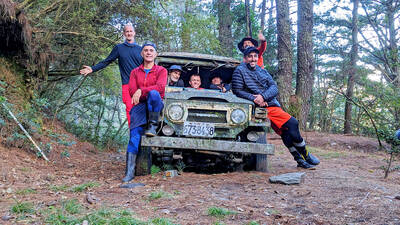
The year was 1991. A Toyota Land Cruiser set out on a 67km journey up the Junda Forest Road (郡大林道) toward an old loggers’ camp, at which point the hikers inside would get out and begin their ascent of Jade Mountain (玉山). Little did they know, they would be the last group of hikers to ever enjoy this shortcut into the mountains. An approaching typhoon soon wiped out the road behind them, trapping the vehicle on the mountain and forever changing the approach to Jade Mountain. THE CONTEMPORARY ROUTE Nowadays, the approach to Jade Mountain from the north side takes an

Last week Joseph Nye, the well-known China scholar, wrote on the Australian Strategic Policy Institute’s website about how war over Taiwan might be averted. He noted that years ago he was on a team that met with then-president Chen Shui-bian (陳水扁), “whose previous ‘unofficial’ visit to the US had caused a crisis in which China fired missiles into the sea and the US deployed carriers off the coast of Taiwan.” Yes, that’s right, mighty Chen caused that crisis all by himself. Neither the US nor the People’s Republic of China (PRC) exercised any agency. Nye then nostalgically invoked the comical specter

Relations between Taiwan and the Czech Republic have flourished in recent years. However, not everyone is pleased about the growing friendship between the two countries. Last month, an incident involving a Chinese diplomat tailing the car of vice president-elect Hsiao Bi-khim (蕭美琴) in Prague, drew public attention to the People’s Republic of China’s (PRC) operations to undermine Taiwan overseas. The trip was not Hsiao’s first visit to the Central European country. It was meant to be low-key, a chance to meet with local academics and politicians, until her police escort noticed a car was tailing her through the Czech capital. The
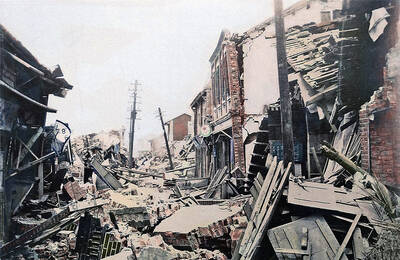
April 15 to April 21 Yang Kui (楊逵) was horrified as he drove past trucks, oxcarts and trolleys loaded with coffins on his way to Tuntzechiao (屯子腳), which he heard had been completely destroyed. The friend he came to check on was safe, but most residents were suffering in the town hit the hardest by the 7.1-magnitude Hsinchu-Taichung Earthquake on April 21, 1935. It remains the deadliest in Taiwan’s recorded history, claiming around 3,300 lives and injuring nearly 12,000. The disaster completely flattened roughly 18,000 houses and damaged countless more. The social activist and


 RSS
RSS