


Wanted posters still flutter on police-station walls in Germany for two young Moroccan men believed to have been key members of the Hamburg terrorist cell that led the Sept. 11
attacks.
Over the past two years, German police have minutely examined every clue, and have put on trial two other Moroccan students for complicity in the attacks. Other groups of Islamic radicals in Germany have also felt the heat as police laid bare who knew who.
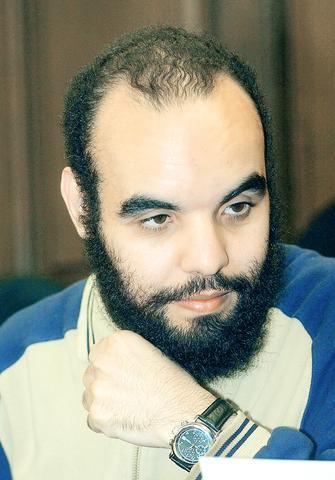
PHOTO: DPA
But the trail has grown cold. One of the two fugitives, Said Bahaji, 28, reportedly phoned his parents in Morocco in mid-August to say he was well, then hung up.
German investigators maintain that the Sept. 11 plot was devised in Hamburg by a group of eight students who went to Afghanistan to obtain helpers, funds and logistical aid from al-Qaeda leader Osama bin Laden.
Three of the eight, including cell chief Mohammed Atta, died in the attacks. Mounir al-Motassadeq was jailed in February for 15 years. Alleged member Abdel-Ghani Mzoudi, 30, is currently on trial on 3,066 counts of assisting murder and membership in a terrorist organization.
Over the years, the count of Islamists in the multicultural city has been a fairly steady 1,500, with 200 of them rated as "militant."
Elsewhere in Germany, police have smashed the local branch of al-Tawhid, a Jordan-based radical group said to have al-Qaeda associations. Palestinian Shadi Abdallah, 26, is currently on trial for having been a member. He told the court he renounced its views.
In a setback, prosecutors were denied an arrest warrant for Christian G, 36, a German alleged to have had advance knowledge of the April 11, bombing last year that killed 21 people, 14 of them German tourists, outside a synagogue in Djerba, Tunisia.
Germany revised its anti-terrorism legislation after the attacks to give the government authority to outlaw faith-based groups that had previously been able to claim freedom-of-religion exemption.
The powers were not initially used against Al Qaeda, but another thorn in Berlin's side: Metin Kaplan. The imam and his 1,100-strong Caliphate State movement want to overthrow secular government in Turkey. Berlin now hopes to deport him.
In April this year, despite the furious row over Iraq, the US State Department praised both France and Germany for their efforts in the war on terrorism.
Paris was commended for its assistance in the investigations of Reid and of Zacarias Moussaoui, a French citizen of Moroccan descent who is in US custody on charges of involvement in the Sept. 11 attacks.
Because of a series of bloody terrorist attacks on its soil in the early 1990s, France was not unprepared for the stricter security measures that needed to be imposed after September 2001.
However, two unrelated events more than one year apart added new urgency to its anti-terrorist efforts.
The first was the December 2001 attempt by Briton Richard Reid to destroy an American Airlines plane over the Atlantic by igniting explosives he had concealed in his shoe.
The second was the naming of ambitious, media-savvy Nicolas Sarkozy as France's interior minister after the right-wing victory in the June general elections last year.
Reid had boarded the plane in Paris, and had spent time in the French capital planning his coup. Several months later, a number of people were arrested on suspicion of collaborating with the so-called shoe bomber and of links to Al Qaeda.
Shortly after Sarkozy came into office, French police made a series of lightning raids in the greater Paris area, arresting more than two dozen people suspected of planning terrorist acts in France or elsewhere, or of links to the Tunisia synagogue attack.
Britain has also kept close tabs on its Islamic radicals. The heightened security has not always been welcomed.
From time to time press reports tell of heightened terror alerts around London, and drills have been conducted on the London underground rail system, for example, but phlegmatic Londoners have tended to go about their business as usual.
Most Britons believe their security services are better trained and more effective than those in the US, but the government is not being complacent.
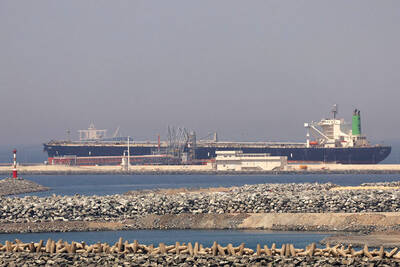
The breakwater stretches out to sea from the sprawling Kaohsiung port in southern Taiwan. Normally, it’s crowded with massive tankers ferrying liquefied natural gas from Qatar to be stored in the bulbous white tanks that dot the shoreline. These are not normal times, though, and not a single shipment from Qatar has docked at the Yongan terminal since early March after the Strait of Hormuz was shuttered. The suspension has provided a realistic preview of a potential Chinese blockade, a move that would throttle an economy anchored by the world’s most advanced and power-hungry semiconductor industry. It is a stark reminder of
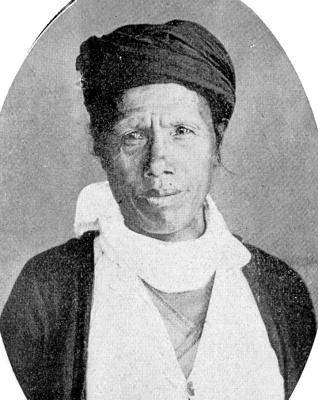
May 11 to May 17 Traversing the southern slopes of the Yushan Range in 1931, Japanese naturalist Tadao Kano knew he was approaching the last swath of Taiwan still beyond colonial control. The “vast, unknown territory,” protected by the “fierce” Bunun headman Dahu Ali, was “filled with an utterly endless jungle that choked the mountains and valleys,” Kano wrote. He noted how the group had “refused to submit to the measures of our authorities and entrenched themselves deep in these mountains … living a free existence spent chasing deer in the morning and seeking serow in the evening,” even describing them as
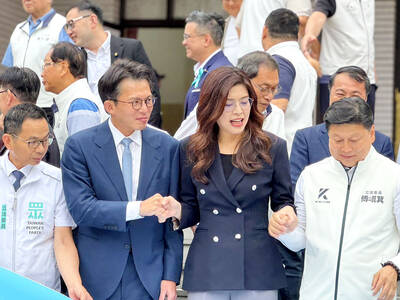
As a different column was being written, the big news dropped that Chinese Nationalist Party (KMT) caucus whip Fu Kun-chi (傅?萁) announced that negotiations within his caucus, with legislative speaker Han Kuo-yu (韓國瑜) of the KMT, party Chair Cheng Li-wun (鄭麗文), Taichung Mayor Lu Shiow-yen (盧秀燕) and Taiwan People’s Party (TPP) Chair Huang Kuo-chang (黃國昌) had produced a compromise special military budget proposal. On Thursday morning, prior to meeting with Cheng over a lunch of beef noodles, Lu reiterated her support for a budget of NT$800 or NT$900 billion — but refused to comment after the meeting. Right after Fu’s
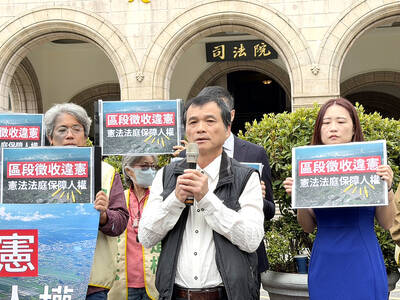
What government project has expropriated the most land in Taiwan? According to local media reports, it is the Taoyuan Aerotropolis, eating 2,500 hectares of land in its first phase, with more to come. Forty thousand people are expected to be displaced by the project. Naturally that enormous land grab is generating powerful pushback. Last week Chen Chien-ho (陳健和), a local resident of Jhuwei Borough (竹圍) in Taoyuan City’s Dayuan District (大園) filed a petition for constitutional review of the project after losing his case at the Taipei Administrative Court. The Administrative Court found in favor of nine other local landowners, but


 RSS
RSS