


Works by 10 young, up-and-coming artists are gathered at the Taipei Fine Arts Museum for an exhibition that shows an unusually broad diversity of artistic expression.
The artists represented in the show titled "New Minds -- Artistic Creations in Motion" recently completed an exchange program sponsored by the Council for Cultural Affairs (
The artists are given significant leeway in their presentations, providing testament to contemporary Taiwan art as dynamic, imaginative and creative, mixing media and technology, and bringing theatrical effects into the showroom.
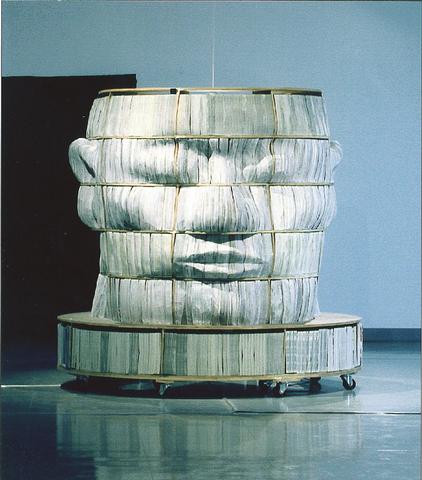
PHOTO: TFAM
The younger of the featured artists use a direct and personal approach in releasing their emotions through their artwork. Chen Chien-jung's (
Having grown up in Taipei, Chen, 28, said he finds painting a means of venting anxiety he feels toward the city which has changed so dramatically and is a constant swirl of political turmoil, pollution and crowds.
In a drastic change of tone from Chen's piece, Hsieh Min-wen's (
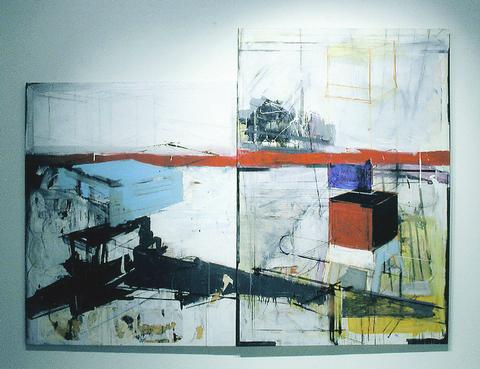
PHOTO: TFAM
Another young artist Fang Wei-wen (
The older artists featured in the exhibition, such as Chen Long-bin,(陳龍斌) Tang Tang-fa (唐唐發) and Li I-chiuan (李宜全) tackle the larger themes of the environment and society. What's refreshing in these artists' works is that they have largely shed the harsh, critical tones that have dominated much of Taiwan art over the past decade and instead have turned to humor to address in a mild way the issues in their lives and environments.
Tang, for example, has a two-piece installation titled Sweet Kiss in which he uses plastic material painted with light neon colors to make a cloud and what looks like and an over-sized anteater. This second piece was made with a standing fan, from which extends a s-shaped plastic bag. Two "eyes" dangle from wires that project from what should logically be the beast's head. Tang said he sought to cast plastic in a positive, benign light by making his installation loveable and pleasing to the eye.
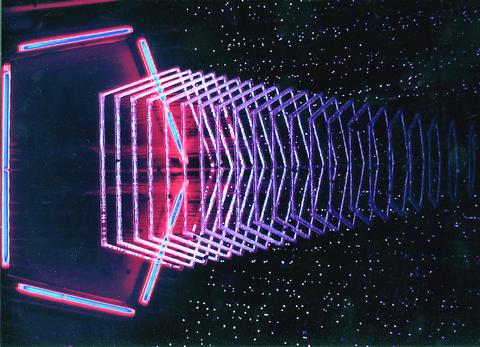
PHOTO: TFAM
Li, 37, whose previous installations touched on morality and religion, has changed thematic directions to make a comical and playful over-sized board game that hangs from the exhibition wall. Game is Not Over is a reproduction of a favorite children's game, which often provides people's initiation to gambling and commercialism, phenomena about which Li is wryly sarcastic.
The most sophisticated project may be Chen Long-bin's Reading Room -- Dr. Gorilla Show (2001). For this piece, Chen made a large, hollow reading room using bookcases. The bookcases are filled with publications and the whole is sculpted into the form of a human head, which can be opened, permitting entry to the space inside. Also, projected on an adjacent screen is the the 36-year-old artist, wearing a tuxedo and a gorilla mask at the opening of the show. Chen says he wore the costume to deconstruct the supposition that knowledge and culture are contained within books and to say that despite outward appearances of gentility, people are, in fact, beasts. "Some people are animals with human faces," Chen said, "and their cultural decorations, such as books, serve to camouflage their inhumanity."
Chen said he bought the mask last year while at the 18th Street art village in Los Angeles, where he was inspired by the special effects and glitter of Hollywood.
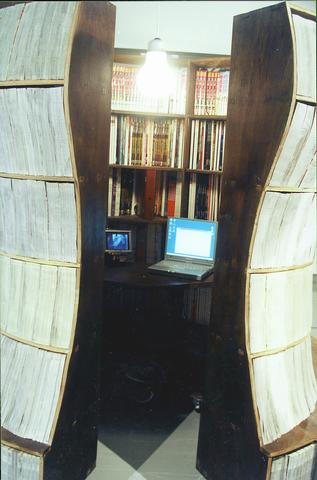
PHOTO: CHEN LONG-BIN
Art Notes:
What: New Minds -- Artistic Creations in Motion (飆緒藝術創作移防)
Where: Gallery 3B, Taipei Fine Art Museum (台北市立美術館), 181 Chungshan N. Rd., Taipei (台北市中山北路4段181號)
When: Until April 22

“Taiwan’s Opposition Leader Comes to US With a Message Straight Out of Beijing” read a May 31 headline in the Wall Street Journal. Top US administration officials and members of Congress almost certainly read the WSJ, and if there was a bullet point takeaway that people in Washington should absorb ahead of Chinese Nationalist Party (KMT) Chair Cheng Li-wun’s (鄭麗文) arrival in DC on June 9, that headline is it. The last few columns have discussed this very topic, and the timing is not coincidental. While those top officials likely do not read the Taipei Times, judging by the number

With weighty, anxiety-inducing geopolitical topics dominating the headlines, checking in on the wild and weird state of local politics can take some of the edge off. This November’s elections will determine who will be in charge of fixing potholes in your neighborhood, not the potholes in Taiwan’s complicated geopolitical space. Recently, after an online interview with a Taipei-based journalist, I commented that Taipei journalists never go further than the MRT can take them. He laughed and agreed. Naturally, the Taipei mayoral race is eating up much of the press attention. TAIPEI CITY Democratic Progressive Party (DPP) candidate Puma Shen (沈伯洋) has
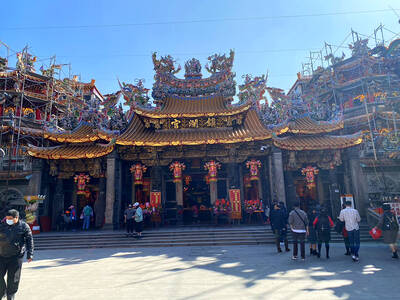
In December of 2008 Lee E-tin (李乙廷), a Miaoli county legislative hopeful, was convicted of vote-buying. Rather than buy votes retail, voter by voter, in the usual manner, Lee had done it wholesale, in a commendably efficient manner: he had visited local temples and made donations to gain their support. Because he did not normally make donations to temples, the court ruled he was attempting to improperly influence voter behavior. The case indicates how important temples are in influencing political life. Both judge and politician appeared to see them in the same way. Beijing sees them that way as well. Democratic Progressive
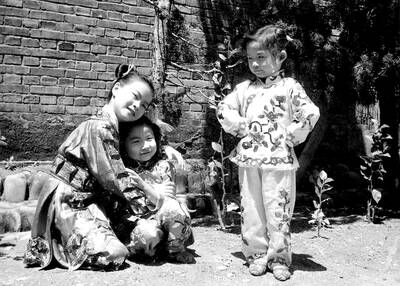
Audiences in Leicester, Cardiff, London and Sheffield will this month gather to watch a series of black-and-white Taiwanese-language films made more than 70 years ago. On the surface, these screenings commemorate the seventieth anniversary of taiyupian (台語片) — Taiwanese-language cinema. Yet the significance of these events extends far beyond nostalgia or film history. They represent a remarkable chapter in Taiwan’s ongoing effort to recover, preserve and reinterpret a cultural heritage that was once thought to have largely disappeared. The centerpiece of the program is the Ho Chi-ming (何基明) directed Xue Pinggui and Wang Baochuan (薛平貴與王寶釧), a film produced in 1955 and


 RSS
RSS