


To be honest, the Hannover Equestrian Club (漢諾威馬術俱樂部) doesn't smell much like horse dung. The stables are brand new, as is the soccer field-size covered riding arena, as is the country club style restaurant with its shabu shabu counter and teppanyaki bar. The riding grounds for the show jumping are very nearly, but not quite, perfect, surrounded as they are by hedges and a white post fence. On closer inspection, these last turn out to be made of plastic.
It's a puzzling place, and the odd details remind one less of imperfection and more that this place is very, very far from either the ambling greens of Kentucky or the heaths of the British countryside. This Hannover is located in the rice paddies off the northern end of Chengteh Road (
The club boasts a stable of 33 horses and a full-time staff nearly as large. After the addition of several beautiful new facilities in mid-1999, it can claim to be Taiwan's premier riding grounds. But that is not the only reason it's so remarkable.
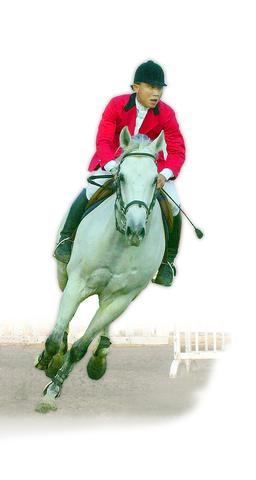
PHOTO: CHIANG YING-YING, TAIPEI TIMES
The men responsible for this ornament to the equestrian arts are a most singular segment of the Taiwanese elite. They wear white jodhpurs and breeches, velvet covered riding helmets, black coup saumur Aigle boots and even red jackets. They also chew betel nut, smoke incessantly, banter in Taiwanese and toast shots of whiskey over lunch. They are a very Taiwanese brand of the new rich.
At their head is Hsu An-chin (
Hsu, a man of Napoleonic stature and intensity, has controlling interests in the Sun TV cable channel (太陽衛星電視台), film and video production companies and other programming content providers. Formerly, he also had a stake in Taiwan Playboy. Jin, who's singing days are more than a decade behind her, now heads up Shock Records (俠客), which currently produces David Tao (陶吉吉) among other heartthrobs. Together, they comprise something like a modern Taiwan version of Tom and Daisy Buchanan.
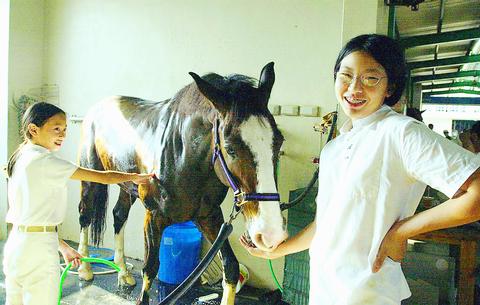
PHOTO: CHIANG YING-YING, TAIPEI TIMES
Last Sunday, Hsu and Hannover hosted the Yu-hwang Cup (玉湟洋酒盃), a competition of show jumping and dressage involving around 50 riders of different skill levels. Apparently, cost was no object, as the NT$70,000 sponsorship from Berio Olive Oil and Martell Cognac didn't even come close to covering the NT$114,000 in prize money. Then again, it was rumored that club members' side bets exceeded the sponsorship funds as well.
The dressage, a competition of tightly controlled horsemanship in which all the moves bear French names, like pirouette, piaffe, and levade, began early at 8am. "We know that for spectators, it's kind of hard to understand," said Chen Hui-ming (
Another such old hand is Huang Cheng-hsuing (
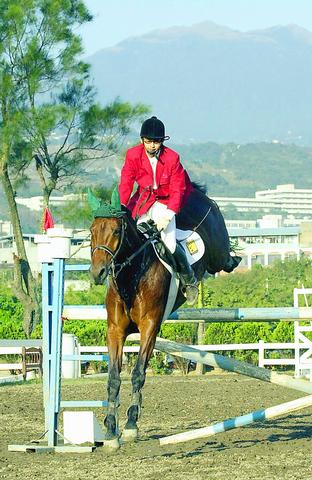
PHOTO: CHIANG YING-YING, TAIPEI TIMES
Of his early days in the saddle, Huang said, "At first all Taiwan had were the horses left over from the Japanese cavalry of the WWII era. You could ride them at an old army base in Houli."
He then went on to describe how those old Japanese war horses formed most of Taiwan's riding stock until the last decade or so. From the time he learned to ride, it took a long time for any significant interest to develop locally.
Even 10 years ago, "the stables were filthy. There were flies everywhere. It wasn't a very pleasant place to take a date," said Bai Jie-yung (
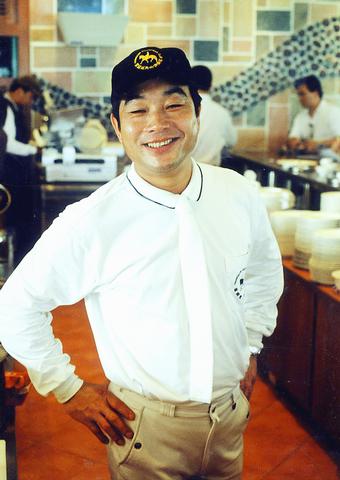
PHOTO: DAVID FRAZIER, TAIPEI TIMES
"It wasn't really until two or three years ago that public interest began to grow," she continued. "Now there are around half a dozen large stables in Taiwan [five are in the vicinity of Taipei, with the sixth near Taichung], and counting the smaller ones, about fifty in all."
At Sunday's Yu-hwang Cup, Bai, true to her title, served as the head judge. For each competitor, she called out points and time. Once when a young rider was disqualified from a run because his mount refused to jump, she belted out in Taiwanese, "Hey, don't piss off the laoban by hitting his horse!"
Most of her work came in the late morning and through the afternoon when the D, C and B grade show jumping was held for 500 or more spectators. The B grade jumping, the highest level of competition in Taiwan, involved a course of fifteen jumps with a maximum height of 120cm and a maximum breadth of 150cm.
"This isn't exactly grand prix, which is what you'd see at the Olympics, but some of the jumps are fairly big," said Roger Thurber, an American from Baltimore whose daughter, Mary, was competing.
Mary, the eventual second place finisher in D group, is a sophomore at the Taipei American School. The school provides a significant portion of Hannover's 70 full members and other patrons, many of them only 11 or 12 years old. Before she came to Taiwan, she says she asked her mom with a sigh, "Are they going to have horses?"
Did they ever. Her father noted that Hannover, with its Dutch Warmbloods and Australian Thoroughbreds and other vaunted pedigrees, was graced with a generally high caliber of animal. "You wouldn't find this quality of horse in a lot of stables in the States," he said.
Huang, in remarks that were more offhand than haughty, corroborated Thurber's remarks, saying, "We get most of our horses from places like New Zealand, Japan and Europe. American horses are kind of average." The stud of the stable is Hsu's own mighty steed, a jet black French thoroughbred stallion. It cost him NT$7 million, or the price of two S-class Mercedes Benz automobiles. On English programs, Hsu lists the horse's name as Winner, but in Chinese, he calls it something slightly more ostentatious, a name that translates into something like God of Victory (
"It took about seven years to find him," said Hsu's wife, wistfully gazing at yet another rider canter, trot and vault his way through the course. "We traveled all over the world. Vancouver, Beijing, Hawaii." Later, fresh from his own run in the combined DC class, Hsu added with manly pride, "He's in his prime. An eleven-year-old."
Not the kind to openly express the full depth of his love of horses, he also left this responsibility to his wife. "He's very busy at work, but he's still here riding every day," she said. "He also took me to the Sydney Olympics to see the dressage, jumping and the taekwando."
Thus it appears that the television magnate's passion is one that has been bridled, saddled and is charging forth. Indeed, he has mighty plans for Hannover. At present, he says his main goal is to promote local interest in riding, though in the interests of profitability he's also considering adding a swimming pool and spa to the riding facility. So far, he's already hosted one competition involving international riders, and this June, he hopes to host Taiwan's first ever officially sanctioned East Asia regional equestrian event.
WHAT IT COSTS: One year membership: NT$60,000
40-minute lesson: NT$600 for members or NT$2,000 for non-members
10-lesson package for non-members: NT$16,000
For information on other equestrian clubs and riding stables, call the ROC Equestrian Association at (04) 2633-5524

“Taiwan’s Opposition Leader Comes to US With a Message Straight Out of Beijing” read a May 31 headline in the Wall Street Journal. Top US administration officials and members of Congress almost certainly read the WSJ, and if there was a bullet point takeaway that people in Washington should absorb ahead of Chinese Nationalist Party (KMT) Chair Cheng Li-wun’s (鄭麗文) arrival in DC on June 9, that headline is it. The last few columns have discussed this very topic, and the timing is not coincidental. While those top officials likely do not read the Taipei Times, judging by the number

With weighty, anxiety-inducing geopolitical topics dominating the headlines, checking in on the wild and weird state of local politics can take some of the edge off. This November’s elections will determine who will be in charge of fixing potholes in your neighborhood, not the potholes in Taiwan’s complicated geopolitical space. Recently, after an online interview with a Taipei-based journalist, I commented that Taipei journalists never go further than the MRT can take them. He laughed and agreed. Naturally, the Taipei mayoral race is eating up much of the press attention. TAIPEI CITY Democratic Progressive Party (DPP) candidate Puma Shen (沈伯洋) has
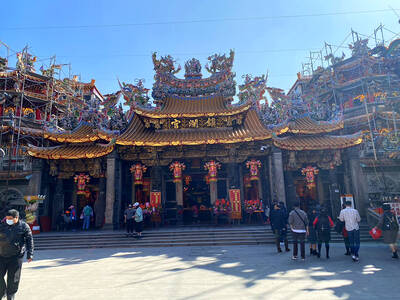
In December of 2008 Lee E-tin (李乙廷), a Miaoli county legislative hopeful, was convicted of vote-buying. Rather than buy votes retail, voter by voter, in the usual manner, Lee had done it wholesale, in a commendably efficient manner: he had visited local temples and made donations to gain their support. Because he did not normally make donations to temples, the court ruled he was attempting to improperly influence voter behavior. The case indicates how important temples are in influencing political life. Both judge and politician appeared to see them in the same way. Beijing sees them that way as well. Democratic Progressive
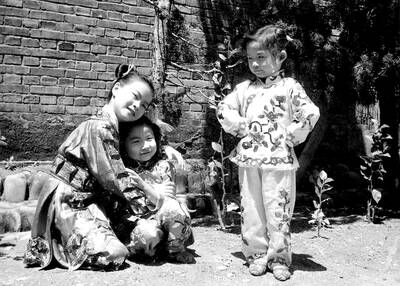
Audiences in Leicester, Cardiff, London and Sheffield will this month gather to watch a series of black-and-white Taiwanese-language films made more than 70 years ago. On the surface, these screenings commemorate the seventieth anniversary of taiyupian (台語片) — Taiwanese-language cinema. Yet the significance of these events extends far beyond nostalgia or film history. They represent a remarkable chapter in Taiwan’s ongoing effort to recover, preserve and reinterpret a cultural heritage that was once thought to have largely disappeared. The centerpiece of the program is the Ho Chi-ming (何基明) directed Xue Pinggui and Wang Baochuan (薛平貴與王寶釧), a film produced in 1955 and


 RSS
RSS