


Over the past three years, the drug ecstasy -- also known simply as "E" -- has infiltrated Taiwan with surprising speed.
Pharmacologically known as methylenedioxymethamphetamine (MDMA), ecstasy combines properties of both stimulants and hallucinogens and is said to produce a sensual euphoria. It also comes in rainbow colors and neat logos. For many people in Taiwan it has become the ultimate recreational drug.
Taiwan's first reported case of ecstasy use was in 1996, and 1997 saw law enforcement's first MDMA seizures, which totaled just 73.5 grams for the entire year. This year, more than 60 times that amount (4.8kg through October) has already been confiscated.
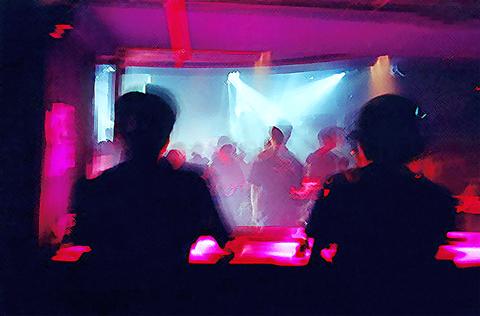
PHOTO: JAMES HU FROM LOVE DREAM GROUP
A new fad is clearly in the making.
While the police's MDMA hauls are still small in comparison with those of other drugs like heroin (116 kg) and amphetamines (789 kg), Li Jih-heng (
"Everyone's just doing it for fashion," said Alan, a 20-year-old makeup artist and occasional club patron. For him, the ecstasy wave is in the same league with aluminum alloy sun glasses, synthetic fabrics, the pounding of trance beats and all the other reprocessed psychedelia consumed in rave and dance culture.
Like legitimate products, MDMA makers use brand names and logos to market their pills. Many are appropriated from the slick designs of corporate pop-culture, taking names like Motorola, Mitsubishi and Ferrari. Other ecstasy brands are derived from cartoons, like Pokeman, Snoopy and Pink Panther. For the digital flower children types, still more lines play up a natural product image, like the currently popular Tai Chi series, white tiger and several different colors of butterfly. So far, the Taipei police have distributed pictures of at least nine different versions of ecstasy pills to help KTV and pub owners identify the drug.
But the effectiveness of the marketing shows in the way people talk about ecstasy, trying different varieties, brands, the quality rated by word of mouth. Users tell their friends that green taichi "is really great," or that blue lightening is "low-grade stuff" or that tulip is "really scary."
Isabelle has taken ecstasy between 15 and 17 times over the last six months, roughly once every other weekend. She's 25-years-old, vivacious, has a head-turning figure, and in light of her new drug of choice, she finds it a little ironic that she works as a secretary at a pharmaceuticals manufacturing company.
Like most ecstasy users, Isabelle is young, well-off and well educated. She comes from a solidly middle-class family and has studied in the US. In fact, she is the very antithesis of the nightclub vampire, who under the current catchall phrase "head shakers," is being demonized by the government and the media.
The "head shake" (搖頭) image is based on early reports in the Taiwan media, which showed users shaking their heads for minutes at a time into booming subwoofers at techno clubs. Thus the identification of MDMA users with dancers gone rabid was established. Now, as the drug becomes more popular, it is being associated with almost any activity regarded as socially dangerous.
For several months now, journalists and government officials have repeatedly confused MDMA with a number of other drugs, most commonly FM2 (also known as the "date rape drug"), amphetamines and heroin.An Oct. 21 statement by Government Information Office Director-General Su Tzen-ping (蘇正平) went so far as to put ecstasy beside the totally unrelated phenomenon of motorcycle gangs.
Isabelle, however, is anything but a "head-shaker". Calling discos "the worst place to take `E'" because "the scene is so dark," she says she usually does "E" in the company of small groups of close friends, mostly including either her boyfriend or her sisters and usually somewhere private, like a friend's apartment.
Her habit is to take half a tablet at a time, eating one part first, then taking the second one later to extend the high.
She says she likes ecstasy because, "You can relieve yourself, express yourself a lot better. You can share a lot of things and say things you'd never say otherwise. When I do it with my sisters, you can apologize for something you might not normally admit to because of problems with face or whatever. You know, I think that if a couple has a problem, maybe each of them should take one and then they could talk and work it out."
As a drug, ecstasy works much like a turbo-charged version of the anti-depressant Prozac. Both MDMA and Prozac influence the way brain cells pass on the natural, mood enhancing chemical, seratonin.
Brain rush
But while Prozac provides a mild boost in the flow of seratonin, making you feel a little better, MDMA precipitates a virtual flood, enough in fact to damage the seratonin receptors on downstream brain cells, which cannot absorb all that comes their way. This usually happens between 10 and 30 minutes after taking a tablet.
Whether seratonin overload is ultimately harmful or not is still uncertain. However, it is known that MDMA produces potentially harmful effects on other brain functions, and while not physically addictive, it has other adverse effects on the body. One of ecstasy's greatest dangers is its way of raising the body's temperature, which in extreme cases can lead to dehydration, thickening of the blood, heart or kidney failure and death. Rare instances, however, have also been reported of the drug leading to "water intoxication," in which the brain's salts become so dilute that the brain ceases to function properly at the cellular level.
Still, the medical community's most common concern is how ecstasy affects users psychologically. So far this year in Taiwan, at least one case of schizophrenia and four other cases of psychosis have been attributed to MDMA use. Many users add a personal testament, concurring that psychological discomfort often accompanies use of the drug, occasionally during, but usually after its use.
As much as Isabelle purports to like ecstasy, even she admits to the terrible, 12-hour-long hangovers that come in the wake of "E" euphoria. Called "Frankenstein syndrome" by some, Isabelle describes it as "a whole day of blah."
To get through an "E" hangover, she says that some of her friends recommend using other drugs, like high grade marijuana or ketamine, a veterinary grade tranquilizer that produces hallucinogenic effects in humans and is beginning to catch on in some Taipei nightclubs.
Government officials and doctors, meanwhile, warn that such up-for-down usage patterns can only lead to experimentation with more harmful substances and strengthen dependencies.
Wang, 25, is a regular Taipei youth who once loved weekend partying. But he had one experience too many with ecstasy. His bad trip kept him "fried" for four days straight, psychologically disturbed for two weeks after that, and may have caused permanent damage to his central nervous system. Before this, he considered himself "a casual user" and had only taken the drug 10 or 11 times. Now he has been sidelined with what his physician believes to be a rare brain disorder.
Cut-price drug
There is no assurance that Wang's condition was necessarily triggered by MDMA; most users agree that local "E" is often cut with other drugs. The laboratories of the Ministry of Justice's Investigation Bureau also show a high level of impurities in local MDMA pills, which they say are most commonly cut with ketamine and stimulants like methamphetamine, caffeine and ephedrine. For Wang, one thing at least is clear: "You know something's got to be wrong if it feels that good."
Between an afternoon workout and an evening bushiban class, Isabelle sits in a coffee shop near the train station, talking to her ecstasy connection on a cell phone.
For someone like her at the bottom of the supply chain, ecstasy deals tend to take place within circles of friends. Suppliers are usually viewed more as friends and facilitators than as dealers or pushers. Often, the drug is simply passed around within a group, though larger scores are generally ordered over the phone, like pizza.
Isabelle talks into her phone, asking, "blue or brown, what's the difference?"
Brown is brown taichi, 80 percent pure and Taiwan made at NT$350 a tablet.
The blue is purple butterfly, a slightly higher grade from Holland, 100 percent pure at NT$400 a tablet, says her contact.
So Isabelle puts in an order for 30 of the brown taichi, ten each for herself and her two sisters.
* MDMA
1997 - 0
1998 - .073 kg
1999 - 3.5 kg
2000, Jan-Oct - 4.8 kg
* Amphetamines
1997 - 2,556 kg
1998 - 886 kg
1999 - 1,215 kg
2000 - 789 kg
* Marijuana
1997 - 3.68 kg
1998 - 16.3 kg
1999 - 47.9 kg
2000 - 39.6 kg
* Cocaine
1997 - .0002 kg
1998 - .145 kg
1999 - 0 kg
2000 - .0046 kg
* Heroin
1997 - 150 kg
1998 - 113 kg
1999 - 107 kg
2000 - 116 kg
Source: Ministry of Justice, Statistics Section

“Taiwan’s Opposition Leader Comes to US With a Message Straight Out of Beijing” read a May 31 headline in the Wall Street Journal. Top US administration officials and members of Congress almost certainly read the WSJ, and if there was a bullet point takeaway that people in Washington should absorb ahead of Chinese Nationalist Party (KMT) Chair Cheng Li-wun’s (鄭麗文) arrival in DC on June 9, that headline is it. The last few columns have discussed this very topic, and the timing is not coincidental. While those top officials likely do not read the Taipei Times, judging by the number

With weighty, anxiety-inducing geopolitical topics dominating the headlines, checking in on the wild and weird state of local politics can take some of the edge off. This November’s elections will determine who will be in charge of fixing potholes in your neighborhood, not the potholes in Taiwan’s complicated geopolitical space. Recently, after an online interview with a Taipei-based journalist, I commented that Taipei journalists never go further than the MRT can take them. He laughed and agreed. Naturally, the Taipei mayoral race is eating up much of the press attention. TAIPEI CITY Democratic Progressive Party (DPP) candidate Puma Shen (沈伯洋) has
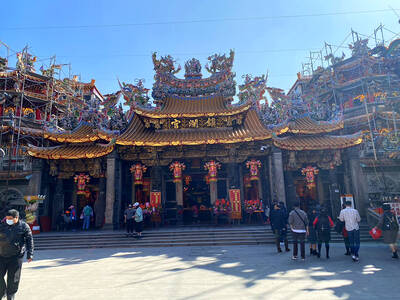
In December of 2008 Lee E-tin (李乙廷), a Miaoli county legislative hopeful, was convicted of vote-buying. Rather than buy votes retail, voter by voter, in the usual manner, Lee had done it wholesale, in a commendably efficient manner: he had visited local temples and made donations to gain their support. Because he did not normally make donations to temples, the court ruled he was attempting to improperly influence voter behavior. The case indicates how important temples are in influencing political life. Both judge and politician appeared to see them in the same way. Beijing sees them that way as well. Democratic Progressive
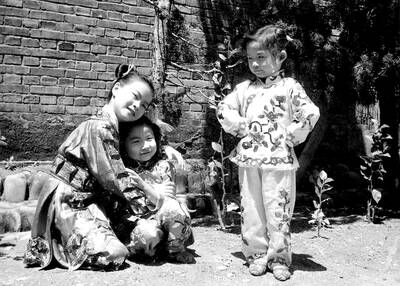
Audiences in Leicester, Cardiff, London and Sheffield will this month gather to watch a series of black-and-white Taiwanese-language films made more than 70 years ago. On the surface, these screenings commemorate the seventieth anniversary of taiyupian (台語片) — Taiwanese-language cinema. Yet the significance of these events extends far beyond nostalgia or film history. They represent a remarkable chapter in Taiwan’s ongoing effort to recover, preserve and reinterpret a cultural heritage that was once thought to have largely disappeared. The centerpiece of the program is the Ho Chi-ming (何基明) directed Xue Pinggui and Wang Baochuan (薛平貴與王寶釧), a film produced in 1955 and


 RSS
RSS