


Anyone who witnessed the startlingly freakish, herky-jerky video sequences featured in the 1998 horror film Ring knows exactly why the film was the most successful Japanese export in Taiwan cinema history. It scared people silly.
And in doing so it raked in millions of Taiwan dollars and secured a place as the top grossing Japanese film of all time in Taiwan. When Ring 2 came out an impossibly short time later, people saw that, too. And now Ring O, the third film in the terrifyingly popular series, is set to open across the country Saturday. If local reaction to the first two films is any indicator, box offices will be in for another killing.
The success of the first two Ring pictures in Taiwan is largely due to the love of Japanese pop culture, the pull of Japanese stars and the fact that "young people in Taiwan love ghost stories," says Gene Liao, a professor of film at National Taiwan University's College of Art. "If, on top of all this, the film is actually good and creates a buzz, it can't help but be a runaway success. Nobody wants to miss it and be left out."
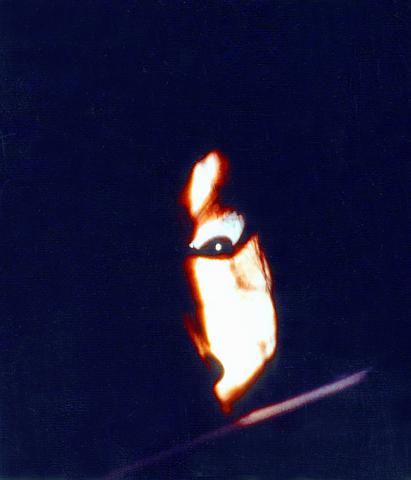
Saying the original Ring was good would be an understatement. In telling the story of a female TV director who investigates the deaths of several high school students killed after viewing a videotape, the film embarks on a journey of terror rarely equalled in modern cinema. It has a chilling feel about it from the beginning, and this grows as the story unfolds.
Filmed in a serene, gently-paced fashion, it has a way of lulling viewers into a false sense of security and then striking out with moments of icy terror. The success of this on-again, off-again style could be heard in the form of terrified shrieks and gasps in theaters throughout Taiwan. And don't forget the eerie video sequences that produced some of the most uncomfortable imagery ever put to celluloid.
Perhaps even more remarkable is that the original Ring achieved this horrific effect without shedding a single drop of blood. There are no slashings or mutilations to speak of. Rather, the fear stems from the perceived horrors and the hints of terror dropped with precision throughout the film. The evil refuses to fully reveal itself, leaving you instead to squirm in agonized apprehension.
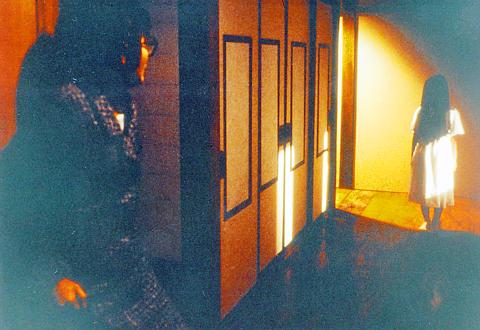
Ring 2 has the lethal videotape escalating its reign of terror. But unlike many sequels in the genre, Ring 2 is not a mere rehashing of the original's story. It is more like a continuation of the saga. While Ring is frightening and satisfying on its own, Ring 2 answers many of the questions raised in the original Ring.
But as is common with number threes, Ring O just doesn't measure up to the original. While the original was taunt and well conceived, creating terror from the slightest gesture, Ring O seems to try too hard and, in doing so, falls flat.
There are still moments where director Nakata Hideo shows that he can still turn what would ordinarily be banal scenes, such as the combing of a woman's hair, into moments of heart-stopping terror. But the overall feeling of menace and terror is lacking -- sacrificed to the need to make sense of what becomes a complex, fragmented plot line.
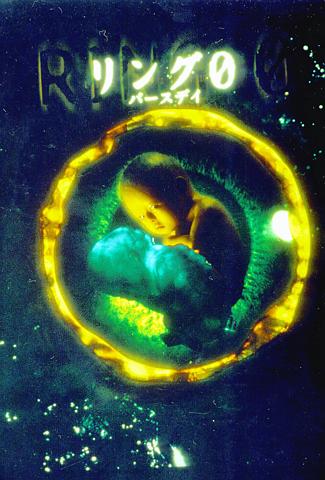
But, according to Liao, it really doesn't matter. A good buzz dies hard. Because of this and despite its inferiority, Liao believes Ring O is as certain to do well in Taiwan as, say, a "Blair Witch Project II" would in America.
"The draw is too strong," he says. "Japanese pop culture, sexy stars and ghosts are a potent formula on the youth of Taiwan. Even if it's not as good, people will still go to see it."
Liao points to the Blair Witch Project as an example to back up his point. "That was a great movie and it did extremely well in America," he says. "But in Asia it didn't do very well at all."
This is despite, as Liao points out, definite similarities in the styles of the two films. The Japanese film, Liao says, did better because the youth of Taiwan not only relate better and are more familiar with Japanese culture, but also they want to make it a part of their daily lives.
"Seeing these Ring films, talking about them with friends, is a way of achieving this goal of assimilation," Liao says.
So prepare for another wave of Ring fever starting this weekend. Expect to hear people talking about the film, suggesting the film, even screaming about the film.
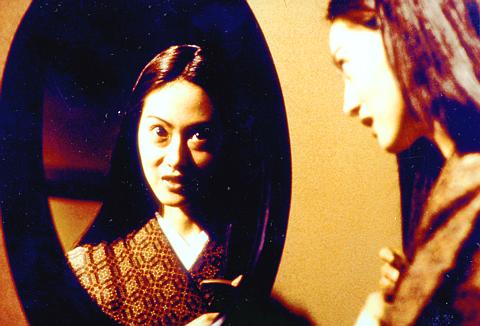
Get ready for a tidal wave of ticket sales, posters and commercials featuring that ghostly, white clad woman, Sadako, as she jerks and lurches her way along, hair obscuring her face, out of the silver screen and back into the pop culture consciousness of Taiwan.
* Taiwan release: March 25
* Rated R
* Starring: Nakama Yuki
(
(
* Directed by Nakata Hideo
(

“Taiwan’s Opposition Leader Comes to US With a Message Straight Out of Beijing” read a May 31 headline in the Wall Street Journal. Top US administration officials and members of Congress almost certainly read the WSJ, and if there was a bullet point takeaway that people in Washington should absorb ahead of Chinese Nationalist Party (KMT) Chair Cheng Li-wun’s (鄭麗文) arrival in DC on June 9, that headline is it. The last few columns have discussed this very topic, and the timing is not coincidental. While those top officials likely do not read the Taipei Times, judging by the number

With weighty, anxiety-inducing geopolitical topics dominating the headlines, checking in on the wild and weird state of local politics can take some of the edge off. This November’s elections will determine who will be in charge of fixing potholes in your neighborhood, not the potholes in Taiwan’s complicated geopolitical space. Recently, after an online interview with a Taipei-based journalist, I commented that Taipei journalists never go further than the MRT can take them. He laughed and agreed. Naturally, the Taipei mayoral race is eating up much of the press attention. TAIPEI CITY Democratic Progressive Party (DPP) candidate Puma Shen (沈伯洋) has
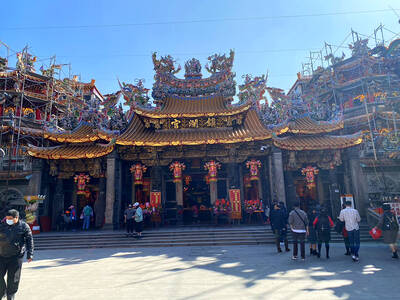
In December of 2008 Lee E-tin (李乙廷), a Miaoli county legislative hopeful, was convicted of vote-buying. Rather than buy votes retail, voter by voter, in the usual manner, Lee had done it wholesale, in a commendably efficient manner: he had visited local temples and made donations to gain their support. Because he did not normally make donations to temples, the court ruled he was attempting to improperly influence voter behavior. The case indicates how important temples are in influencing political life. Both judge and politician appeared to see them in the same way. Beijing sees them that way as well. Democratic Progressive
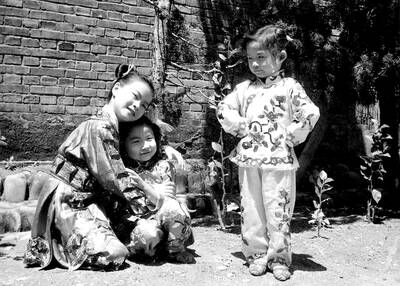
Audiences in Leicester, Cardiff, London and Sheffield will this month gather to watch a series of black-and-white Taiwanese-language films made more than 70 years ago. On the surface, these screenings commemorate the seventieth anniversary of taiyupian (台語片) — Taiwanese-language cinema. Yet the significance of these events extends far beyond nostalgia or film history. They represent a remarkable chapter in Taiwan’s ongoing effort to recover, preserve and reinterpret a cultural heritage that was once thought to have largely disappeared. The centerpiece of the program is the Ho Chi-ming (何基明) directed Xue Pinggui and Wang Baochuan (薛平貴與王寶釧), a film produced in 1955 and


 RSS
RSS